Last Updated: October 12, 2026
Last Updated: October 12, 2026





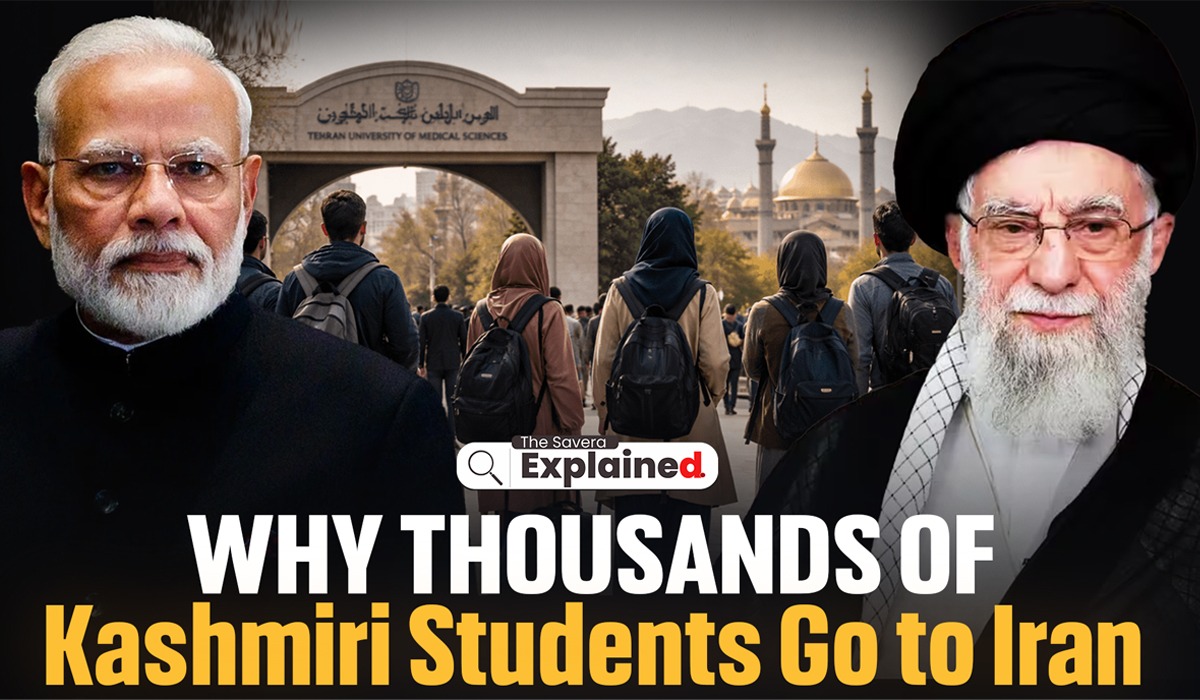
Every year, thousands of young students from Kashmir travel thousands of kilometres west — not chasing conflict or glamour abroad, but chasing a degree.
For many of them, Iran has quietly become the gateway to becoming a doctor or professional when options at home feel financially out of reach.
Today, that long-established route is under strain. Rising tensions and unrest in Iran have triggered concern back home, prompting India to prepare to facilitate the return of its citizens, including students. This development has pushed a wider question into focus — why do so many Kashmiri students go to Iran in the first place?
A Practical Choice Before a Political One
For most Kashmiri families, the decision to send a child to Iran is rooted in practical reality, not geopolitics.
Medical education in India is among the most expensive in the world. Government college seats are limited, and private medical education often costs crores of rupees. Iran, in contrast, offers recognised medical degrees at a fraction of the cost, usually between ₹20 and ₹30 lakh for the entire course, including tuition and basic living expenses.
For many middle-class families in Kashmir, this cost difference decides whether a medical career is possible at all.
Competition at Home, Opportunity Abroad
Alongside high costs comes intense competition. India’s medical entrance system leaves thousands of capable students without seats every year, often by narrow margins after years of preparation.
Iran’s universities provide more accessible admission pathways for international students, easing the pressure of all-or-nothing entrance exams. This balance of affordability and access has made Iran a steady alternative for Kashmiri students for nearly two decades, especially for those who narrowly miss out on medical seats in India.
Cultural Comfort and Historical Links
Beyond academics, there is familiarity. Kashmir shares deep historical, linguistic and cultural links with Iran, dating back centuries. Persian influence shaped Kashmiri language, literature and scholarship, and those connections still resonate.
Because of shared religious practices and social norms, many Kashmiri students find Iran culturally easier to adapt to than Western countries. Over time, this comfort has turned into trust, reinforced by families who have seen earlier batches study, graduate and return home successfully.
How Big Is This Trend?
Estimates suggest over 2,000 Kashmiri students are currently studying in Iran, the vast majority enrolled in medical and allied health courses. They are spread across cities such as Tehran, Shiraz, Mashhad and Qom — major centres for international education.
Across Iran, there are also thousands of Indian nationals, including pilgrims and professionals, but Kashmiri students form one of the most visible academic groups.
When Stability Turned Into Uncertainty
This long-standing arrangement has now been shaken by recent unrest and rising tensions in Iran. Protests, economic pressures and regional conflict dynamics have made daily life unpredictable.
Students have reported communication disruptions, internet shutdowns and rising anxiety. Families in Kashmir say they sometimes struggle to contact their children for days, deepening fear and uncertainty. What was once viewed as a stable education destination now feels fragile.
India Steps In: Preparing for Returns
As concerns grew, the Indian government moved into action. Sources confirm that India is preparing to facilitate the return of Indian nationals from Iran, including students, through coordinated efforts led by the Ministry of External Affairs.
Indian embassies have issued advisories urging citizens to remain alert and leave Iran using available options. Charter flights and evacuation planning are being explored, with special focus on students and pilgrims.
Officials estimate that around 9,000 Indian citizens are currently in Iran, making coordination complex but urgent.
Families, Fear and Appeals
Back home, parents of Kashmiri students have publicly appealed for quicker evacuation plans. Many say the uncertainty is taking a psychological toll, with safety concerns now outweighing academic progress.
The Jammu and Kashmir administration has stepped in by appointing nodal officers to coordinate with the MEA and the Indian Embassy, ensuring families receive timely information and support.
What Lies Ahead
For now, many students face difficult choices — return home and pause their education, or wait and hope for stability to return. For families, this episode has highlighted both the advantages and vulnerabilities of studying abroad.
Iran became a destination because it offered affordable education, cultural familiarity and opportunity when doors at home felt closed. Today’s crisis does not erase those reasons, but it underlines a hard truth — global tensions can suddenly reshape personal dreams.
As India works to bring its citizens home safely, the story of Kashmiri students in Iran sits at the intersection of education, economics and geopolitics — a reminder that the search for opportunity sometimes runs through uncertain terrain.
Good Evening Viewers! Stay updated with The Savera Times Evening Bulletin for the latest news from Punjab, India...

eader of the Opposition in the Lok Sabha, Rahul Gandhi and 10 other INDIA bloc leaders have moved...

Amidst protests in central Delhi, the Delhi Metro Rail Corporation (DMRC) announced the reopening of entry and exit...
The Delhi Police has registered an FIR regarding the alleged disturbance at the Bangla Sahib Gurdwara in...
The Delhi Police on Monday removed Jantar Mantar from the list of officially designated protest sites. The police...
The Supreme Court on Monday clarified that it has not passed any judgment on the Election Commission's (ECI)...
Aries: The day will be auspicious...