Last Updated: October 21, 2026
Last Updated: October 21, 2026





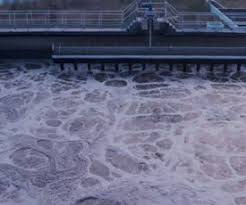
A couple of weeks, the Uttar Pradesh cabinet has approved a Safe Reuse of Treated Water Policy, 2026 for India’s largest state, marking a significant milestone in the country’s journey towards sustainable and resilient water management. The policy lays out a clear and ambitious roadmap in five phases. In phase 1, by 2030, it will aim for 50 per cent safe reuse of treated used water in places where sewage treatment plants (STPs) are operational and collection and treatment capacity already exists. In phase 2, it will try to achieve 100 per cent safe reuse in these same places.
In phase 3, by 2030, it proposes to safely reuse 30 per cent of treated used water in places where STPs do not exist or are non-operational. In phases 4 and 5, the policy will target to reuse 50 per cent by 2035 and 100 per cent by 2045 respectively, in these same places.
By promoting the reuse of treated water across key sectors such as agriculture, industry, construction, and urban landscaping, the state aims to substantially reduce dependence on freshwater sources and curb excessive groundwater extraction.
According to the experts, the policy signals a paradigm shift from conventional ‘treat-and-dispose’ practices to a circular economy approach, where wastewater is recognised as a valuable resource. This approach is expected to not only enhance water security but also contribute to long-term environmental sustainability and economic efficiency. A notable strength of the policy is its focus on decentralised and city-level planning through City-Level Reuse Action Plans (CLRAPs). These plans are designed to guide urban local bodies in identifying reuse opportunities, mapping demand, and in developing the necessary infrastructure to ensure effective utilisation of treated wastewater.
Cities such as Agra and Prayagraj have already initiated this transition through the preparation of CLRAPs, with technical support from CSE and funding support from the National Mission for Clean Ganga (NMCG). These plans demonstrate how reuse strategies can be operationalised on the ground by identifying sector-specific reuse pathways and establishing a clear framework for systematic and financially viable scale-up.
In Prayagraj, four proposed projects worth Rs 1,625 crore aim to enable reuse of 126.45 million litre a day (MLD) of treated water, while in Agra, three projects worth Rs 93 crore will target the reuse of 28 MLD.
Good Evening Viewers! Catch up on the day's biggest stories with The Savera Times Evening Bulletin. Get the...

Congress leaders continued their protest outside the Jaipur Police Commissionerate on Tuesday, demanding the registration of a zero...
On the auspicious occasion of Vijayadashami, Prime Minister Narendra Modi on Tuesday called on the countrymen to unite...
A historic milestone was achieved on Tuesday in the expansion of Chhattisgarh's rail networkA historic milestone was achieved...
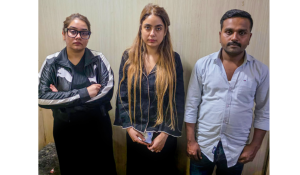
Model Shraddha Dubey, one of the main accused in the death of Lucknow businessman Shiv Sharma, has been...
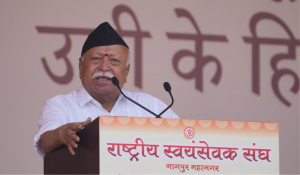
Rashtriya Swayamsevak Sangh (RSS) chief Mohan Bhagwat on Tuesday called for strengthening national unity, social harmony, indigenous practices...
Aries: The day will be auspicious...