Last Updated: October 1, 2026
Last Updated: October 1, 2026






Water has always shaped India’s civilisation, economy, and culture. Rivers have determined settlement patterns, monsoon cycles have guided agriculture, and traditional water systems once ensured local resilience. Yet today, water has emerged as one of India’s most complex governance challenges. Scarcity, pollution, and unequal access threaten livelihoods and social stability, making water governance a defining issue for the country’s future.
India receives significant annual rainfall, but its distribution is uneven across regions and seasons. While some areas face floods, others endure chronic droughts. Climate change has intensified this variability, making rainfall more erratic and less predictable. Extreme weather events now disrupt water planning, exposing weaknesses in existing systems.
Groundwater depletion is among the most serious concerns. Over decades, unregulated extraction for agriculture, industry, and urban consumption has lowered water tables across large parts of the country. Farmers depend heavily on tube wells, often driven by unreliable surface water and electricity subsidies. As aquifers decline, wells run dry, increasing costs and deepening rural distress.
Urban water management presents its own challenges. Rapid population growth has outpaced infrastructure development. Many cities rely on distant rivers or reservoirs, transporting water across long distances at high financial and environmental cost. Leakage, inefficiency, and inequitable distribution mean that while some households receive water around the clock, others depend on tankers and informal suppliers.
Pollution further reduces available freshwater. Untreated sewage, industrial effluents, and agricultural runoff contaminate rivers, lakes, and groundwater. Water bodies that once supported fisheries, livelihoods, and ecosystems have become unfit for human use. Cleaning polluted rivers requires not only technological solutions but strict enforcement and behavioural change.Governance fragmentation complicates responses. Water is managed by multiple agencies across different levels of government, often with overlapping responsibilities. Coordination between states is particularly difficult when rivers cross administrative boundaries. Disputes over sharing water resources have become increasingly frequent, reflecting competing demands and limited trust.Agriculture consumes the majority of India’s freshwater. Crop choices, irrigation methods, and pricing policies significantly influence water use. Water-intensive crops grown in unsuitable regions place additional stress on resources. Promoting efficient irrigation, crop diversification, and sustainable farming practices is essential, but requires aligning incentives with long-term conservation.
Traditional water systems offer valuable lessons. Stepwells, tanks, and community-managed ponds once helped capture rainwater and recharge groundwater. Many of these systems have fallen into disrepair due to neglect and urban expansion. Reviving and adapting them can complement modern infrastructure and strengthen local water security.Public participation plays a crucial role in effective water governance. Community involvement in monitoring, maintenance, and decision-making fosters accountability and sustainability. Awareness campaigns and local stewardship can help reduce waste and protect water bodies. Without public engagement, policy interventions risk remaining disconnected from ground realities.
Economic development depends on reliable water access. Industries, energy production, and urban growth all rely on secure supplies. Water scarcity can disrupt economic activity, increase costs, and deter investment. Integrating water considerations into development planning is therefore essential for long-term stability.
Equity is at the heart of the water challenge. Marginalised communities often bear the brunt of scarcity and pollution. Ensuring access to safe drinking water is a basic necessity, closely linked to health, education, and dignity. Addressing inequities requires targeted interventions and inclusive policy design.The future of water governance in India will depend on integrated approaches that combine science, policy, and community action. Data-driven planning, transparent regulation, and cross-sector coordination are key. Water must be treated not as an infinite resource, but as a shared responsibility.As pressures on water systems increase, the choices made today will shape India’s resilience in the decades ahead. Effective water governance is not just an environmental concern—it is fundamental to social harmony, economic progress, and sustainable development.
Prime Minister Narendra Modi on Thursday hailed Captain Smit Machchhar, the Indian pilot of Flydubai flight FZ1073, who...

The Central Government has cut export levies on diesel and aviation turbine fuel (ATF) for the second consecutive...
India is increasingly aligning its development agenda with climate action, integrating renewable energy, energy efficiency and green industrial...
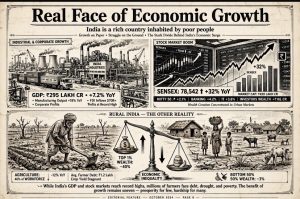
– Abhishek Vij While the National Statistical Office’s data promises a better position for the country globally, it...
The Savera Times Evening Wrap brings you the top India and world news, covering major developments across politics,...

Pakistan-based LeT terrorist Mohammad Asif alias Hashim Moosa, wanted in the Pahalgam terror attack case, was killed in...

Aries: The day will be auspicious...