Last Updated: October 21, 2026
Last Updated: October 21, 2026





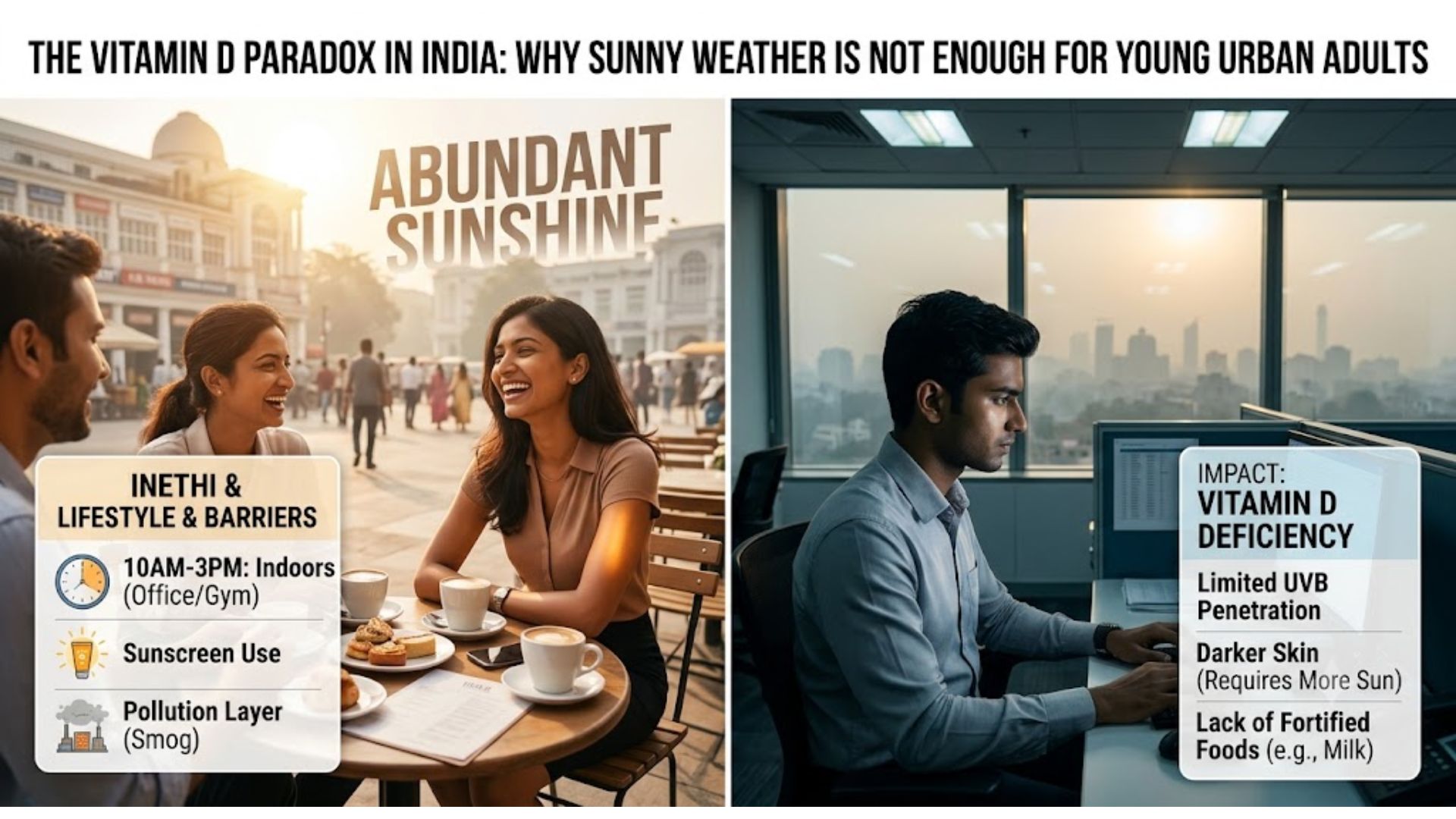
Despite India’s abundant year-round sunshine, the country is currently facing what health experts call a “Vitamin D paradox”—a massive surge in vitamin D deficiency, particularly among young adults and urban populations. Recent data indicates that nearly 70% to 90% of Indians are deficient in this critical nutrient
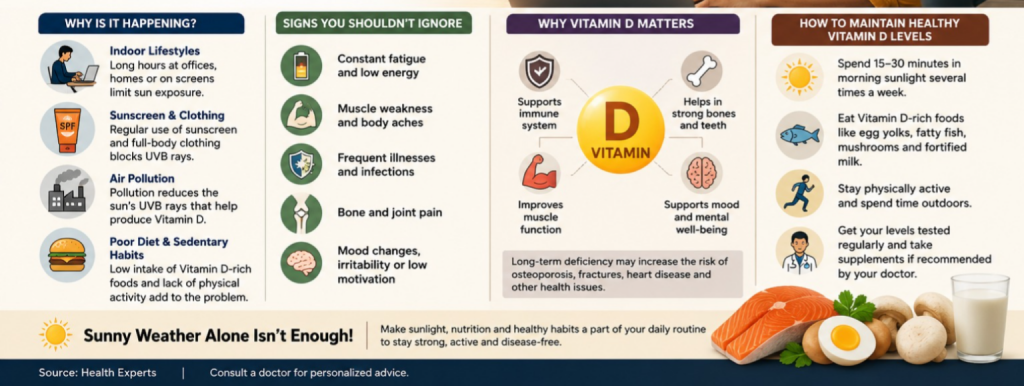
A surprising deficiency in a sun-rich nation
Vitamin D, often referred to as the “sunshine vitamin,” is produced by the body when the skin is exposed to sunlight. However, recent lifestyle changes have significantly reduced the amount of time people spend outdoors.
Urbanization, work-from-home culture, long office hours, increased screen time, and a preference for indoor activities have contributed to a decline in natural sunlight exposure. As a result, many young Indians are not receiving adequate UVB rays required for Vitamin D synthesis.
According to health experts, even individuals living in cities with ample sunshine may remain deficient if they spend most of their day indoors.
Modern lifestyles are a major factor
1. The Shift to an Indoor Lifestyle
2. High Air Pollution in Cities
3. Natural Skin Pigmentation
4. Sunscreen Usage and Clothing Habits
5. Dietary Gaps and Lack of Fortification
6. Misunderstanding the Timing of Sunlight
The shift toward a more sedentary lifestyle has become one of the primary reasons behind the rise in Vitamin D deficiency.
Many professionals leave home early for work, spend the day inside offices, and return after sunset. Students preparing for competitive examinations often remain indoors for extended periods. The growing popularity of online entertainment, gaming, and remote work has further reduced outdoor activity.
Additionally, concerns about tanning and skin damage have led many people to use sunscreen regularly or avoid direct sunlight altogether. While sunscreen is important for skin protection, excessive use can also limit Vitamin D production.
Air pollution may also play a role
Experts point out that rising air pollution levels in several Indian cities can block ultraviolet B (UVB) rays from reaching the ground. This reduces the effectiveness of sunlight exposure, making it harder for the body to produce adequate Vitamin D even during sunny days.
Symptoms often go unnoticed
One of the biggest challenges is that Vitamin D deficiency often develops gradually and can remain undetected for months or even years.
Common symptoms include:
Because these symptoms are often attributed to stress or busy lifestyles, many individuals fail to recognize the underlying deficiency.
Why Vitamin D is essential
Vitamin D plays a crucial role in maintaining bone health by helping the body absorb calcium. It also supports muscle function, strengthens the immune system, and contributes to overall mental well-being.
Research has suggested that inadequate Vitamin D levels may increase the risk of osteoporosis, cardiovascular diseases, weakened immunity, and certain mental health disorders.
For young adults, maintaining healthy Vitamin D levels is particularly important as it contributes to long-term bone strength and overall fitness.
Experts recommend a balanced approach
Health professionals advise spending at least 15 to 30 minutes in direct sunlight several times a week, preferably during morning hours when sunlight is less harsh.
In addition, individuals can improve their Vitamin D intake through foods such as:
Those experiencing symptoms or belonging to high-risk groups are encouraged to consult healthcare professionals and undergo a simple blood test to assess Vitamin D levels.
Growing awareness is key
As lifestyles continue to evolve, experts believe awareness about Vitamin D deficiency is more important than ever. While India’s sunny climate provides a natural advantage, sunlight alone is not enough if daily routines prevent people from spending time outdoors.
With increasing numbers of young Indians facing this preventable health issue, adopting healthier habits, maintaining an active lifestyle, and ensuring adequate sunlight exposure could help reverse the trend and improve overall well-being.
Imagine a universe where stars still shine, planets still form and water exists, but liquids are so thick...

In This is the age of artificiality, of artificial intelligence. A few years ago, experiments were conducted to...

International clean air funding during 2023-24 showed a dual win for global public health, as targeted clean air...

Sri Krishna says, "He who has renounced action through yoga and dispelled his doubts with knowledge becomes established...

Two oxygen-producing compounds, including one that boosts performance in some laundry detergents, might one day play a key...

A significant loss of plant diversity could result in grasslands wor ldwide , including meadows and pastures, absorbing...

Aries: The day will be auspicious...