Last Updated: October 16, 2026
Last Updated: October 16, 2026





-Abhishek Vij
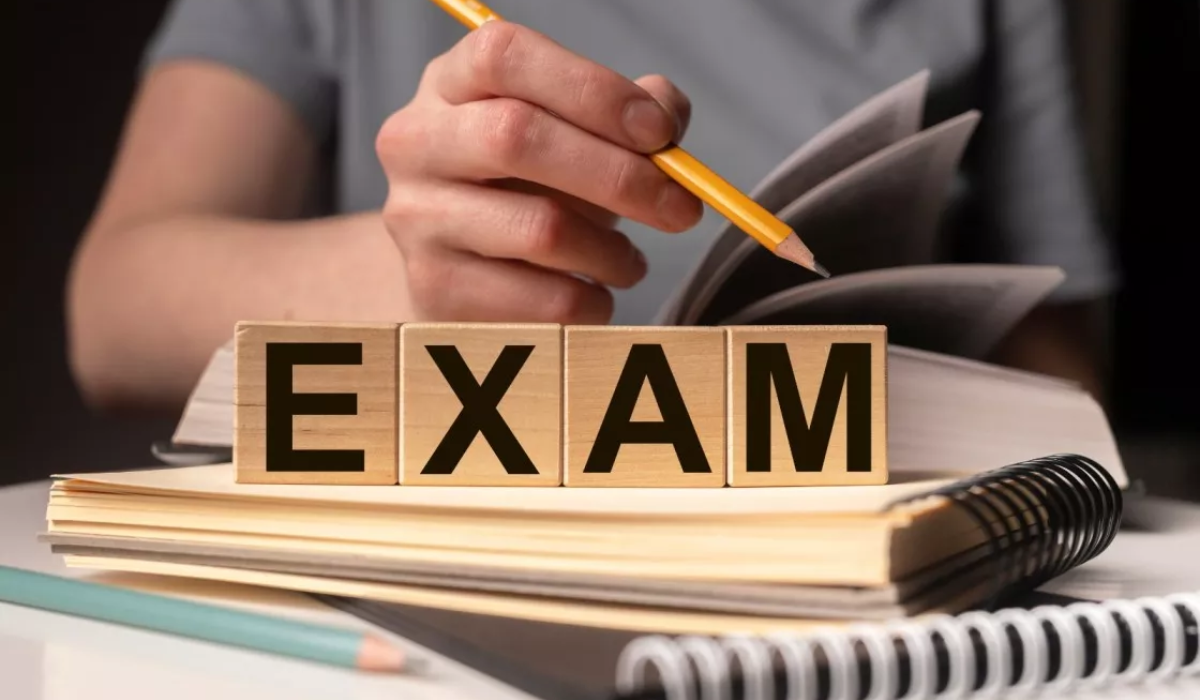
The National Testing Agency (NTA)—the body responsible for conducting examinations—acknowledging its errors and deeply conscious of the distress caused by the cheating scandal in the NEET exam, is prepared to conduct a re-examination.
The NTA had intended to administer the exam via the CBT (Computer-Based Test) mode; however, a Supreme Court bench comprising Justice P.S. Narasimha and Justice Aravind Kumar—while hearing a petition filed by RJD MP Sudhakar Singh and others—ruled that, instead of reverting to the existing pen-and-paper method, the question of organizing the exam via computers again simply does not arise.
In essence, this means that students across the country will once again return to the traditional pen-and-paper format to take this examination. The Bench further asserted that this examination must now be entirely error-free, and should any errors occur, the responsibility for them will rest with the Education Minister. However, such consequences would only come into play *after* the examination has already become entangled in the quagmire of cheating or errors. As things stand, anxious students are either studying continuously or engaging in relentless rote memorization, all while preparing for an examination regarding whose transparency or error-free nature even the government itself appears to lack confidence.
This is precisely why the NTA had sought to conduct the exam using the Computer-Based Test method; yet, the Honorable Court has issued a directive mandating that the examination be conducted exclusively in the pen-and-paper mode. Meanwhile, Abhijit—founder of the ‘Cockroach Janata Party’—is scheduled to return to India on June 6th. He has resolved to join the students in protesting against this regressive decision to hold a re-examination, demanding the resignation of the Education Minister whom he holds responsible for jeopardizing the students’ future. In our country, the tradition of accepting responsibility and tendering one’s resignation has become a relic of the past—a tradition exemplified by the thenRailway Minister Lal Bahadur Shastri, who stepped down after accepting moral responsibility for a train accident.
Nowadays, however, ministers typically manage to evade accountability by exploiting some technical loophole or other. In this instance, too—while promising students that they will face no difficulties this time around due to cheating, paper leaks, or any other illicit causes—the authorities are effectively shifting the burden of the re-examination, scheduled for June 21st, back onto the students themselves. Furthermore, even after the examinations are concluded, students frequently express deep dissatisfaction regarding the evaluation process. This year’s CBSE examinations stand as a testament to this reality. Students were so disheartened by their evaluations that a significant number are now seeking a re-evaluation of their answer sheets. However, in a country that claims to rank among the world leaders in digital prowess, the very moment the evaluation process began, the CBSE portal—the gateway for this procedure—crashed and became completely inaccessible. This not only brought the re-evaluation process to a standstill but also caused mounting anxiety and heartpounding stress among the students.
When the NEET paper leak occurred—threatening to derail the lives of countless students— the government arrested three accused individuals; subsequently, regarding the CBSE re-evaluation fiasco, the authorities laid the blame squarely on the irresponsibility of the teachers involved. Taking decisive action, the government removed both the Chairman and the Secretary of the CBSE. When the process of re-evaluating the answer sheets of aggrieved students within the CBSE system finally commenced, it became evident that their new “on-screen evaluation” methodology had been a complete failure. The plight of these young individuals—trapped within the vicious cycle of the country’s education system—evokes not only the sympathy of their parents but the compassion of the entire nation.
What greater human tragedy could there be for educators than the instances—all too frequent—when a student is driven to take their own life? Yet, will such tragedies bring about a solution? Must we reject the advancements we have made and revert to the antiquated era of paper and pen? The fundamental question arises: is it truly a rational solution to the current crisis to turn our backs on the scientific progress the nation has achieved in step with the changing times, and to simply pick up our paper and pens once again
Punjab is organising a Mega Parent-Teacher Meeting across 19,200 government schools in 23 districts on October 9. Parents...
The foundation of Punjab’s Aam Aadmi Party government is renowned for two models. One is the medical model,...

Los Angeles Unified has blocked generative AI tools on student laptops and tablets, adding to growing restrictions on...

New Delhi: The NEET PG 2026 examination commenced across the country on Sunday, with more than 2.73 lakh...
Punjab Education Minister Harjot Singh Bains on Tuesday presented the progress report card of the education sector during...
New Delhi: The Union Cabinet on Friday approved amendments to the Public Examinations (Prevention of Unfair Means) Act,...
Aries: The day will be auspicious...