Last Updated: October 22, 2026
Last Updated: October 22, 2026





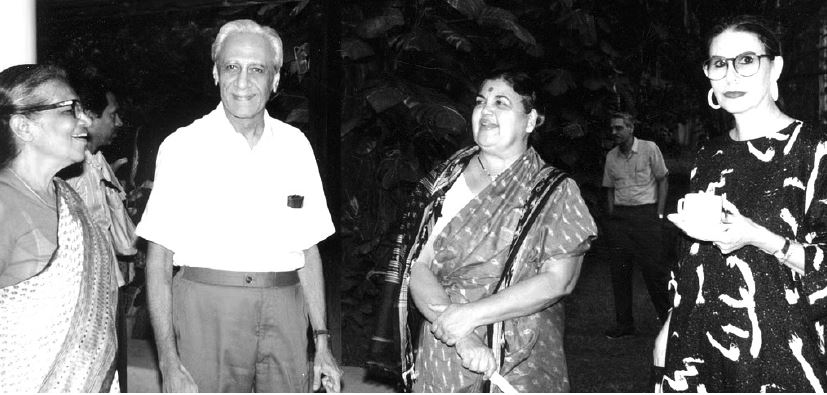
When the National Book Trust released Anna Mani: The Uncut Diamond this September, few expected a modest biography of an Indian meteorologist to provoke deep reflection about climate and science. Yet Asha Gopinathan’s book has done just that, reviving the memory of a woman who, more than half a century ago, was already documenting the changes in the atmosphere that define today’s Anthropocene.
Before climate change became a global concern, Anna Mani, a physicist from Kerala, was quietly measuring the skies over Pune. Each dawn in the 1960s, she climbed to the rooftop of the India Meteorological Department (IMD) laboratory to calibrate instruments she had built herself. Through glass tubes and Teflon pumps, she captured traces of a changing planet—declining ozone levels, rising pollutants, and the first signs of human influence on the air.
Rediscovering a pioneer
Gopinathan’s book reconstructs Mani’s life from her childhood in Peermade, Kerala, to her years of research in the male-dominated scientific establishment. Its most valuable contribution lies in reviving her pioneering ozone studies at IMD Pune, which positioned her among the first scientists in the Global South to measure humanity’s atmospheric impact.
“Mani saw urbanisation not just as progress but as a force reshaping the chemistry of our skies,” Gopinathan told Down To Earth. Long before the term Anthropocene was coined, Mani was recording its arrival through ozone readings and electrical conductivity data collected over a growing Pune.
Charting India’s ozone history
When Mani joined IMD in 1957, atmospheric research in India was largely descriptive. She brought precision and innovation. By the early 1960s, she had developed India’s first reliable radiation-measuring instruments, including pyranometers and sunshine recorders designed for local climatic conditions. Her most groundbreaking work came in 1964, when she supervised the launch of India’s first ozonesonde balloon from Pune. The fragile device ascended 30 km before bursting, providing India’s first vertical ozone profile and later contributing to the World Meteorological Organization’s global ozone network.
Mani’s curiosity extended beyond the stratosphere. She began examining ground-level ozone—what we now recognise as tropospheric ozone, a greenhouse gas formed from industrial emissions. Her reports from the 1960s described chemical reactions involving hydrocarbons and nitrogen compounds, decades before modern climate chemistry formally identified them. Comparing readings from industrial Pune and the cleaner Bay of Bengal air, she observed that urban pollution reduced atmospheric conductivity by half.
Precision as a principle
Mani’s commitment to accuracy defined her career. Her designs corrected flaws in European ozonesondes by using non-reactive materials such as glass and Teflon. “Accurate measurements are the foundation of understanding nature,” she often said. Her lab was immaculate, and her assistants followed strict calibration protocols. Gopinathan describes this as Mani’s “spirituality of precision”—a belief that studying nature with honesty was itself a moral act.
Mapping a changing sky
Under Mani’s leadership in the 1970s, Pune became India’s National Ozone Centre and later the Regional Ozone Centre for Asia. She coordinated data from stations across India, helping map ozone trends across the tropics. At the same time, she grew concerned about the environmental effects of urbanisation. Her notes from the decade recorded Pune’s “increasing nighttime warmth” and “shortened monsoon onset,” observations that anticipated the study of urban heat islands.
A scientist ahead of her time
By the time the world turned its attention to ozone depletion in the 1980s, Mani had retired to Bengaluru. Her early datasets became critical baselines for global climate models. In a 1993 essay in Current Science, she urged action against CFC emissions, warning that the tropics might not escape the effects of atmospheric pollution.
Though never an activist, Mani possessed a rare environmental conscience rooted in observation. Her awareness of human-driven atmospheric change predated India’s environmental movement by decades. “In her quiet way, she was already mapping the intersection of science and society,” Gopinathan said.
The quiet legacy
When Anna Mani died in 2001 in Thiruvananthapuram, her passing went largely unnoticed. She left behind no autobiography or public campaign—only her instruments, notebooks, and data. Her work remains India’s earliest record of human-induced atmospheric change.
Today, as India faces record heatwaves and rising ozone alerts, Mani’s insights have renewed relevance. “She measured the skies not to own them, but to understand how fragile they were,” writes Gopinathan. In doing so, Anna Mani gave India its first clear view of the age we now inhabit—the Anthropocene.
Good Evening Viewers! Get the latest updates from India and around the world with The Savera Times Evening...

Bharatiya Janata Party (BJP) National General Secretary Smriti Zubin Irani launched a scathing attack on Congress MP and...

New Delhi: Cockroach Janata Party (CJP) leaders Saurav Das and Ashutosh Ranka will be released from judicial custody...

According to police, three suspicious young men are seen in CCTV footage. Efforts are underway to identify them....

A video has surfaced of an alleged attempted assault on Jan Suraj Party's Bihar president Manoj Bharti. The...

Two accused have been convicted and sentenced to 10 years of rigorous imprisonment in a 2017 drug trafficking...

Aries: The day will be auspicious...