Last Updated: October 21, 2026
Last Updated: October 21, 2026





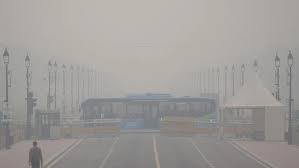
Air quality in Patna deteriorated sharply on December 10, surpassing Delhi and placing the Bihar capital among the most polluted cities in the country. According to data from the Central Pollution Control Board, Patna recorded an air quality index of 335 in the morning, a level classified as severe and unhealthy. At the same time, Delhi’s Dwarka station registered an AQI of 326. The highest levels in Patna were reported from Samanpura, a densely populated residential area that the Bihar Pollution Control Board has already marked as a red zone for consistently recording poor air quality.
Samanpura and nearby localities such as Ashiana, Khajpura and Raja Bazaar fall in one of the most congested parts of the city. Despite their proximity to the Patna Zoo, considered a green zone, these areas continue to experience rising levels of pollution. Officials said a combination of localised emissions and winter weather conditions has trapped pollutants close to the ground.
The problem was not confined to Patna alone. Ten other cities and towns in Bihar also reported worsening air quality as temperatures dipped. Bhagalpur recorded an AQI of 280, followed by Munger at 269, Biharsharif at 259 and Rajgir at 248. Gaya reported an AQI of 221, Araria 218, Ara 217, Hajipur 214 and Muzaffarpur 206. These levels fall under the poor category and pose health risks, especially for people with pre-existing medical conditions.
Doctors and health experts have voiced concern over the trend. Hospitals in Patna, including AIIMS, Patna Medical College and Hospital, Nalanda Medical College and Hospital and the Indira Gandhi Institute of Medical Science, have reported a noticeable rise in patients suffering from respiratory problems. Many have complained of breathlessness, chest discomfort and suspected infections. Doctors said children, senior citizens and those with chronic illness are the most vulnerable.
Officials of the pollution control board said the region’s geography and soil composition contribute to the rise in airborne dust particles. A recent assessment indicated that the shifting course of the Ganga away from Patna has increased dust circulation. Biomass burning near the city, construction activities and heavy vehicular movement have added to the pollution load.
The local administration has begun water sprinkling on major roads to settle dust and directed builders to cover construction sites. While air pollution remains a recurring issue in Bihar, the board noted that PM2.5 levels have shown a marginal decline compared to previous years, although overall air quality remains poor.
A fire in a hut in Nonapar village of Deoria district claimed three lives, including those of a...

Amit Shah paid tribute to police personnel who died in the line of duty at the National Police...

Reduced water levels at Har Ki Pauri and other Haridwar ghats have inconvenienced pilgrims during the Upper Ganga...
Six people returning from a Dussehra Mela were seriously injured when a car hit them on National Highway...

A bus travelling from Pachiound to Ramnagar fell into a gorge at Gulli Gula in Udhampur district. Nine...

Start your day with The Savera Morning Brief, bringing you the latest news from India and around the...

Aries: The day will be auspicious...