Last Updated: October 23, 2026
Last Updated: October 23, 2026





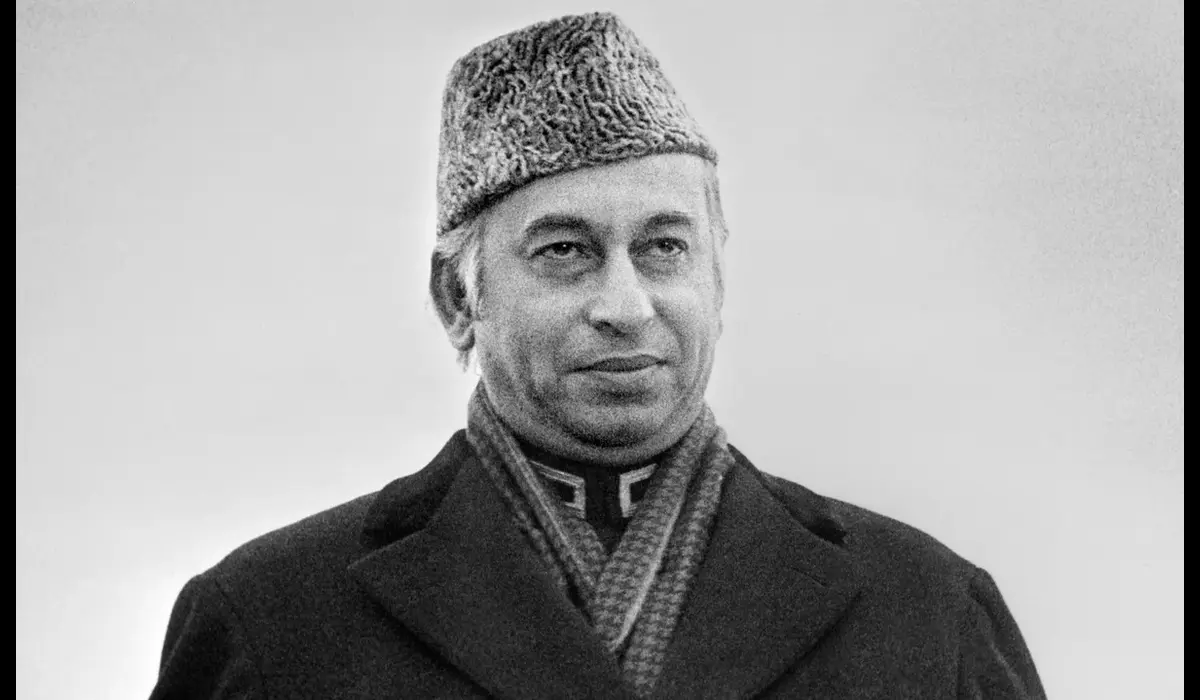
Pakistan was still reeling from the trauma of losing East Pakistan when Zulfikar Ali Bhutto assumed the presidency on December 20, 1971.
The country was facing one of the gravest crises in its history, barely days after the Bangladesh Liberation War ended with the surrender of Pakistani forces in Dhaka on December 16 and the birth of a new nation, Bangladesh.
The defeat shattered Pakistan’s political and military establishment. General Yahya Khan, who had led the country during the war, lost whatever legitimacy he had left. Public anger was widespread, protests erupted across cities, and the military’s credibility stood deeply eroded.
Under mounting pressure, Yahya Khan stepped down, paving the way for Zulfikar Ali Bhutto, leader of the Pakistan Peoples Party (PPP), to take charge. Bhutto’s rise marked a dramatic shift in Pakistan’s leadership.
He became both President and the country’s first civilian Chief Martial Law Administrator, inheriting a nation bruised by military defeat, political instability, and international isolation.
Pakistan had lost more than half its population and a significant portion of its territory. The psychological blow was immense, with national morale at its lowest and the idea of Pakistan itself under intense scrutiny.
The challenges before Bhutto were enormous. The economy was in disarray, inflation was rising, and millions of prisoners of war were still held in India. Pakistan’s diplomatic standing had suffered globally, while internally, ethnic and regional tensions threatened further fragmentation.
Bhutto moved swiftly to consolidate power, presenting himself as a strong, decisive leader capable of steering the country out of chaos. One of his first priorities was to reassert civilian authority over the military, whose dominance had shaped Pakistan’s politics since independence.
Though he retained martial law initially, Bhutto promised democratic reforms and sought to restore public confidence in civilian leadership. He also initiated steps to rebuild Pakistan’s international image, particularly by engaging diplomatically with India and other regional players.
Bhutto’s presidency marked the beginning of a transformative phase in Pakistan’s political history. He introduced sweeping reforms aimed at reshaping the country’s social and economic structure.
These included nationalisation of key industries, banks, and educational institutions, measures that were intended to reduce inequality but later sparked debate over their long-term economic impact.
His populist slogan of “roti, kapda aur makaan” resonated with the masses, helping him consolidate popular support. At the same time, Bhutto faced criticism for concentrating power and curbing dissent.
While he projected himself as a champion of democracy, his tenure also saw restrictions on political opponents and the press. Nevertheless, his leadership played a crucial role in stabilising Pakistan after its most severe national setback.
The events of December 1971 reshaped South Asia and altered Pakistan’s political trajectory permanently.
Bhutto’s assumption of the presidency symbolised both an end and a beginning: the end of a period dominated by military rulers and the beginning of an ambitious, if contentious, civilian-led effort to rebuild a fractured nation.
His legacy remains complex, but there is little doubt that his rise to power came at a moment when Pakistan stood at a historic crossroads, searching for direction after one of its darkest chapters.
Israeli Prime Minister Benjamin Netanyahu spoke with Prime Minister Narendra Modi over the phone on Thursday and invited...
Nearly 4,000 Indian pilgrims are reportedly stranded in the holy cities of Mecca and Medina in Saudi Arabia....
Yemen's Houthi rebels claimed on Thursday that their forces launched a rescue operation after Saudi Arabia attacked a...
New Delhi: India has objected to serious factual errors in the report of a United Nations (UN) Special...
Iran's Mohsen Rezaei has warned that Tehran is ready to respond if the war continues. He also said...
Prime Minister Donald Tusk on Thursday praised the strengthening relations between India and Poland, saying he is proud...
Aries: The day will be auspicious...