Last Updated: October 12, 2026
Last Updated: October 12, 2026





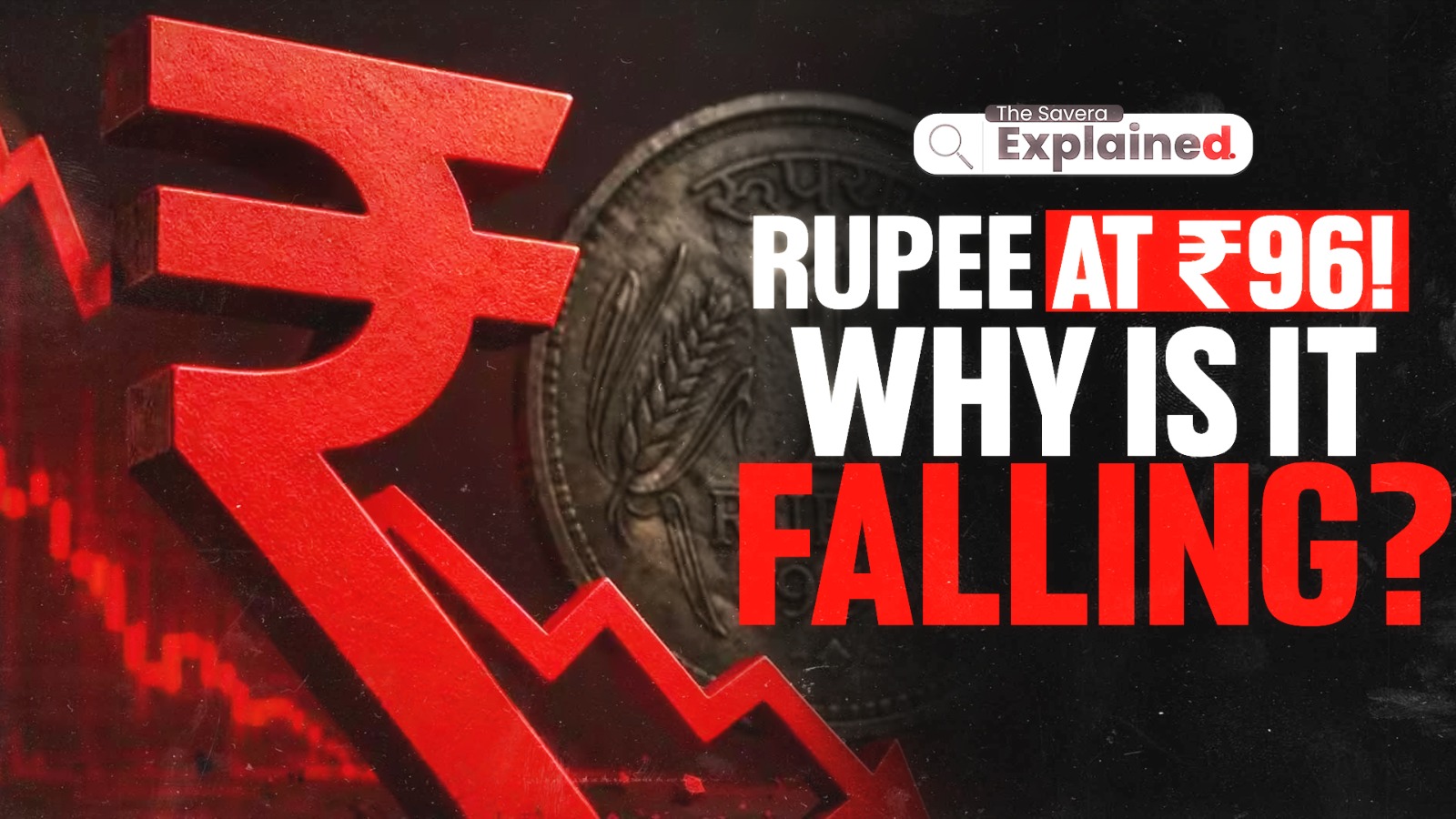
A rupee nearing Rs 96 against the US dollar is more than just a market number. For an Indian family planning a foreign holiday, paying a child’s college fees abroad or buying imported products, every fall in the rupee can mean spending more money.
To understand it simply: when $1 costs Rs 83, buying $5,000 requires Rs 4.15 lakh. But at Rs 95, the same $5,000 costs Rs 4.75 lakh. That is an additional Rs 60,000 without buying anything extra.
So, is this weakness temporary, or are Indians heading towards a new reality of a permanently weaker rupee?
Why Is the Rupee Under Pressure?
The biggest reason is India’s dependence on imported crude oil. India is one of the world’s major oil importers, and oil is largely bought in US dollars. When global crude prices rise, Indian companies need more dollars to pay for oil imports. This increases demand for dollars and puts pressure on the rupee.
Brent crude was trading above $90 a barrel during the recent pressure on the rupee, while geopolitical tensions and strong dollar demand from importers added to the weakness. On August 21, the rupee was hovering near Rs 95.70 per dollar, despite support from RBI intervention.
Global interest rates, foreign investment flows and the strength of the US dollar also play an important role. If investors move money towards dollar-based assets, demand for the dollar rises and emerging-market currencies, including the rupee, can come under pressure.
How Will It Affect the Indian Economy?
The first major impact is on imports. India imports crude oil, electronics, machinery and several other products. As the rupee weakens, these imports become more expensive in rupee terms.
Higher oil prices can also raise transport and production costs. This may eventually increase prices of goods and services, adding to inflationary pressure.
A weaker rupee can widen India’s import bill, especially if oil prices remain high. That can put pressure on India’s trade balance and current account.
However, there is another side. Indian exporters may benefit because every dollar they earn converts into more rupees. IT companies, pharmaceutical exporters and other businesses earning in dollars can see higher rupee earnings, although the actual benefit depends on their costs and currency hedging.
Foreign Travel and Education Get Costlier
The impact is immediate for ordinary consumers making payments in dollars.
Foreign university fees, hostel charges, rent and daily expenses become more expensive for Indian students. Families sending money abroad may have to increase their budgets even if the dollar amount remains unchanged.
Similarly, overseas holidays can become costlier. Air tickets, hotel bookings and forex purchases may require more rupees. For example, buying $5,000 at Rs 95 costs around Rs 4.75 lakh, compared with about Rs 4.15 lakh at Rs 83.
What Is RBI Doing?
The Reserve Bank of India has reportedly been intervening in the currency market to limit excessive volatility. Market participants have seen state-run banks selling dollars, which traders believe reflects RBI intervention.
This has helped prevent a sharper fall, even as the rupee came under pressure from high crude prices and strong dollar demand. Reuters reported on August 21 that the rupee was around Rs 95.69 per dollar, with RBI intervention helping anchor the currency.
India also has a significant buffer. Recent reports said foreign exchange reserves had risen above $700 billion, supported partly by strong foreign-currency inflows. This gives the RBI greater capacity to manage extreme volatility, although reserves cannot permanently fix all pressures on the rupee.
Temporary Shock or the New Normal?
There is no certainty that Rs 95 will become the permanent new level. The rupee had also recovered to around Rs 95.56 on August 20 before moving again near Rs 95.70 on Friday, showing how quickly global developments can change the exchange rate.
The next direction will largely depend on crude oil prices, global tensions, US interest rates, foreign investment and dollar demand.
For now, the message is clear: a weaker rupee does not mean an economic crisis, but it does make imports and dollar-based expenses more expensive. If oil prices remain elevated and global uncertainty continues, pressure on the rupee may persist. Whether Rs 95 is only a temporary shock or the beginning of a new normal will depend on how these global and domestic factors unfold in the coming months.
The Reserve Bank of India (RBI)'s new measures to curb speculation in the rupee and maintain stability in...

Gold exchange-traded funds (ETFs) witnessed a sharp rise in investor interest in September, with net inflows surging 71.4...

Rahul Gandhi accused the Modi government of protecting Chief Election Commissioner Gyanesh Kumar, criticised security restrictions in Delhi...

Chief Justice Surya Kant said every citizen can approach the Supreme Court through a petition after declining a...

A major fire broke out at a scrap warehouse opposite the Maruti Temple in Sangameshwar, Maharashtra, around midnight....

A 48-year-old man, Pawan Sharma, died after an alleged altercation over a senior citizen seat at Delhi’s Supreme...

Aries: The day will be auspicious...