Last Updated: October 10, 2026
Last Updated: October 10, 2026





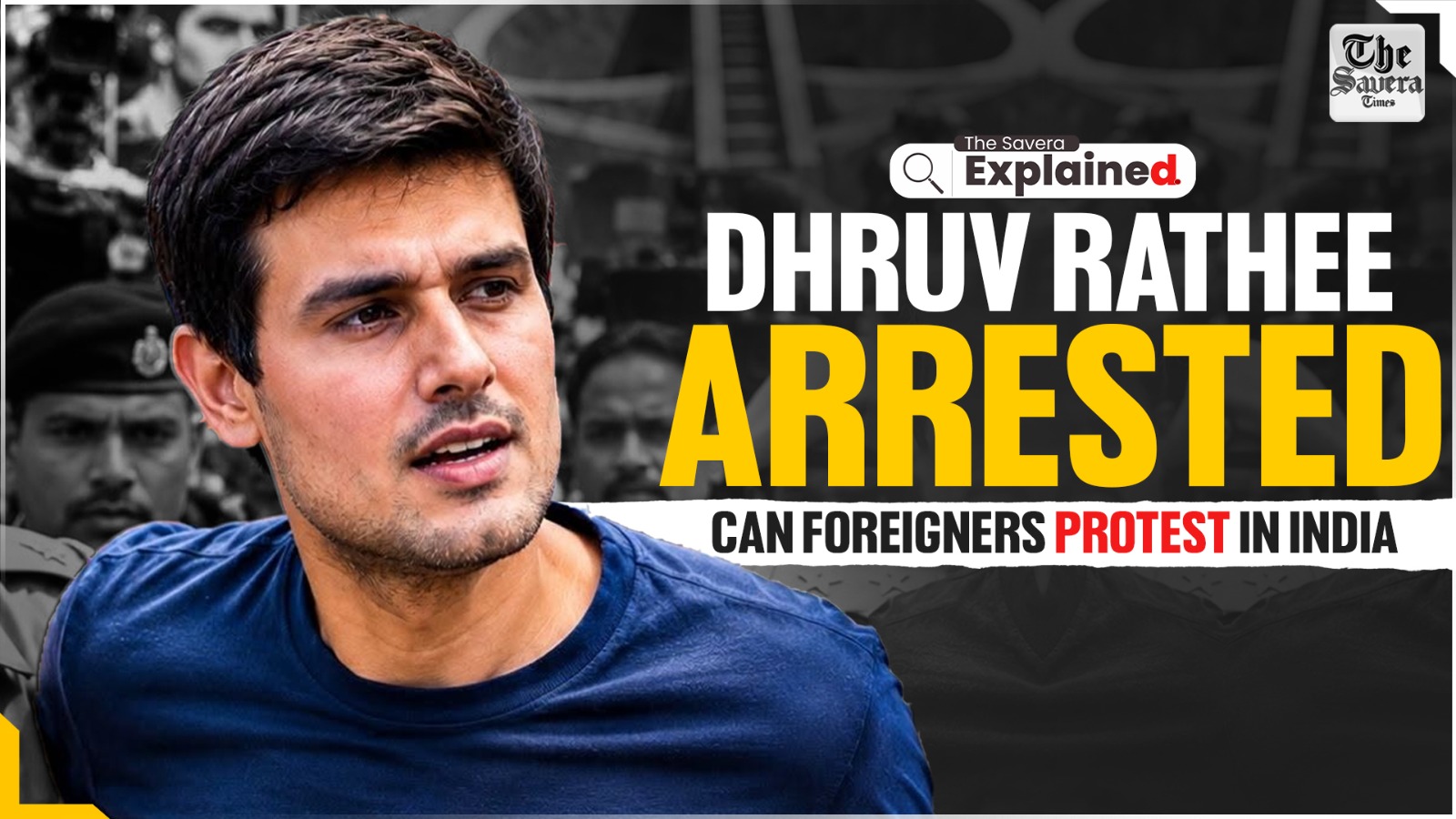
Imagine a foreign national standing among Indian citizens at a political protest, raising questions about the government or an institution. Does the law give that person the same right to protest as an Indian citizen? And can participating in a demonstration affect their permission to stay in India?
These questions have come into focus after YouTuber Dhruv Rathee was reportedly detained in Gurugram on October 10, 2026, ahead of a planned protest in Delhi. The incident has also triggered a demand for an inquiry into his citizenship and visa status.
Why Was Dhruv Rathee Detained?
Rathee had arrived in India from Germany and participated in an anti-Special Intensive Revision, or SIR, protest in Bengaluru on October 8. The demonstration raised concerns about electoral roll revisions and demanded action against Chief Election Commissioner Gyanesh Kumar.
Two days later, Rathee was reportedly detained from his Gurugram residence before the Cockroach Janta Party’s proposed protest at Delhi’s Jantar Mantar. The demonstration was called over alleged irregularities in voter lists and demands for the Election Commission’s accountability.
According to The Times of India, police cited security concerns, prohibitory orders under Section 163 of the Bharatiya Nagarik Suraksha Sanhita, and the absence of permission for the proposed protest.
Separately, former Bengaluru Police Commissioner and BJP leader Bhaskar Rao asked the Union Home Ministry to verify Rathee’s nationality, passport, immigration status and compliance with visa conditions. His request is not proof of any violation, and the reported detention should not automatically be linked to Rathee’s nationality.
What Does the Constitution Say?
The Indian Constitution makes an important distinction between citizens and other people living in the country.
Article 19 guarantees Indian citizens the right to freedom of speech and expression, as well as the right to assemble peacefully and without arms. These specific rights are not available to foreign nationals simply because they are present in India.
However, foreigners are not without constitutional protection. Article 14 guarantees equality before the law and equal protection of the laws to every person within India. Article 21 protects the life and personal liberty of every person.
In simple words, foreign nationals do not enjoy the same constitutional right to protest as Indian citizens. But government action against them must still comply with applicable law.
Can Foreigners Face Action for Joining Protests?
Yes, immigration rules can create legal consequences for foreign nationals who participate in political demonstrations, depending on their status and the conditions attached to their stay.
The Immigration and Foreigners Act, 2025, came into force on September 1, 2025. It provides the current legal framework for regulating the entry, stay and exit of foreign nationals in India.
The relevant visa conditions and permissions matter. For example, a tourist visa does not automatically allow someone to undertake every kind of activity while visiting the country. Authorities can examine whether a foreign national’s conduct breaches the conditions of their visa or other permission.
Depending on the circumstances and applicable law, violations may lead to immigration action, including cancellation of permission to stay or removal from India. However, it would be incorrect to claim that every foreigner attending any public gathering automatically breaks the law.
What Happened During the CAA Protests?
There is a precedent. In December 2019, Norwegian tourist Janne-Mette Johansson was asked to leave India after participating in an anti-Citizenship Amendment Act protest in Kochi. She had entered India on a tourist visa, and immigration authorities said her participation violated visa conditions.
Around the same time, German student Jakob Lindenthal, who was studying at IIT Madras, also faced action over participating in anti-CAA protests.
In March 2020, the Union government informed Parliament that five foreign nationals had been asked to leave India for participating in anti-CAA protests in violation of visa norms.
These cases show why immigration status and visa conditions matter when foreign nationals take part in political demonstrations.
So, Can a German Citizen Protest in India?
The answer depends on the applicable law and the individual’s immigration status. Foreign nationals do not have the same Article 19 rights as Indian citizens, and their activities must comply with the conditions governing their stay.
In Dhruv Rathee’s case, Bhaskar Rao’s request for an inquiry remains a demand for verification, not a finding of wrongdoing. Authorities would need to establish the relevant facts before determining whether any immigration rule was violated.
The larger question is not simply whether a foreigner can attend a protest. It is whether their participation complies with the law, what restrictions apply to their immigration status, and whether any action taken by authorities follows the required legal process.
Jaipur: The Anti-Narcotics Task Force (ANTF) of Rajasthan Police has arrested wanted drug smuggler Sohanlal, alias Sonu, carrying...
Aizawl: The Assam Rifles, in coordination with other law enforcement agencies, seized methamphetamine tablets and foreign-made cigarettes worth...
Kolkata: A Returning Officer (RO), acting on behalf of the Election Commission of India (ECI), has lodged a...
New Delhi: The Delhi BJP Mahila Morcha staged a protest on Saturday to demand the expulsion from Congress...
Sanaa: Saudi warplanes launched fresh airstrikes on Houthi-held areas in northwestern Yemen on Saturday as fighting intensified between...

Patna: Bihar police on Saturday detained more than 50 teaching and non-teaching staff during a protest at JD...
Aries: The day will be auspicious...