Last Updated: October 21, 2026
Last Updated: October 21, 2026





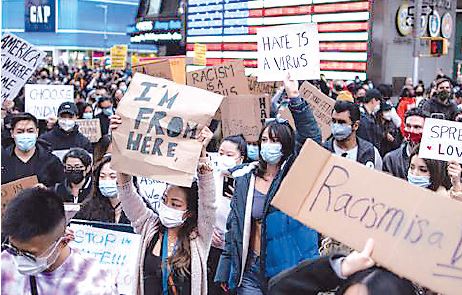
The growing unease in US–India ties is now finding reflection in American political discourse, public rhetoric, and even official policy decisions. A wave of hostile remarks, controversial policy shifts, and online campaigns against Indians and Hinduism have created an atmosphere that many commentators describe as a sharp downturn in relations. From debates over H1B visas and tariffs to accusations of India’s role in the Russia–Ukraine war, the once-courted Indian American community appears to be facing an unexpected backlash.
The contrast with 2024 is striking. Then, the conservative coalition around Donald Trump and his running mate J.D. Vance promised a return to “American greatness.” The Maga campaign projected itself as inclusive, appealing not only to white working-class voters and Christian conservatives, but also to immigrants of colour. High-profile Indian American voices such as Tulsi Gabbard and Vivek Ramaswamy were highlighted as proof of this diversity. But that rhetoric seems distant today. Critics have begun coining a new phrase—“Miga,” or “Make Indians Go Away”—to describe the prevailing mood.
Disappointment and Blame
The reasons for this downturn are contested. Some Indian commentators fault New Delhi for failing to accommodate American demands, while others argue that Washington is envious of India’s growing global influence. Indian media discussions often shift focus to the diaspora, questioning why influential Indian Americans have not lobbied harder on issues such as tariffs. Shashi Tharoor recently remarked that several US politicians admitted they had received no outreach from Indian American constituents on the matter.
On social media, disillusionment is widespread. Once-celebrated Indian American corporate leaders are now criticised for silence. At the same time, there is a renewed call for India to strengthen its own technology sector and reduce reliance on foreign goodwill. Allegations of religious bias have also grown sharper, with Hindu groups condemning what they see as targeted mockery—most recently triggered by a Republican politician’s derogatory remarks about a Hanuman statue in Texas.
Why “Because They Can”
One explanation advanced by observers is that hostility persists simply because it can. Over decades, a set of cultural myths and tropes about India and Hinduism have been normalised across Western institutions. This makes Indians an easy target, regardless of political shifts in Washington. What began as casual stereotyping has evolved into a systematic narrative where attacks—true or false—carry little cost for those making them.
Analysts describe this as a form of social engineering. Propaganda, they argue, functions by demanding compliance and shaping behaviour through stories, images, and pressures in schools, workplaces, and public discourse. For India and its diaspora, the lack of investment in cultural production has left them vulnerable. While Indians dominate STEM fields and management, they have not built a strong presence in media, arts, or cultural industries that shape perceptions.
Culture at the Core
This imbalance is crucial. In both the US and India, cultural narratives often drive politics rather than the other way around. In America, universities, media, and corporations have leaned liberal for decades. Conservatives have attempted counter-campaigns, but cultural definitions of inclusiveness and tolerance remain powerful. Within this contested landscape, Indians and Hindus find themselves criticised from both sides of the political spectrum.
Moreover, culture is not merely a by-product but a deliberately crafted system. It functions as an assembly line of narratives designed to assert control. Indians, accustomed to engaging with culture as consumers rather than producers, often underestimate its influence. The result is that powerful institutions in the US can frame India’s image with little resistance.
Old Tropes, New Guises
The persistence of anti-India narratives is not new. Katherine Mayo’s infamous 1927 book Mother India depicted Hindus as diseased and degenerate, feeding into early 20th-century American anxieties about immigration. Nearly a century later, similar tropes resurface in modern guises. Films such as Slumdog Millionaire portrayed Hindus as violent aggressors during communal riots, echoing stereotypes that reappeared in coverage of the 2008 Mumbai attacks.
Examples abound in recent years. Western newspapers carried alarming but unverified headlines about India allegedly stripping 200 million Muslims of citizenship. Academics have used fabricated references to paint Hindu texts as misogynistic. Politicians have made sweeping, fact-free claims, such as suggesting that no Muslims remain in Gujarat after 2002. These narratives gain traction not because of evidence but because they fit pre-existing storylines familiar to Western audiences.
The Power of Attention
The key to such propaganda lies not in truth but in attention. Outrage, whether in agreement or disbelief, sustains the narrative. Recent US election cycles showed how even absurd claims—like allegations about immigrants eating household pets—could dominate public conversation. In the case of Indians, the lies have often been subtler but no less damaging.
Accusations have included false claims about mass sterilisation of immigrants by an Indian American doctor, later proven defamatory, and speculative reports about Indian women seeking premature deliveries in the US to secure citizenship advantages. Each incident reinforced an image of Indians as dishonest or exploitative, regardless of subsequent corrections.
A Special Target
What stands out is that this treatment has become uniquely directed at India and Hindus. While US public discourse has grown more cautious about offending other minority groups, hostile statements about Indians often carry no professional or political cost for those making them. Analysts describe this as a “reverse MFN” status—“Maliciously Fib-about-able Nation”—where fabrications are tolerated and even rewarded.
This normalisation reflects a deeper cultural dynamic. For centuries, Western narratives have revolved around dividing people into heroes, martyrs, and villains. Modern propaganda recycles these tropes, recasting groups into roles that serve political or ideological goals. Indians, who once fit the image of a pitiable third-world nation in need of saving, are now portrayed as obstacles, threats, or villains.
The Road Ahead
For India and its diaspora, the challenge lies in recognising that these are not random missteps but part of an entrenched system of perception. Political lobbying, economic strength, or electoral participation alone may not suffice to counter it. A serious engagement with cultural production—through media, scholarship, arts, and storytelling—may be essential to shift narratives.
The present downturn in US attitudes towards Indians cannot be dismissed as temporary friction. It represents the convergence of long-standing stereotypes, electoral calculations, and the absence of counter-narratives. Unless Indians learn to engage with culture not just as consumers but as creators, the label of “Miga” may linger far longer than the promise of “Maga.”
Start your day with The Savera Morning Brief, bringing you the latest news from India and around the...

Union Home Minister Amit Shah will pay tribute to police martyrs at the National Police Memorial in New...
Four more people, including two women, have been arrested in the Tiger Shroff firing case. Delhi Police are...

We are very proud that at present India is the number one country in the world by surpassing...
Every investor wants the wealth-creating power of equity and the reassuring stability of debt. Balanced Advantage Funds attempt...

Tourism is a major source of government revenue in our country. There are different types of tourism. Scenic...

Aries: The day will be auspicious...