Last Updated: November 24, 2026
Last Updated: November 24, 2026




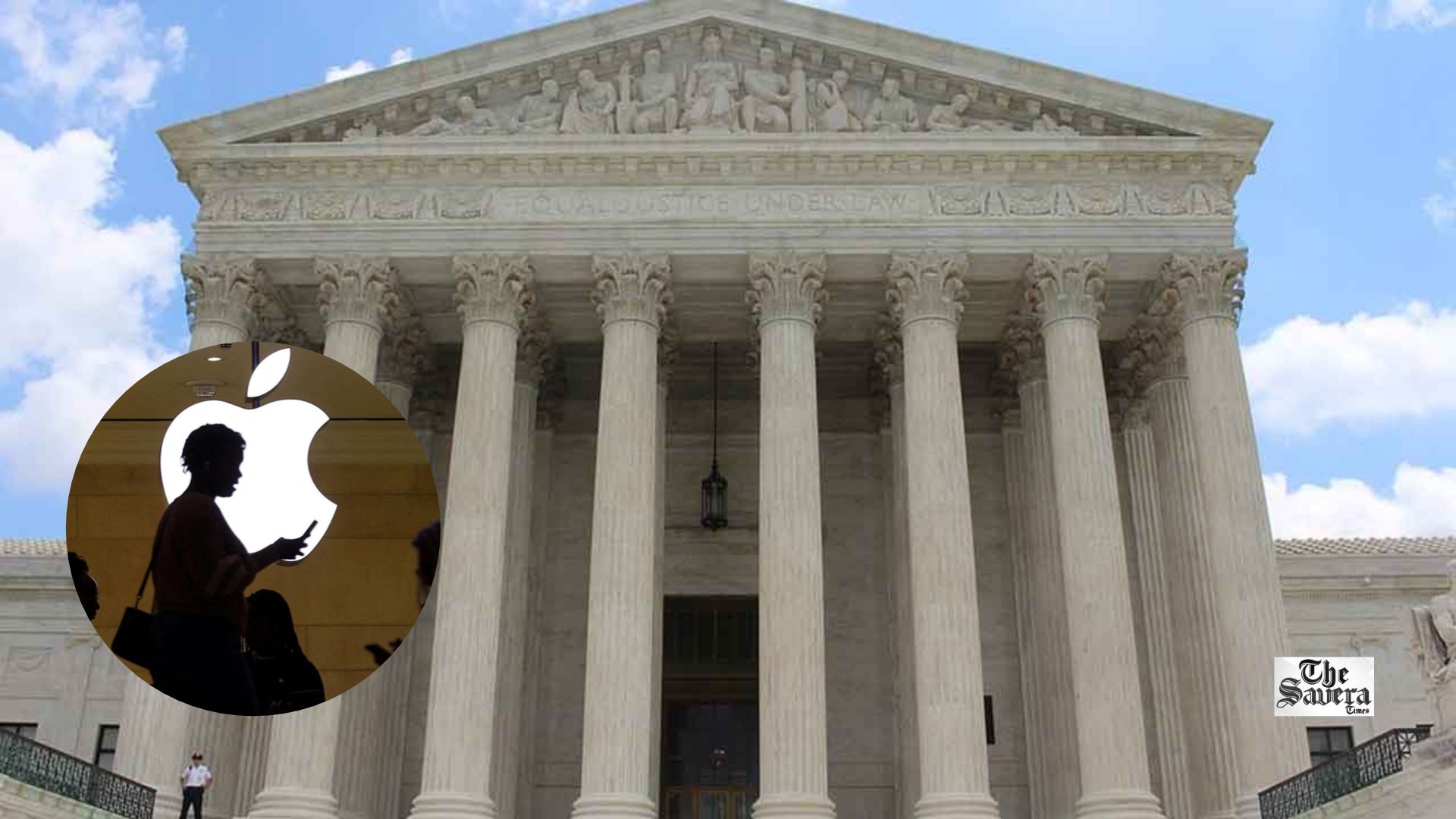
Washington: A bipartisan coalition of 32 US states and the District of Columbia has urged the US Supreme Court to uphold a civil contempt finding against Apple in its legal dispute with Epic Games. The states argue that companies should not be allowed to bypass court orders by making minor changes to their business practices.
The intervention concerns Apple’s restrictions on app developers directing customers towards payment options outside its own payment system. The states have warned that weakening the enforcement of court orders could affect their ability to protect consumers in other competition-related cases.
California Attorney General Rob Bonta announced his participation in the coalition on Monday. According to the Supreme Court docket, the coalition submitted its brief on November 20. Oral arguments in Apple’s appeal are scheduled for January 11, 2027.
“No matter the individual or the business, complying with court orders is not optional,” Bonta said in his announcement.
How Did the Apple-Epic Legal Dispute Begin?
The dispute originated in 2020 when Epic Games filed a lawsuit challenging Apple’s App Store practices.
A federal district court found that Apple’s restrictions on directing customers towards alternative payment methods violated California’s Unfair Competition Law. The court subsequently issued an injunction requiring Apple to make changes to its practices.
These restrictions are known as “anti-steering” rules. They determine whether app developers can inform users about alternative ways to purchase digital goods and services, potentially at lower prices, outside Apple’s payment system.
However, according to Bonta’s office, Apple later introduced fees and restrictions that undermined the relief developers were supposed to receive under the court’s order.
The district court subsequently held Apple in civil contempt. The company is now challenging that finding before the Supreme Court.
Apple Says Court Order Did Not Prohibit Commissions
Apple has argued that a company cannot be held in contempt unless the court order clearly prohibits the conduct in question.
In its Supreme Court brief, the company said the injunction prevented it from prohibiting developers from including buttons, external links and other calls to action directing users to alternative payment options.
However, Apple argued that the order did not address commissions and that it complied with the injunction by allowing developers to include such links.
The company also contends that lower courts relied on the broader purpose of the injunction rather than its specific wording. According to Apple, there was at least reasonable doubt over whether its actions violated the court order.
32 States Urge Supreme Court to Uphold Contempt Finding
The coalition of 32 states and the District of Columbia has rejected Apple’s interpretation.
In their brief, the states argued that competition-related court orders must be interpreted in their broader context. They said companies should not be allowed to recreate the same harmful practices through slightly different methods.
Led by Utah, the coalition includes California, Florida, New York, Oklahoma and Louisiana, among other states.
The states have asked the Supreme Court to uphold the civil contempt finding against Apple. Alternatively, if the court changes the applicable legal standard, they want the case sent back to the lower courts for reconsideration.
The filing is an amicus brief, which means a submission by parties that are not directly involved in a case but offer arguments to assist the court. It does not represent a new judgment against Apple.
The Supreme Court agreed in June to review the civil contempt question. During the January hearing, the justices will examine the legal standard for enforcing the injunction.
Both Apple and the coalition of states argue that the outcome could have implications beyond their ongoing dispute.
The Chamber of Trade and Industry has warned that proposed BS-VI vehicle entry restrictions and a commercial vehicle...

The Baloch Liberation Army has claimed that 20 Pakistani military personnel and alleged operatives were killed in a...

Indian stock markets will remain closed on Tuesday for Guru Nanak Jayanti. While NSE and BSE will suspend...

Former Bangladesh Prime Minister Sheikh Hasina has announced plans to return from India on December 16, urging the...

A 5.3-magnitude earthquake struck near Lelep in Nepal's Koshi Province on Tuesday morning. Tremors were felt across parts...

Nvidia CEO Jensen Huang received an enthusiastic welcome from employees at the company's California headquarters after being reinstated....

Aries: The day will be auspicious...