Last Updated: October 15, 2026
Last Updated: October 15, 2026





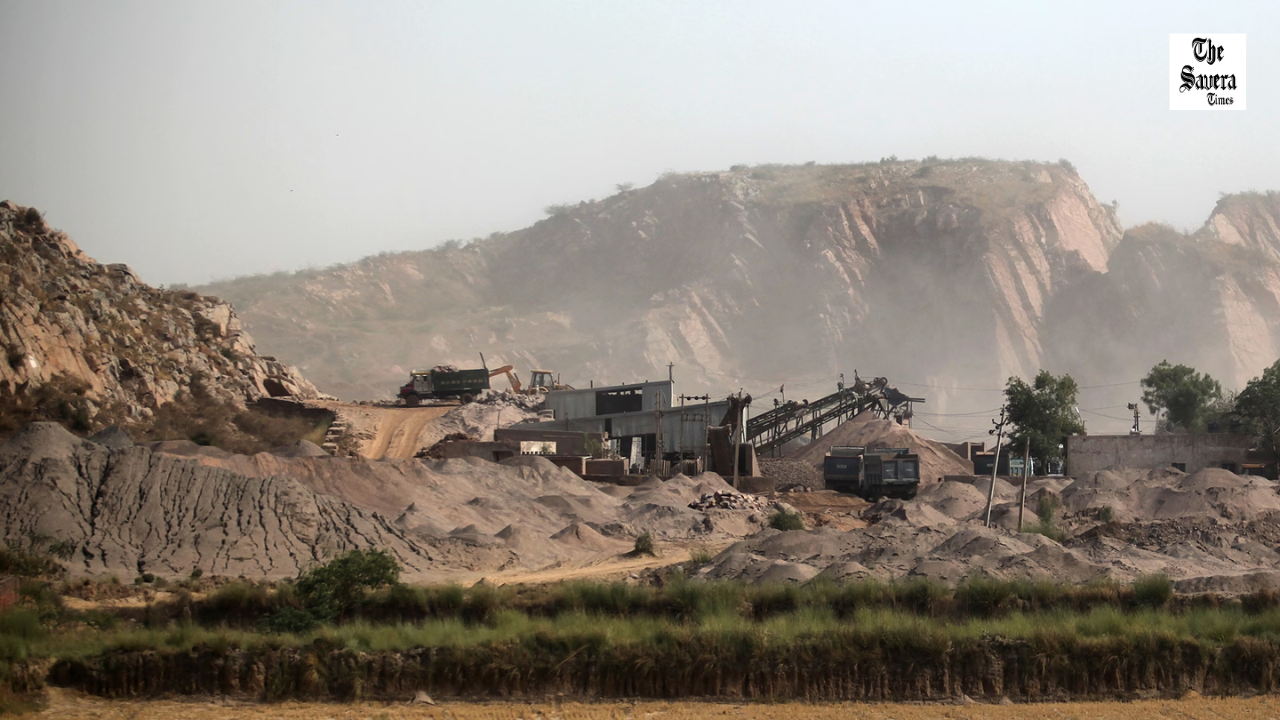
A recent official analysis has found that applying a newly accepted definition of a major hill range in northern India could expose nearly half of its total area to legal mining activity, triggering fresh alarm among environmental observers. Under this revised benchmark, only landforms that rise at least 100 metres above the surrounding terrain are classified as part of the hill system.
When this criterion was applied across more than thirty thousand square kilometres of mapped landscape, roughly 49 per cent of land previously assumed protected no longer met the threshold and could thus fall outside strict mining safeguards.
Critics argue this change risks undoing decades of conservation effort aimed at safeguarding one of the region’s most important ecological systems. The hill range in question plays a vital role in groundwater recharge, acts as a natural climate buffer against desertification, and supports rich biodiversity. Smaller ridges, foothills and low‑lying slopes, which fall below the new height cutoff, perform crucial environmental functions despite not qualifying as “hills” under the revised definition. These areas help stabilise soil, regulate surface water flow and support ecosystems that sustain local communities.
Good Afternoon Viewers! Stay updated with The Savera Times Afternoon Bulletin, bringing you the latest news from Punjab,...

New Delhi: Heavy rain and thunderstorms swept parts of Delhi-NCR on Thursday as dark clouds covered the national...
A street vendor has approached the Delhi High Court seeking to stop the Cockroach Janata Party (CJP)'s protest...
Suva: India and Fiji on Thursday held discussions focused on deepening bilateral ties and reaffirmed their shared commitment...

Bokaro (Jharkhand): The protest by trained youth from displaced families affected by the Bokaro Steel Plant (BSL) intensified...
Varanasi: Uttar Pradesh Chief Minister Yogi Adityanath, on a two-day visit to Varanasi, honoured sanitation workers from the...

Aries: The day will be auspicious...