Last Updated: September 22, 2026
Last Updated: September 22, 2026





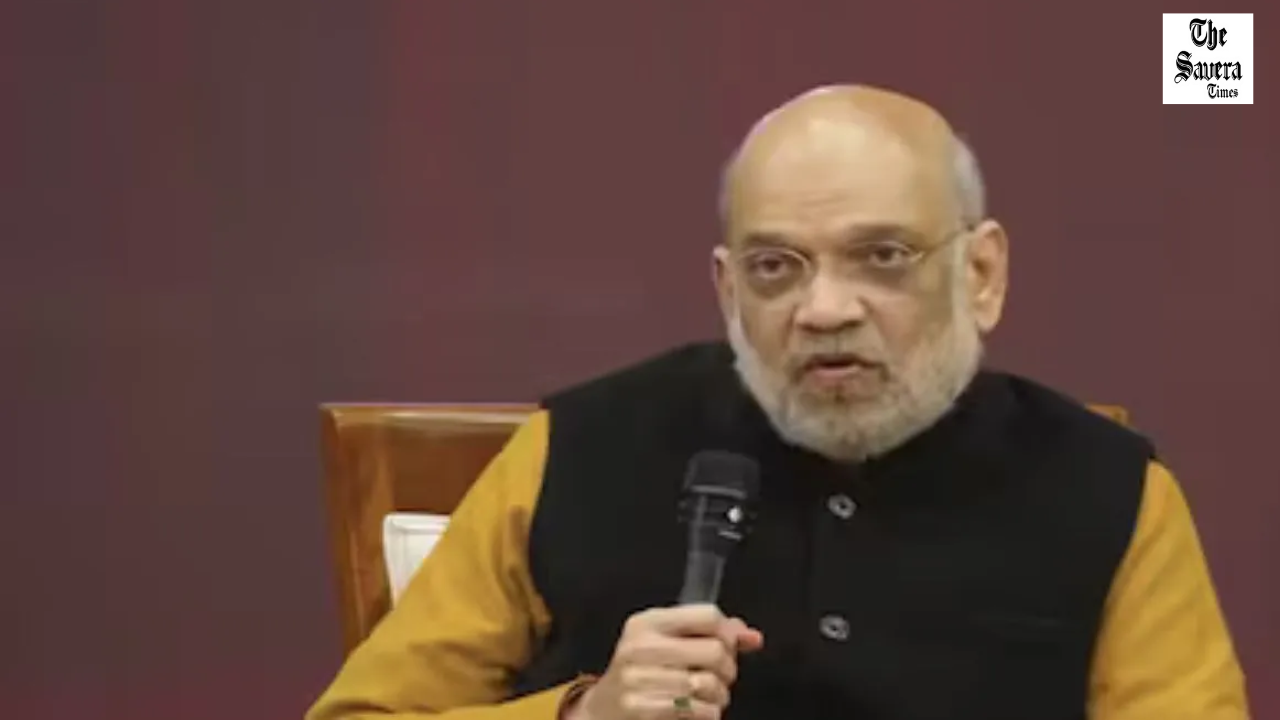
Union Home and Cooperation Minister Amit Shah on February 23, 2026, announced that the government-backed ride-hailing platform Bharat Taxi will return 80 % of its profits to taxi drivers, promising a significant shift in how earnings are shared in India’s taxi ecosystem. Speaking directly to drivers referred to as “Saarthis” Shah emphasised the platform’s cooperative, driver-owned structure and urged participants to be patient as the model grows over the next three years.
Unlike conventional platforms where large portions of earnings are retained by companies as commission or platform fees, Bharat Taxi seeks to reverse that model. In this cooperative setup, drivers invest a nominal ₹500 membership fee, become stakeholders, and stand to benefit from profits generated by the business. Shah explained that if the platform earns, for example, ₹25 crore, ₹5 crore (20 %) will be set aside for the cooperative’s capital needs, while the remaining ₹20 crore (80 %) will be distributed back to drivers based on their kilometres driven.
Bharat Taxi is being positioned as India’s first cooperative ride-hailing service, registered under the Multi-State Cooperative Societies Act, 2002, and supported by major cooperative organisations including Amul, IFFCO and NABARD. The platform aims to compete with private aggregators such as Uber, Ola and Rapido by offering transparent fares, zero commission and no surge pricing features that Shah says benefit both drivers and passengers.
In his address, Shah highlighted the philosophical basis of the cooperative approach: “The concept is that the one who works hard should get the profit, not some rich man.” He underscored that, unlike private companies focused primarily on enriching owners or shareholders, Bharat Taxi is designed so that drivers are the owners and share directly in any profit.
Under this model, in the initial phase drivers will continue to receive fixed rental income for their vehicles while the platform stabilises. Once the system matures over a projected three-year period drivers will start receiving profit shares in addition to their regular income.
Apart from profit distribution, the cooperative model includes several driver welfare measures. Bharat Taxi offers health and accident insurance coverage, financial support options like car loans, and in-app support services for Saarthis. Drivers are also free to work on other platforms, as there is no exclusivity requirement, ensuring they retain flexibility.
The platform also emphasises fair pricing for passengers, with no surge pricing during peak hours — a long-standing concern for cab users in India. Under its fare structure, riders pay fixed charges for initial blocks of distance and time, with reasonable per-kilometre rates thereafter.
Shah outlined that Bharat Taxi, which began with a pilot in Delhi-NCR and Gujarat, plans to expand nationwide within three years. The vision includes onboarding millions of drivers as cooperative members to help reshape the mobility sector in India.
Shah encouraged drivers to embrace the cooperative principles, assuring them that the cooperative model would ensure transparent accounts and shared decision-making. He also stressed that as owners, Saarthis would have representation in the platform’s governance and board, further empowering them in the business.
Bharat Taxi’s model directly challenges the gig economy model prevalent in the ride-hailing industry, where many drivers often feel disadvantaged by high commissions and surge pricing. Its cooperative profit-sharing structure could compel existing players to rethink their driver compensation frameworks if it gains widespread adoption.
Shah’s announcement marks a major push towards a driver-first economy within digital mobility, aiming to balance fair earnings with broader accessibility and affordability for passengers. As the platform scales, its success could influence policy and industry standards across India’s transport sector.
The collective knowledge of digitization, computers, and the power of the internet is proving artificial intelligence to be...

Over 12.22 crore individual toilets have been built in rural households across India, and 98,273 biogas plants have...

The chief ministers of Uttar Pradesh, Uttarakhand, Himachal Pradesh, Rajasthan, Delhi and Haryana signed an agreement on September...

As Brussels moves the trade agreement between India and the European Union (EU) towards signature, India and Italy...

India’s festive hiring is expected to rise 15–20 per cent this year, with the 2026 festive season likely...

Stay updated with the biggest India and world headlines, breaking news, political developments, business updates, sports and other...

Aries: The day will be auspicious...