Last Updated: October 16, 2026
Last Updated: October 16, 2026





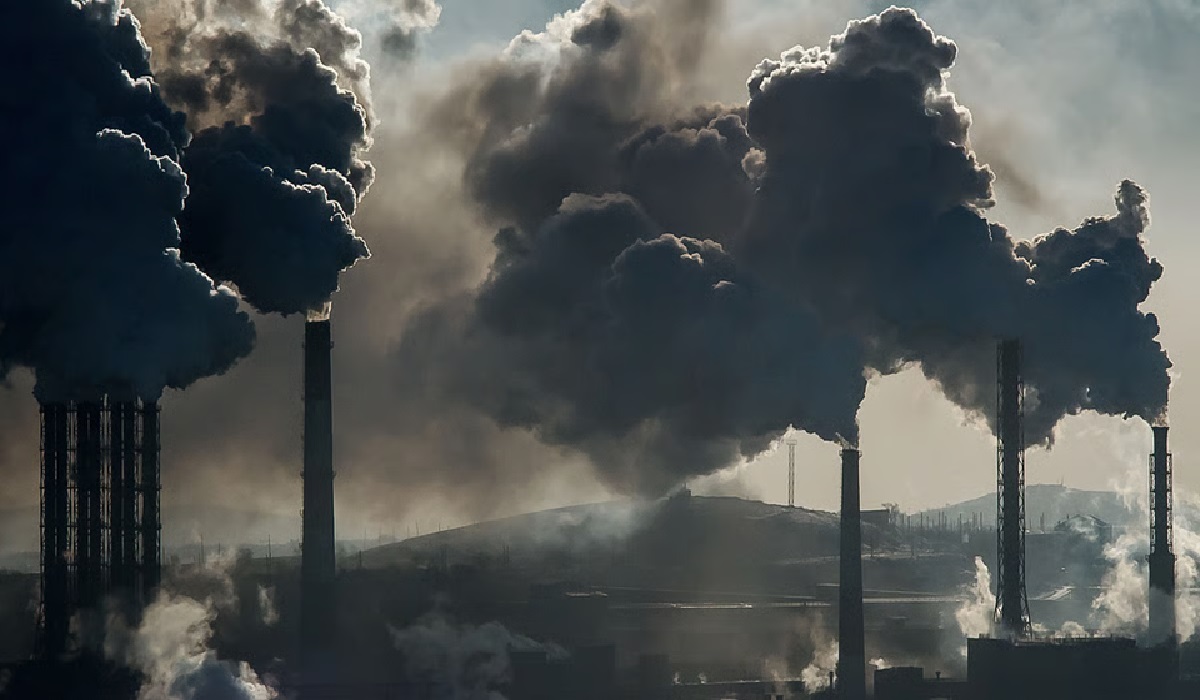
India, home to more than 1.4 billion people and some of the world’s most polluted cities, could avert a massive public health crisis through decisive climate action. A groundbreaking study by the Euro-Mediterranean Centre on Climate Change (CMCC) suggests that adopting stringent global climate policies could prevent up to 207,000 premature deaths annually in India by 2030 — a powerful reminder that climate action is not just an environmental necessity but an urgent public health imperative.
Air pollution is already one of India’s deadliest problems. It contributes to an estimated 1.6 million deaths each year, making it one of the world’s largest causes of premature mortality. From the smog choked streets of Delhi to the industrial belts of Maharashtra and the coalfields of Jharkhand, millions breathe air that is several times more toxic than World Health Organization (WHO) safety limits.
The CMCC research, published in Science Advances, quantifies for the first time how strong climate mitigation — limiting global temperature rise to below 1.5°C as set by the Paris Agreement — could yield significant health and economic benefits within just a few years. “Our analysis shows that stringent climate policies deliver immediate, measurable benefits,” said lead author Valentina Bosetti of CMCC. “Improving air quality by cutting fossil fuel use saves lives and strengthens economies — especially in densely populated regions.”
The findings reveal that countries with dense populations and high air pollution levels, such as India and China, stand to gain the most from strong climate policies. The researchers used a sophisticated global air pollution model linking emission reduction pathways to air quality improvements, health outcomes, and economic gains. According to the study, improvements in air quality alone could save up to 2 per cent of global GDP in avoided losses by 2030. For India, this means potentially saving billions of dollars in healthcare costs, boosting worker productivity, and protecting millions of citizens from respiratory and cardiovascular diseases.
The study reframes climate action not just as an environmental or moral challenge, but as a smart economic strategy. Cutting fossil fuel emissions reduces both pollution-related deaths and long-term climate risks — what experts call a “double dividend.” “While many discussions on climate policy focus on long-term benefits like slowing sea-level rise or preventing extreme weather, this research shows that the gains are much more immediate,” Bosetti explained.
“The benefits of mitigation are not decades away — they’re tangible within years. ”In India’s case, adopting stronger emission controls, investing in clean energy, and tightening regulations on transportation and industry could all yield measurable payoffs within the next decade. India has already taken significant steps toward a low-carbon future. The government has committed to achieving net-zero emissions by 2070, expanding renewable energy capacity to 500 GW by 2030, and reducing the carbon intensity of its economy by 45% from 2005 levels.
Initiatives such as the National Clean Air Programme (NCAP), Mission LiFE (Lifestyle for Environment), and aggressive solar and wind expansion are examples of efforts that align both climate and health goals. However, experts say that implementation and enforcement remain key challenges. Despite ambitious targets, India’s air quality remains among the worst in the world, particularly in northern cities like Delhi, Ghaziabad, and Lucknow, where winter smog often pushes Air Quality Index (AQI) readings to “severe” levels.The CMCC study’s message is clear: the cleaner the air, the healthier the population.
By cutting emissions from power plants, vehicles, and heavy industry, India can dramatically lower particulate matter (PM2.5) levels — the fine particles that penetrate deep into lungs and cause respiratory and heart diseases. Strong mitigation policies can also reduce hospital admissions, lower healthcare expenditures, and improve worker productivity. “Reducing air pollution is not just about saving lives — it’s about improving quality of life and supporting economic growth,” said Bosetti. The study also emphasizes the importance of global cooperation.
Developing countries like India, which have contributed relatively little to historical carbon emissions, face some of the most severe consequences of climate change and pollution. For the Global South, integrating air quality and climate policies is not just a policy preference — it’s a survival strategy. Cleaner air means healthier citizens, stronger economies, and reduced pressure on fragile healthcare systems.
Experts argue that global climate financing mechanisms — including technology transfers, green investment funds, and carbon markets — must prioritize such countries. “Climate justice must translate into climate investment,” said a senior CMCC researcher. “The nations most affected should not be the last to benefit.” The findings highlight that stringent climate policies deliver results far sooner than many expect. Reductions in air pollution can occur within months of cutting emissions, while health improvements and economic gains follow closely after.
For India, this presents a historic opportunity. The world’s most populous nation can simultaneously fight climate change, improve public health, and strengthen its economy — all through the same policies.
Varanasi: A massive explosion triggered the collapse of a two-storey building in Uttar Pradesh’s Varanasi on Thursday, leaving...

Sofia: A vessel sailing under the flag of San Marino caught fire in the Black Sea near Romania...

New Delhi: Accusing the Congress of double-speak on women dignity, the Bharatiya Janata Party (BJP) Mahila Morcha on...

New Delhi: NITI Aayog’s Frontier Tech Hub released a Data Centre Evaluation Framework to help states plan for...
New Delhi: The Supreme Court on Thursday referred the cheque dishonour cases against actor and comedian Rajpal Yadav...

Mirzapur: Uttar Pradesh Chief Minister Yogi Adityanath on Thursday accused the Samajwadi Party (SP) and the Congress of...
Aries: The day will be auspicious...