Last Updated: October 20, 2026
Last Updated: October 20, 2026





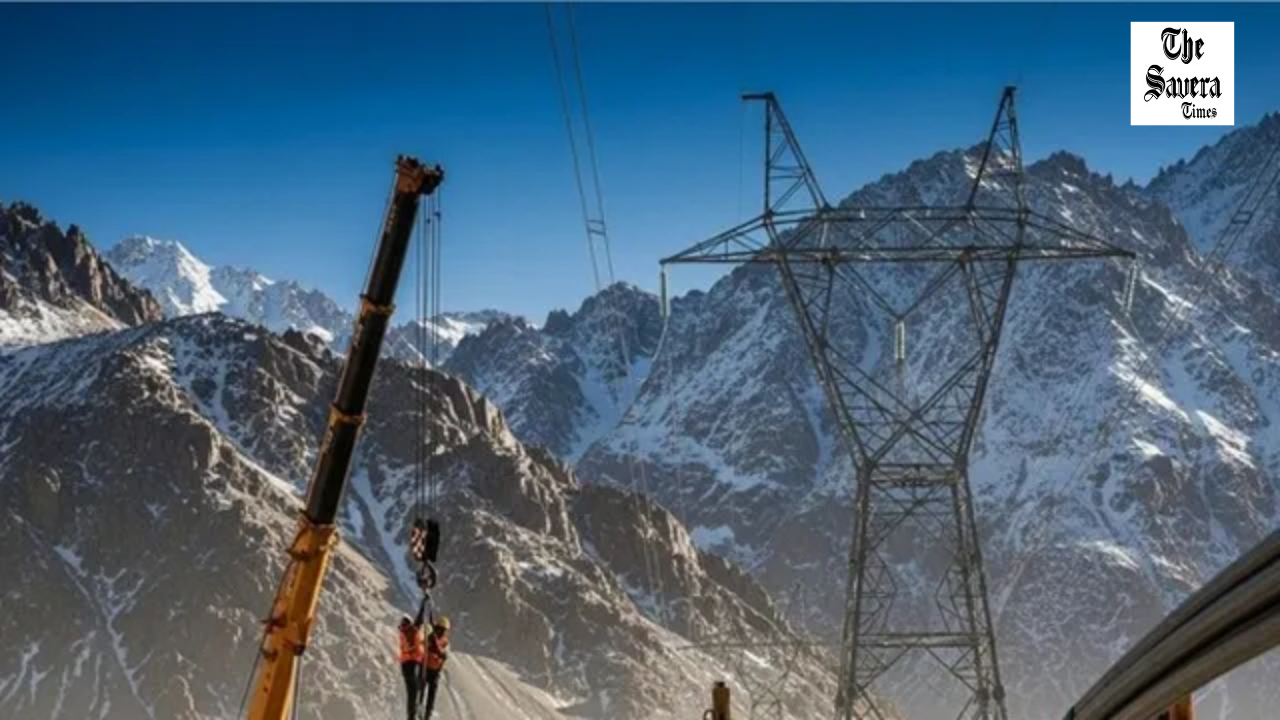
New Delhi: Ladakh is set to witness a major transformation in its power infrastructure as three strategically significant transmission projects, worth ₹1,925 crore, are targeted for completion by September this year. The projects are expected to provide round-the-clock electricity to remote border regions, reduce dependence on diesel generators, and strengthen the Union Territory’s energy security.
The projects are being implemented under the Prime Minister’s Development Package (PMDP) and were recently reviewed by Lieutenant Governor V.K. Saxena. Officials from REC Limited and the Ministry of Power briefed the Lieutenant Governor on the progress of the works and assured that construction is moving as per schedule.
Strategic Border Areas to Get Reliable Power
Among the key projects are the construction of a 189-km 220 kV transmission line from Drass to Padum and a 79-km 220 kV transmission line from Phyang to Diskit. These transmission corridors will provide uninterrupted electricity to strategically important regions such as Padum in Zanskar and Siachen Base Camp in Nubra, where power supply has largely depended on diesel-based generation.
Once completed, the projects will connect six of Ladakh’s seven districts to the national power grid, with only Changthang remaining outside the grid network until future expansion works are completed. The improved connectivity is expected to significantly strengthen both civilian infrastructure and strategic defence installations in border areas.
New Substations to Strengthen Grid
To ensure reliable power distribution, multiple substations are also being developed under the project. Four substations will be established across the Zanskar Valley, while two additional substations are planned at Siachen Base Camp and Partapur in Nubra.
Officials also informed that an extensive 66 kV transmission network has been proposed for Changthang, including substations at Durbuk, Phobrang, Chushul, Mudh-Nyoma, Korzok, Hanle, Koyul and Chumathang. These projects aim to provide stable electricity to some of the most remote and sparsely populated regions of Ladakh.
Diesel Dependence to Reduce
At present, several parts of Nubra, Zanskar and Changthang rely on local diesel generator stations, resulting in limited and intermittent power supply. The new transmission network will gradually phase out diesel-based generation, ensuring cleaner, more reliable and cost-effective electricity.
Officials said uninterrupted electricity will improve healthcare, education, tourism, digital connectivity, local businesses and overall quality of life while supporting economic development in remote Himalayan regions. The enhanced transmission infrastructure is also expected to facilitate future renewable energy integration across Ladakh.
LG Stresses Timely Completion
During the review meeting, Lieutenant Governor V.K. Saxena directed all executing agencies to complete the projects within the stipulated timeline. He emphasised that reliable electricity is essential not only for public welfare but also for strengthening strategic border infrastructure.
Officials described the projects as a historic milestone in Ladakh’s development journey, stating that continuous electricity in remote areas will open new opportunities for tourism, entrepreneurship, digital services and defence logistics while enhancing energy security across the Union Territory.
A Srinagar-bound bus with a Jammu and Kashmir registration number was attacked with stones outside the Divine Star...

An encounter broke out in Jumgund in Jammu and Kashmir's Kupwara district after troops detected suspicious movement near...

Higher reaches of Jammu and Kashmir received the season’s first snowfall, covering Doda, Gurez Valley and Pir Ki...

Several high-altitude areas in Jammu and Kashmir have received the season's first snowfall in the past 24 hours....
Jammu: Joint security forces recovered a cache of arms and ammunition during a search operation in Jammu and...
Kashmir’s handicraft industry is on a path to revival after the turbulent years of militancy and the Covid-19...
Aries: The day will be auspicious...