Last Updated: October 21, 2026
Last Updated: October 21, 2026





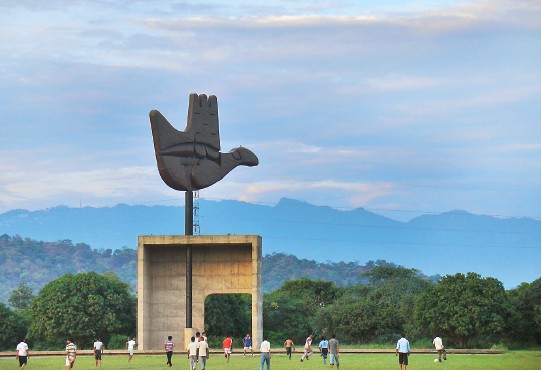
The Government of India’s clarification this week that it does not intend to introduce legislation related to Chandigarh in the current session should have a calming influence in Punjab. The announcement came after a burst of political anxiety, triggered by speculation that the Centre was preparing a constitutional amendment altering Chandigarh’s administrative standing. That anxiety was visible not only in political parties across the spectrum, but also among farmer unions and civil society networks.
However, now that the Centre has publicly denied any such move, this is an opportune moment to reset the discourse. And more importantly, to address the core concern: was Punjab right to fear the proposal in the first place?
To answer that, we must step away from slogans and step into constitutional detail.
The Legislative Knot Around Chandigarh
Chandigarh’s legislative framework is uniquely constrained. Since 1966, there have been only two ways to legislate for the Union Territory:
(1) the Centre can extend appropriate State laws under Section 87 of the Punjab Reorganisation Act, or
(2) Parliament can directly legislate for Chandigarh.
Neither route is smooth. The first, as experts note, requires searching for existing State laws suitable for extension — a difficult task that leaves “legislative gaps,” especially where modern regulations are needed. The second has been used only twice in nearly sixty years.
The explainer prepared on the subject argues that this results in outdated rules and procedural stagnation. It proposes the addition of Chandigarh under Article 240 — similar to other Union Territories — enabling a streamlined process for Central Government legislation, without altering the governance system or its relationship with Punjab and Haryana.
Critically, the explainer states what the proposal would not do:
it would not change the administrative or governance structure of Chandigarh;
it would not affect Punjab’s historical relationship with the Union Territory;
it would not remove the Governor of Punjab as ex-officio Administrator;
and it would not disturb day-to-day administration.
If this is indeed the scope of the amendment, then its purpose appears techno-administrative, not territorial or political.
Why Then Did Alarm Spread?
Punjab’s anxiety is not born of this proposal alone.
It is cumulative.
The state has long viewed developments around Chandigarh through the lens of historical commitments and unrealised expectations. Chandigarh is the emotional and constitutional residue of the Punjab-Haryana bifurcation.
Add to this recent disputes:
the BBMB appointment changes, the standoff over power projects, recurring flashpoints over water, and the perception that Punjab’s institutional primacy in Chandigarh has been eroded gradually.
It is against that backdrop that political actors framed the possible amendment as part of a pattern.
In a state where distrust toward the Centre is often inherited rather than invented, the burden of reassurance always falls higher.
Clarity Matters. So Does Communication.
The Centre’s clarification is therefore necessary — but not sufficient.
Punjab needs predictability, not episodic statements.
Going forward, what is required is a structured mechanism for formal consultation on Chandigarh-related institutional changes. If amendments are contemplated in future, the communication cannot come last. It must come first. And it must come with detail.
The best antidote to mistrust is transparency.
Punjab Should Not Fear Modernisation
There is also a broader point.
Chandigarh’s governance mechanism does need reform.
No city with the complexity of Chandigarh can function efficiently without the ability to update regulations swiftly. The legislative bottlenecks identified in the explainer are real, practical and consequential.
A modern capital city cannot remain dependent on the chance availability of extendable state laws or on rare stand-alone Parliamentary interventions. Chandigarh needs regulatory agility — in land, commerce, urban planning, public services and digital governance.
Strengthening that capability does not erode Punjab’s rights.
If anything, it strengthens Chandigarh, which, in turn, strengthens Punjab’s capital ecosystem.
The Real Federal Task
For Punjab today, the more constructive approach is not to resist administrative modernisation, but to demand structured safeguards:
One, an institutionalised Centre–Punjab consultative forum for Chandigarh.
Two, a written commitment that governance structure will not be altered without state consultation.
Three, publication of a white paper on Chandigarh’s legislative gaps.
Four, consensus-based reforms as the norm, not the exception.
If these are achieved, modernization becomes compatible with trust.
A Time to Recalibrate
The Centre’s assurance gives Punjab space to step back from confrontation and step towards engagement.
Punjab must insist on clarity.
The Centre must provide it.
But fear can no longer be the frame.
Confidence must be.
Reforms for Chandigarh should not be seen as an intrusion into Punjab, but as an opportunity to untangle a six-decade-old administrative complication.
Punjab does not gain by freezing Chandigarh in 1966.
Punjab gains when Chandigarh functions at its best in 2025.
Federalism is Stronger When There Is Trust
This moment must not be wasted.
Let this episode serve as a reminder that mistrust is costly, communication is crucial, and cooperative federalism is not a slogan — it is a discipline.
Punjab should not fear the Centre.
The Centre should not surprise Punjab.
Between the two, Chandigarh deserves clarity, maturity, and constitutional coherence.
That is the path forward.
(The writer is a retired civil servant, views are personal.)
Punjab government employees are observing a two-day mass casual leave protest on October 21 and 22. The agitation...
Punjab Police have arrested seven people in a suspected drug, arms and explosives smuggling case in Amritsar. A...

Punjab has reported 404 stubble-burning incidents, with Tarn Taran and Amritsar accounting for the highest numbers. Authorities have...

The CBI has taken over the investigation into anti-drug activist Parvinder Singh Jhota’s killing in Mansa and registered...
Punjab Chief Minister Bhagwant Mann was allegedly detained for three hours at Delhi airport upon his return from...

The Punjab Vigilance Bureau (VB) during its ongoing drive against corruption in the state, has apprehended Inspector Gulshan...
Aries: The day will be auspicious...