Last Updated: October 13, 2026
Last Updated: October 13, 2026






Utah, both politically and culturally conservative, is among the states with the fewest barriers to gun ownership. Adults can openly carry firearms or conceal them without a permit, though residents between 18 and 20 face certain restrictions. While the state also issues concealed-carry permits, which some owners prefer for reciprocity with other states, no such license is required for adults to carry within Utah’s borders. (c)
The fatal shooting of conservative activist Charlie Kirk in Utah has drawn attention to the state’s permissive gun policies, though experts insist that no regulation could have prevented the deliberate, targeted attack. Kirk, a staunch advocate of gun rights, was killed on Wednesday while speaking outdoors to students at Utah Valley University in Orem.
Investigators said a high-powered, bolt-action rifle believed to have been used in the attack was discovered wrapped in a towel in a wooded area near the university. The weapon’s placement suggested it had been hidden by the shooter before or after the fatal shot. Law enforcement officials have not disclosed whether a suspect has been identified, but they confirmed that the killing appeared premeditated.
Clark Aposhian, a firearms instructor and chair of the Utah Shooting Sports Council, said Utah’s laws had no bearing on the crime. “No law allows a person to bring a rifle on a campus, climb on a roof and shoot somebody. It was wrong from the get-go,” he said on Thursday. Attorney Mitch Vilos, who specializes in Utah gun statutes, echoed that view. “This was obviously well planned,” he noted, stressing that permissive gun policies cannot be equated with facilitating assassination.
Utah, both politically and culturally conservative, is among the states with the fewest barriers to gun ownership. Adults can openly carry firearms or conceal them without a permit, though residents between 18 and 20 face certain restrictions. While the state also issues concealed-carry permits, which some owners prefer for reciprocity with other states, no such license is required for adults to carry within Utah’s borders.
“The reason we can open carry in Utah is because there’s no law that prohibits it,” Aposhian explained.
Public universities, however, are subject to some limits. At institutions such as the University of Utah in Salt Lake City, campus police are tasked with verifying that anyone openly carrying a gun possesses a valid concealed-carry permit. Utah Valley University, where Kirk was shot, has stated that it follows state law, which permits concealed carry by licensed individuals. Rifles such as the one used in the attack are not permitted on campus under state statutes.
Kirk, founder of the conservative group Turning Point USA, was responding to a question about gun violence moments before he was shot. A student in the audience asked about the number of mass shootings in the United States in the last decade. Kirk, who frequently defended expansive gun rights, replied with another question: “Counting or not counting gang violence?” Seconds later, a single rifle shot rang out, ending the event in chaos.
His death has sparked both grief and renewed debate over Utah’s gun laws. Supporters argue the state’s policies reflect its belief in individual responsibility and the right to self-defense. Critics contend that permissive regulations make it easier for firearms to circulate in public spaces.
Vilos, author of a book on Utah’s gun policy, described the legal framework as “protective gun laws.” He explained the principle behind them: “The idea is to protect the innocent, as long as you’re not doing things that would cause someone to believe that they’re being threatened by the presence of your firearm.”
While the shooting has shaken the conservative community, those familiar with Utah’s regulations caution against drawing direct connections between the state’s gun-friendly stance and the circumstances of Kirk’s killing. Both Aposhian and Vilos emphasized that no legal provision permitted a gunman to use a rifle on a campus rooftop. Instead, they described the incident as a calculated crime beyond the reach of ordinary regulation.
Kirk’s assassination has underscored the tension that surrounds gun rights in America, particularly in states like Utah that place few restrictions on ownership and carriage. For many, the attack illustrates the limits of law in preventing acts of violence that are premeditated and targeted. For others, it has reignited calls for greater scrutiny of where and how guns may be carried.
As investigations continue, Kirk’s death leaves a complicated legacy: a man who defended the right to bear arms until his final moments, killed in a state where those rights are among the most broadly protected.
A shooting occurred at a school in the French city of Aubagne on Monday.

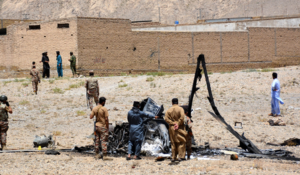
A Pakistani Army training aircraft crashed near Quetta, the capital of Pakistan's Balochistan province, on Monday.
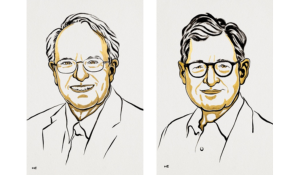
The Royal Swedish Academy of Sciences on Monday announced the 2026 Nobel Prize in Economics to American economists...
A Sudanese rights group says at least 72 gold miners were killed in an air strike near the...

US President Donald Trump is scheduled to attend the ASEAN summit in Manila on November 16 before travelling...
An Indian national injured in the October 10 attack on Riyadh’s King Khalid International Airport has died, taking...
Aries: The day will be auspicious...