Last Updated: October 16, 2026
Last Updated: October 16, 2026





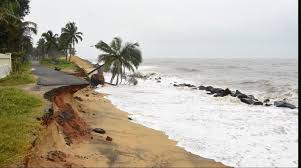
Coastal erosion is an increasingly visible consequence of climate change in India, threatening livelihoods, infrastructure, and ecosystems along the country’s 7,500-kilometer coastline. Rising sea levels, stronger storm surges, and changing rainfall patterns exacerbate the natural process of shoreline retreat, impacting coastal towns and villages in states like West Bengal, Odisha, Maharashtra, and Tamil Nadu.
Coastal erosion affects both human settlements and natural habitats. Fishing communities face loss of homes, ports, and landing sites, while agricultural lands near coasts experience salinization, reducing crop productivity. Mangroves, sand dunes, and coral reefs—natural buffers against storms—are also degraded, diminishing biodiversity and increasing vulnerability to disasters.
Urbanization intensifies erosion. Coastal cities expand into floodplains and wetlands, disrupting sediment balance and increasing vulnerability to tidal surges. Construction of sea walls, ports, and breakwaters without careful planning can accelerate erosion in adjacent areas, creating a cycle of damage. Adaptation strategies include both hard and soft engineering solutions. Hard solutions involve seawalls, groynes, and breakwaters to protect infrastructure, while soft solutions focus on restoring mangroves, planting vegetation, and replenishing beaches with sand. Integrated Coastal Zone Management (ICZM) plans encourage sustainable development and community participation, balancing human needs with ecological protection.
Climate change mitigation is crucial. Reducing greenhouse gas emissions and promoting renewable energy are long-term measures to limit sea-level rise. Coastal communities also benefit from early warning systems, disaster preparedness programs, and relocation planning to reduce human and economic losses.
Community participation plays a pivotal role. Coastal residents often have indigenous knowledge of tides, sedimentation, and seasonal patterns. Integrating local knowledge with scientific monitoring strengthens adaptation measures and ensures practical, context-specific interventions. In conclusion, climate change-driven coastal erosion is a complex challenge for India’s coastline, impacting ecosystems and human livelihoods. A combination of engineering solutions, ecological restoration, policy planning, and community engagement is necessary to protect vulnerable areas.
Varanasi: A massive explosion triggered the collapse of a two-storey building in Uttar Pradesh’s Varanasi on Thursday, leaving...

Sofia: A vessel sailing under the flag of San Marino caught fire in the Black Sea near Romania...

New Delhi: Accusing the Congress of double-speak on women dignity, the Bharatiya Janata Party (BJP) Mahila Morcha on...

New Delhi: NITI Aayog’s Frontier Tech Hub released a Data Centre Evaluation Framework to help states plan for...
New Delhi: The Supreme Court on Thursday referred the cheque dishonour cases against actor and comedian Rajpal Yadav...

Mirzapur: Uttar Pradesh Chief Minister Yogi Adityanath on Thursday accused the Samajwadi Party (SP) and the Congress of...
Aries: The day will be auspicious...