Last Updated: October 16, 2026
Last Updated: October 16, 2026





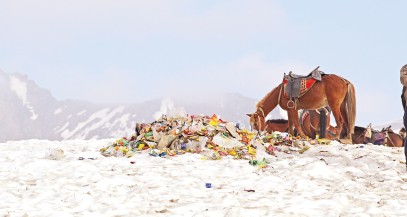
The Himalayas, often referred to as the “Third Pole,” hold the largest reserve of ice outside the Arctic and Antarctic. Stretching across South Asia, these glaciers feed some of the world’s most important river systems, including the Indus, Ganga, and Brahmaputra. For nearly two billion people downstream, Himalayan glaciers are not just frozen masses of ice; they are lifelines. Yet today, these glaciers are retreating at an alarming pace, raising serious concerns about water security, disasters, and long-term regional stability.
Scientific studies show that Himalayan glaciers are melting faster than the global average. Rising temperatures, erratic snowfall patterns, and black carbon deposition from industrial pollution are accelerating glacial loss. In some regions, glaciers have shrunk by more than 25 percent in the last few decades. What once took centuries is now happening within a generation.
Initially, glacial melting creates the illusion of abundance. Rivers swell during summer, groundwater recharge improves, and hydroelectric projects appear more viable. But this phase is temporary. As glaciers continue to shrink, the long-term flow of rivers is expected to decline, particularly during dry seasons. This phenomenon, known as “peak water,” will eventually give way to chronic shortages, especially in already water-stressed regions.
Communities living closest to the glaciers are witnessing the impacts first. In parts of Ladakh, Kashmir, Himachal Pradesh, and Uttarakhand, farmers report unpredictable water availability. Traditional irrigation systems that relied on steady glacial melt are failing. Cropping cycles are being disrupted, forcing farmers to abandon water-intensive crops or migrate in search of alternative livelihoods.Glacial retreat is also increasing the risk of disasters. As ice melts, it forms unstable glacial lakes dammed by loose debris. These lakes can burst suddenly, causing Glacial Lake Outburst Floods (GLOFs). Such events release massive volumes of water and debris, destroying villages, roads, and power projects downstream. Several Himalayan states have already experienced deadly floods linked to glacial instability, exposing the vulnerability of mountain infrastructure.
Urban centers are not immune either. Cities dependent on glacier-fed rivers face future water stress as seasonal flows become erratic. Hydropower projects, promoted as clean energy solutions, may struggle with reduced water availability and increased sediment load, affecting both efficiency and safety. This raises difficult questions about development models in ecologically fragile zones.Despite these warnings, policy responses remain fragmented. Climate adaptation strategies often overlook mountain-specific risks. Data gaps persist due to the difficult terrain and limited long-term monitoring. Moreover, local knowledge held by indigenous and pastoral communities is rarely integrated into formal planning, even though these communities have adapted to harsh environments for centuries.
Addressing Himalayan glacial loss requires coordinated action at multiple levels. Regionally, countries sharing Himalayan rivers must strengthen data sharing and climate cooperation, separating environmental survival from political disputes. Nationally, governments need to invest in glacier monitoring, disaster preparedness, and climate-resilient livelihoods. Locally, empowering communities through early warning systems and sustainable water management can reduce vulnerability.The melting of Himalayan glaciers is not a distant environmental issue; it is an unfolding crisis with direct consequences for food, water, and human security. What disappears in silence at high altitudes will be felt loudly in the plains below. The question is no longer whether the glaciers are melting, but whether societies downstream are prepared for what comes after.
Varanasi: A massive explosion triggered the collapse of a two-storey building in Uttar Pradesh’s Varanasi on Thursday, leaving...
Sofia: A vessel sailing under the flag of San Marino caught fire in the Black Sea near Romania...

New Delhi: Accusing the Congress of double-speak on women dignity, the Bharatiya Janata Party (BJP) Mahila Morcha on...

New Delhi: NITI Aayog’s Frontier Tech Hub released a Data Centre Evaluation Framework to help states plan for...
New Delhi: The Supreme Court on Thursday referred the cheque dishonour cases against actor and comedian Rajpal Yadav...

Mirzapur: Uttar Pradesh Chief Minister Yogi Adityanath on Thursday accused the Samajwadi Party (SP) and the Congress of...
Aries: The day will be auspicious...