Last Updated: October 26, 2026
Last Updated: October 26, 2026






Copper has crossed a level never seen before, while Brent crude has moved back above $100 a barrel. Together, their rise raises a bigger question: Is the world facing a new commodity supply shock?
Copper hits record high
Three-month copper on the London Metal Exchange touched a record $14,858.50 per tonne on September 10, taking its 2026 rise to about 19% and its one-year gain to roughly 48%.
Hours later, copper futures fell more than 4% after reports that the White House had not decided whether to extend tariffs to refined copper.
The rise is not because the world has run out of copper. But the market faces tighter mine supply while demand remains strong. Global copper mine output fell 1.1 per cent in the first half of 2026, according to preliminary International Copper Study Group data. Output weakness was reported in Chile, Indonesia, and the Democratic Republic of the Congo.
Five main drivers behind copper
First, mine supply is weakening. Aging mines, operational problems, and lower ore grades are making it harder to increase production.
Second, US tariff fears have distorted global trade. Traders rushed copper into the United States to get ahead of possible tariffs. That increased US inventories but reduced availability elsewhere.
Third, demand is changing. Copper is needed for electricity grids, renewable energy, electric vehicles and artificial-intelligence data centres.
Fourth, new mines take years to develop. So even when prices rise, supply cannot increase quickly.
Fifth, geopolitical and trade uncertainty is encouraging companies and traders to hold more metal, adding pressure to available supplies.
Is there really a copper shortage?
There is a shortage of mine supply, but that does not mean there is no copper available anywhere. Refined copper production increased in the first half of 2026. The problem is weaker mine supply and uneven availability. The tariff-driven movement of metal into the US has made this imbalance more visible.
Why is Brent crude rising?
Brent crude moved sharply higher. It crossed $100 a barrel on September 9 and settled at $101.21, its highest level since May, according to Reuters.
The main reason is the worsening Middle East conflict. Attacks involving Iran and the United States have disrupted oil flows and increased fears about the Strait of Hormuz, a key oil route. Oil flows through the strait have fallen sharply.
Saudi Arabia is also producing less. Its August output fell to 6.2 million barrels a day, the lowest this year, while exports fell to 3.1 million barrels a day. Houthi attacks and threats to Saudi shipping and energy infrastructure have added to supply concerns.
Five major forces behind the oil rise are Middle East conflict, disruption around the Strait of Hormuz, lower Saudi output, tight global inventories and fears of further attacks on energy infrastructure.
But oil prices have not risen even more because some supplies still move through alternative routes, non-OPEC producers are adding output, and weaker Chinese demand is limiting consumption.
What does it mean for the economy?
Copper and oil affect the economy differently. Higher copper prices increase costs for construction, electrical equipment, automobiles, and manufacturing. Higher oil prices can raise transport, fuel, power, and production costs.
For oil-importing countries such as India, expensive crude can increase the import bill, widen the current account deficit, and make inflation harder to control. India imports more than 80 per cent of its crude oil requirements.
Recent years have shown the swings in commodity prices. Brent averaged about $100.93 a barrel in 2022, fell to around $82.49 in 2023 and $80.52 in 2024, before averaging about $69.14 in 2025. Copper moved from an average of about $9,812 a tonne in the third quarter of 2025 to $11,114 in the fourth quarter and $13,318 in the second quarter of 2026.
The message is clear: the current rally is not simply a story of rising demand. It is a combination of supply constraints, trade disruptions, geopolitics, and expectations of stronger demand. If these pressures continue, commodities could remain costly, keeping inflation and manufacturing costs under pressure.
Imagine opening WhatsApp on your phone, but the SIM card linked to your account is not inside the...

Delhi’s air pollution is once again raising health concerns, with the Air Quality Index (AQI) entering the ‘poor’...

Ladakh is seeing two changes at once: a new district has been announced, and the Centre has proposed...

What if a decision taken in Washington could influence India’s oil bills, export earnings and trade relations with...

What happens when the world’s richest business leaders clash over one of the world’s biggest internet markets? A...

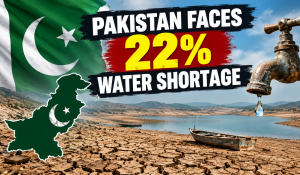
Pakistan is heading into its wheat-growing season with a serious water problem. The country is facing a projected...
Aries: The day will be auspicious...