Last Updated: October 23, 2026
Last Updated: October 23, 2026





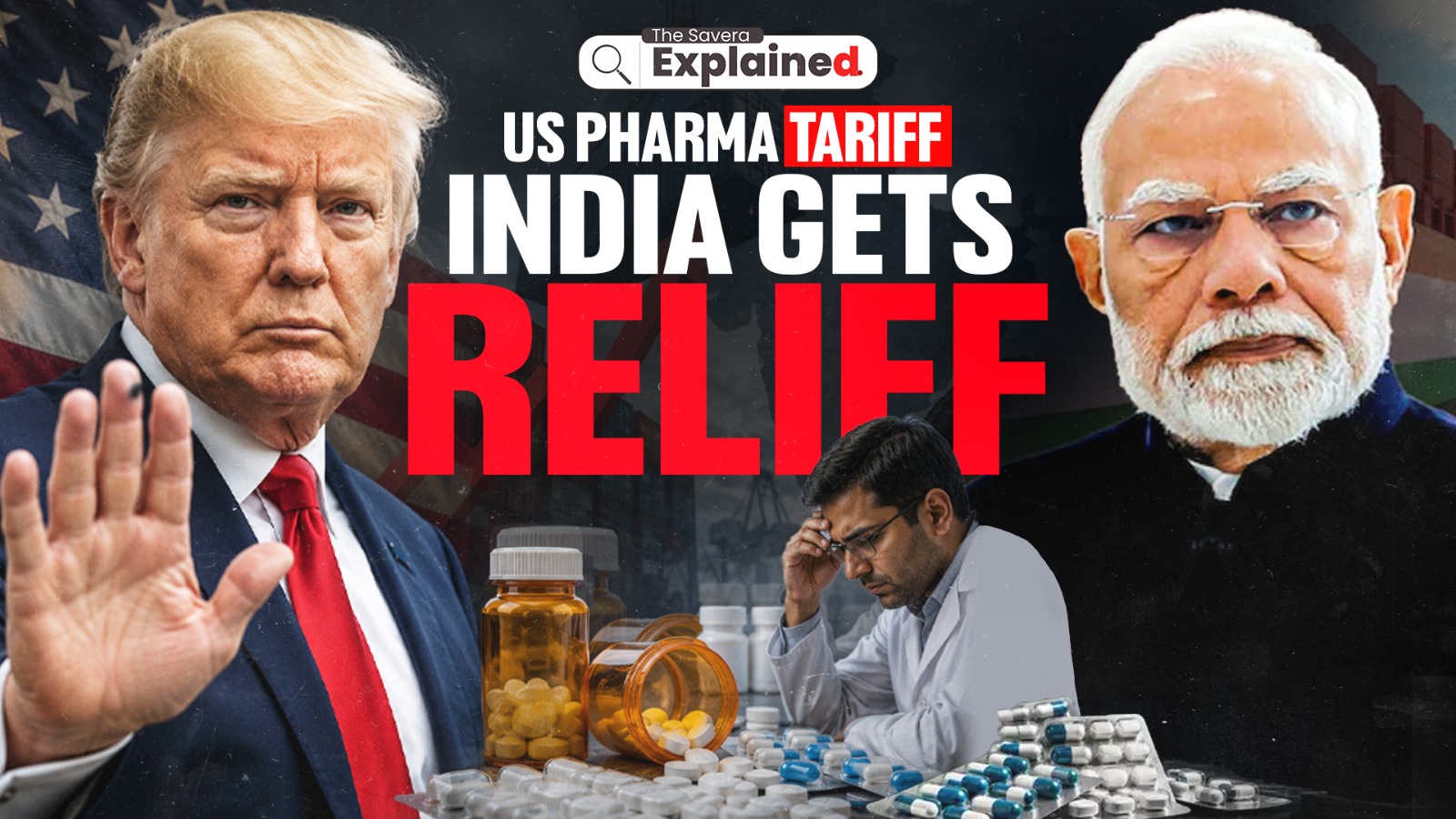
For India’s pharmaceutical industry, the latest US tariff decision brings relief — but not across the entire medicines sector. Washington has given zero-tariff treatment to certain specialty medicines and their associated ingredients from India and 19 other jurisdictions, even as the US moves ahead with a 100 per cent tariff on specified patented pharmaceutical products.
So, what exactly has changed, and how much will India benefit?
Under the US Commerce Department’s September 23 notice, effective September 29, eligible specialty products can receive a zero ad valorem tariff. The categories include orphan drugs, nuclear medicines, plasma-derived therapies, fertility drugs, cell and gene therapies, antibody-drug conjugates, certain medical countermeasures and animal-health pharmaceuticals.
The exemption also covers associated ingredients. India is among the 20 eligible jurisdictions. However, the zero tariff is subject to conditions, including the US determination that products come from an eligible jurisdiction with a current or forthcoming trade and security framework, or that they meet an urgent US health need.
The important point is that this is not a blanket exemption for all Indian medicines.
India is a major global pharmaceutical supplier. According to the Commerce Ministry and Pharmexcil, India’s pharmaceutical exports reached about $30.47 billion in 2024-25, growing 9.4 per cent. The US was India’s largest pharma export destination, accounting for about 34.5 per cent of total pharma exports, according to Pharmexcil data.
But India’s biggest strength in the American market is generic medicines. That distinction matters because the US Commerce Department says generic pharmaceutical products and their associated ingredients are currently outside the Section 232 pharmaceutical tariffs.
So, the latest exemption mainly protects a smaller, specialised segment rather than changing the tariff position for India’s large generic-drug business.
For Indian manufacturers that export eligible specialty medicines, the zero tariff means these products can enter the US without this additional duty, subject to the stated conditions. That can protect their price competitiveness and reduce the risk of higher costs for US buyers.
It could also make supply chains for specialised treatments more predictable. But the immediate benefit for India may be limited because Indian pharma exports to the US are still dominated by generics.
The bigger concern remains future US action on generic medicines. If generics were ever brought under a high tariff, the impact on India could be much larger because of the country’s strong position in that segment.
There is also a patient-access angle. Specialty medicines for rare diseases, infertility, cancer and advanced therapies can already be expensive. Avoiding an additional 100 per cent tariff can help prevent further pressure on prices and supply, particularly for medicines that have limited sources.
For India-US relations, the move provides a measure of stability in a sensitive trade sector. It also shows that Washington is making distinctions between pharmaceutical categories rather than applying the same tariff treatment to every medicine.
But this should not be read as a complete resolution of the wider US-India pharmaceutical tariff issue. The rules remain linked to US trade, security and health considerations, and the treatment of generic medicines remains especially important for India.
The bottom line is simple: Indian exporters of qualifying specialty medicines get a tariff shield, while India’s much larger generic-drug export business remains outside the current Section 232 tariffs. The latest decision is therefore a targeted relief, not a blanket tariff exemption for Indian pharmaceuticals.
Ladakh is seeing two changes at once: a new district has been announced, and the Centre has proposed...

What if a decision taken in Washington could influence India’s oil bills, export earnings and trade relations with...
What happens when the world’s richest business leaders clash over one of the world’s biggest internet markets? A...

Pakistan is heading into its wheat-growing season with a serious water problem. The country is facing a projected...
Imagine a foreign national standing among Indian citizens at a political protest, raising questions about the government or...

For thousands of Indian tech workers in the United States, a job offer is only the beginning of...
Aries: The day will be auspicious...