Last Updated: October 13, 2026
Last Updated: October 13, 2026





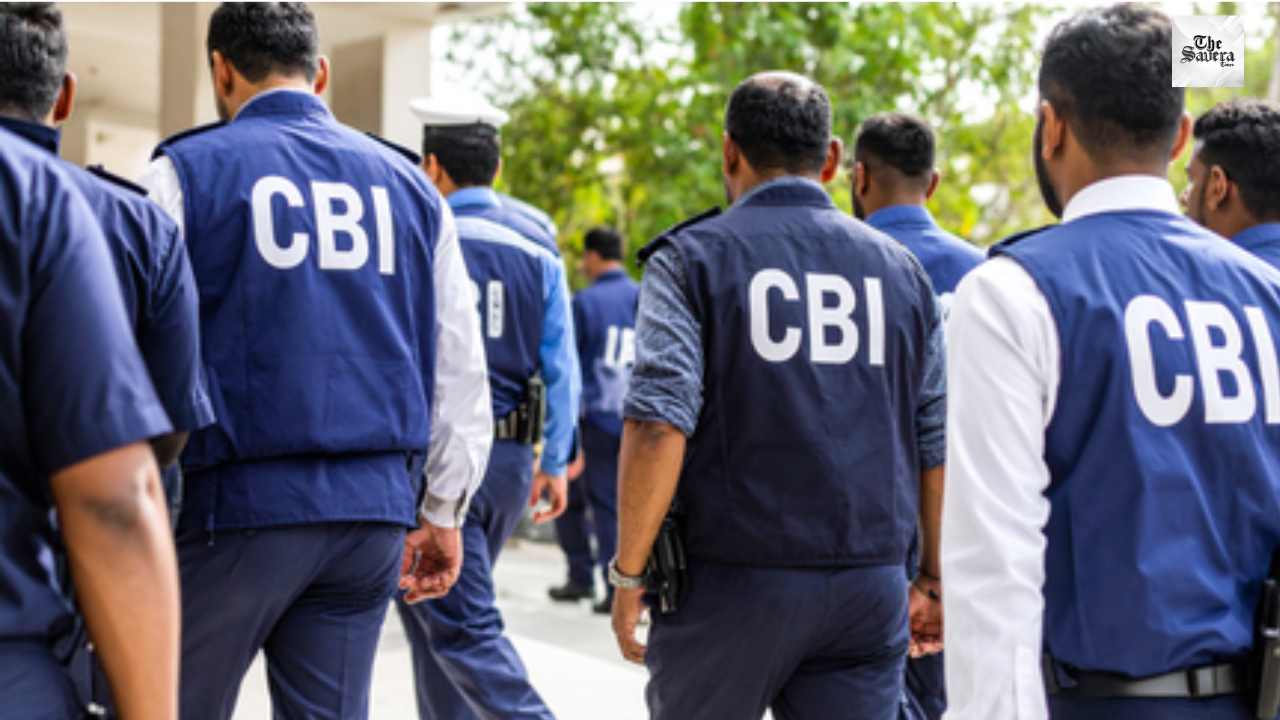
A special court of the Central Bureau of Investigation (CBI) in Dehradun on Friday sentenced eight former Public Works Department (PWD) officials to two years of rigorous imprisonment in connection with a Rs 55 lakh fraud case dating back more than two decades. In addition to the prison term, the court imposed a total fine of Rs 2.85 lakh on the convicted individuals, marking an important development in one of the long‑running corruption cases investigated by the central agency.
The eight convicted in the PWD fraud case included personnel who served in various capacities within the state public works machinery. Those sentenced were Deepak Kumar Verma (LDC), Madan Pal (Mate), Mani Ram (Beldar), Surendra Kumar Kaushik (Driver), Kasim (retired Beldar) all associated with PWD Haridwar along with Sukhpal Singh (UDC) and Chatar Singh (Roller Driver) of PWD Roorkee, and Palu Das (Assistant Treasury Officer, Treasury Haridwar). Each of the eight was handed the same punishment by the court after being found guilty of involvement in fraudulent withdrawals of government funds.
The fraud case was first registered by the CBI on 9 August 2003, following directions from the Uttarakhand High Court issued on 7 May 2003 in a writ petition that ordered the probe be taken over by the central agency. The allegations relate to the early 2000s, when government funds were reportedly withdrawn fraudulently through forged and unauthorised departmental cheques between 2001 and 2002.
As part of its investigation, the CBI eventually filed a formal charge sheet on 15 June 2005 against a total of 12 public servants and eight private individuals accused of colluding to siphon off government money. The lengthy legal process that followed spanned more than two decades, underscoring the challenges of prosecuting corruption cases involving public funds.
During the trial, several developments occurred before the final conviction. Four accused Ravindra Shrivastava, Sukhchand Tyagi, Dharmendra Kumar Bhatnagar and Ilamchan passed away, leading to abatement of proceedings against them. At the same time, seven other accused including Rekha Negi, Punam Verma, Pratibha, Sanjay Kumar, Chandrawati, Rajpal and Reena Srivastav had earlier pleaded guilty and were convicted separately by the trial court. A private individual named Pradeep Kumar Verma was acquitted of all charges.
This verdict highlights persistent efforts by the CBI and the judiciary to hold public servants accountable for corruption and misuse of official position, even many years after the alleged offences were committed. Cases like this, although protracted, demonstrate that legal mechanisms can eventually deliver verdicts against those who exploit their positions to defraud the state.
Legal experts note that convictions in such cases can act as a deterrent to others, reinforcing the message that public office carries with it responsibility and strict legal obligations. In addition, the fine imposed alongside the jail terms reflects the court’s attempt to exact both punitive and financial penalties for misconduct.
The conviction has drawn attention from civil society groups and anti‑corruption activists in Uttarakhand, who have repeatedly called for greater accountability and faster justice in corruption cases. Some observers pointed to the long duration of the case as indicative of systemic delays that often plague white‑collar crime trials in India.
Speaking after the pronouncement, a senior CBI official reiterated the agency’s commitment to pursuing corruption cases to their logical conclusion, promising that those found guilty will face the full rigor of the law regardless of how long investigations and trials take.
New Delhi: The Supreme Court registry has flagged 14 procedural defects in a petition filed by Congress leader...

While western countries continue to focus on India’s coal-fired power plants in the debate on climate change, what...

A Sudanese rights group says at least 72 gold miners were killed in an air strike near the...

An eyewitness has recounted the fatal Mini Cooper crash in Nedumbassery, Kochi, claiming the driver said his father...

Start your day with The Savera Morning Brief, bringing you the top India and world news, breaking developments,...

New Delhi: Chief Justice of India (CJI) Surya Kant has declined a request from the Congress-led INDIA bloc...