Last Updated: November 8, 2026
Last Updated: November 8, 2026





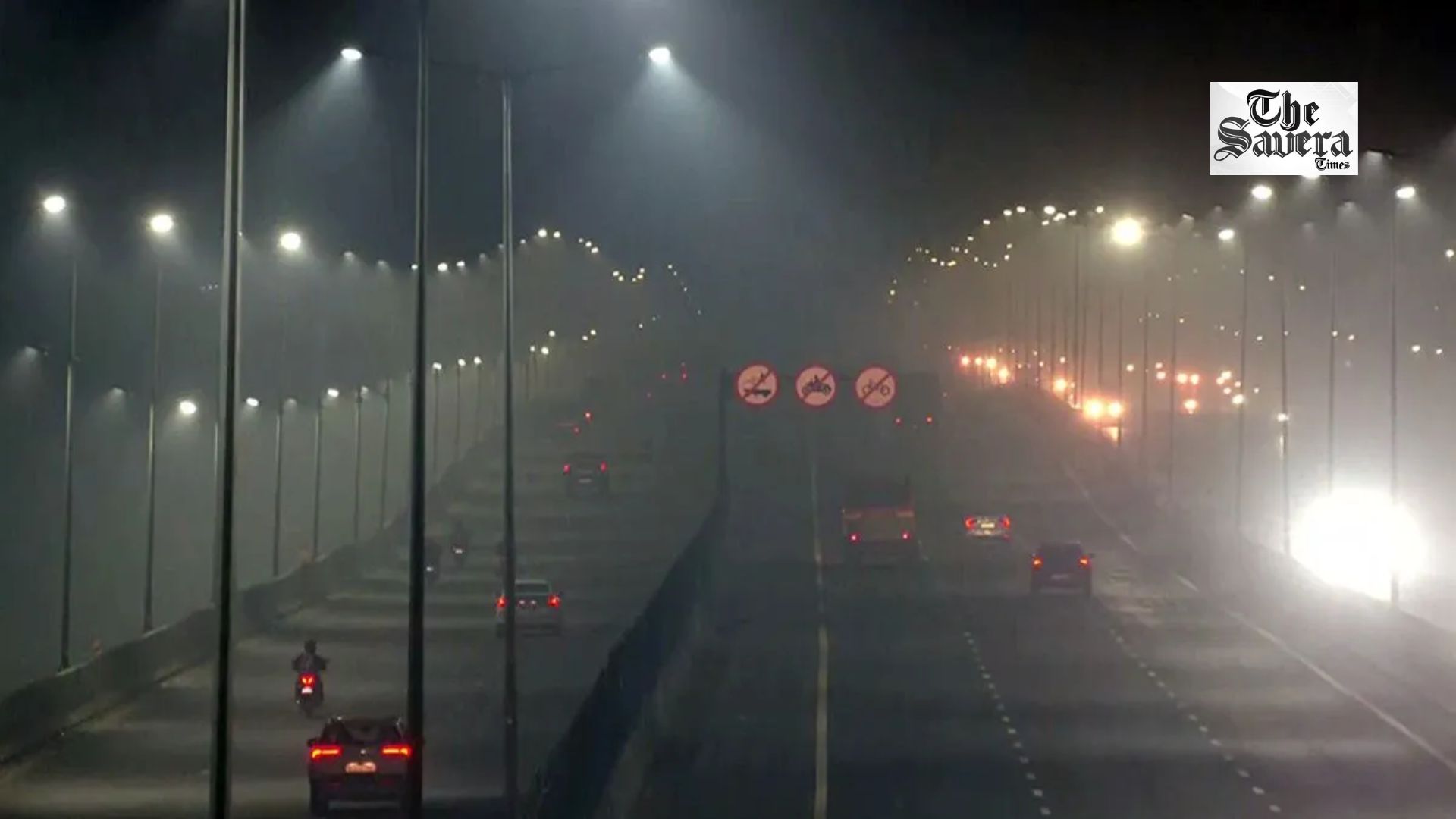
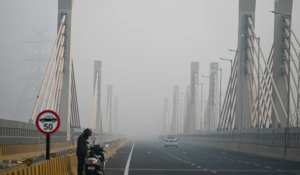
New Delhi: Air quality in Delhi and neighbouring areas remained in the ‘very poor’ category on Sunday night as people celebrated Diwali, with pollution levels expected to deteriorate further and potentially enter the ‘severe’ category from November 9.
According to the Sameer app, developed by the Central Pollution Control Board (CPCB), Delhi recorded an average Air Quality Index (AQI) of 371 at 10:24 pm on Sunday. The reading falls in the ‘very poor’ category, but authorities have warned that pollution levels could rise further following Diwali celebrations.
Of the 59 monitoring stations across Delhi, Sonia Vihar recorded the worst air quality, with an AQI of 463, placing it in the severe category. Meanwhile, 33 monitoring stations reported ‘very poor’ air quality.
Noida, Ghaziabad Also Record Poor Air Quality
Pollution levels remained high in neighbouring cities as well. Noida recorded an AQI of 315, falling in the ‘very poor’ category, while Ghaziabad registered an AQI of 357.
In Haryana, Gurugram recorded an AQI of 277 and Faridabad reported 290. Both cities remained in the ‘poor’ category.
According to the CPCB classification, an AQI between 0 and 50 is considered ‘good’, 51-100 ‘satisfactory’, 101-200 ‘moderate’, 201-300 ‘poor’, 301-400 ‘very poor’ and 401-500 ‘severe’.
Delhi-NCR AQI May Turn Severe from November 9
The Air Quality Early Warning System (EWS) has warned that Delhi-NCR’s AQI could deteriorate to the ‘severe’ category from November 9 and remain at that level for the following few days.
The expected deterioration has been linked to firecracker emissions, vehicular pollution and the ongoing peak period of stubble burning in neighbouring states. Unfavourable weather conditions are also likely to make the situation worse by restricting the dispersion of pollutants.
According to the EWS, a ventilation index below 6,000 square metres per second, along with an average wind speed of less than 10 kilometres per hour, is unfavourable for the effective dispersal of pollutants.
PM2.5 remained the predominant pollutant in Delhi on Sunday, with firecracker emissions adding to the concentration of particulate matter in the air.
Transport Sector Biggest Contributor to Delhi Pollution
According to the Decision Support System (DSS) for Delhi, the transport sector was expected to be the largest contributor to the city’s pollution on Sunday, accounting for 19 per cent of the total.
Stubble burning was estimated to contribute 3.5 per cent on Sunday, while its contribution was forecast to remain around 2.99 per cent on Monday.
The death toll in the collapse of a multi-story building in Delhi's Chawri Bazaar area has risen to...

Five people have been arrested for allegedly selling and storing firecrackers without valid licences in North-East Delhi. Police...
The death toll in the Chawri Bazaar building collapse in Delhi has reached four after rescuers recovered another...
Greater Noida: An encounter broke out between police and a group of house robbers in the Dadri police...

New Delhi: The death toll in the building collapse in Delhi’s Chawri Bazaar has climbed to three after...
New Delhi: Delhi’s air quality continued to remain in the ‘very poor’ category on Saturday, with the 24-hour...
Aries: The day will be auspicious...