Last Updated: October 1, 2026
Last Updated: October 1, 2026





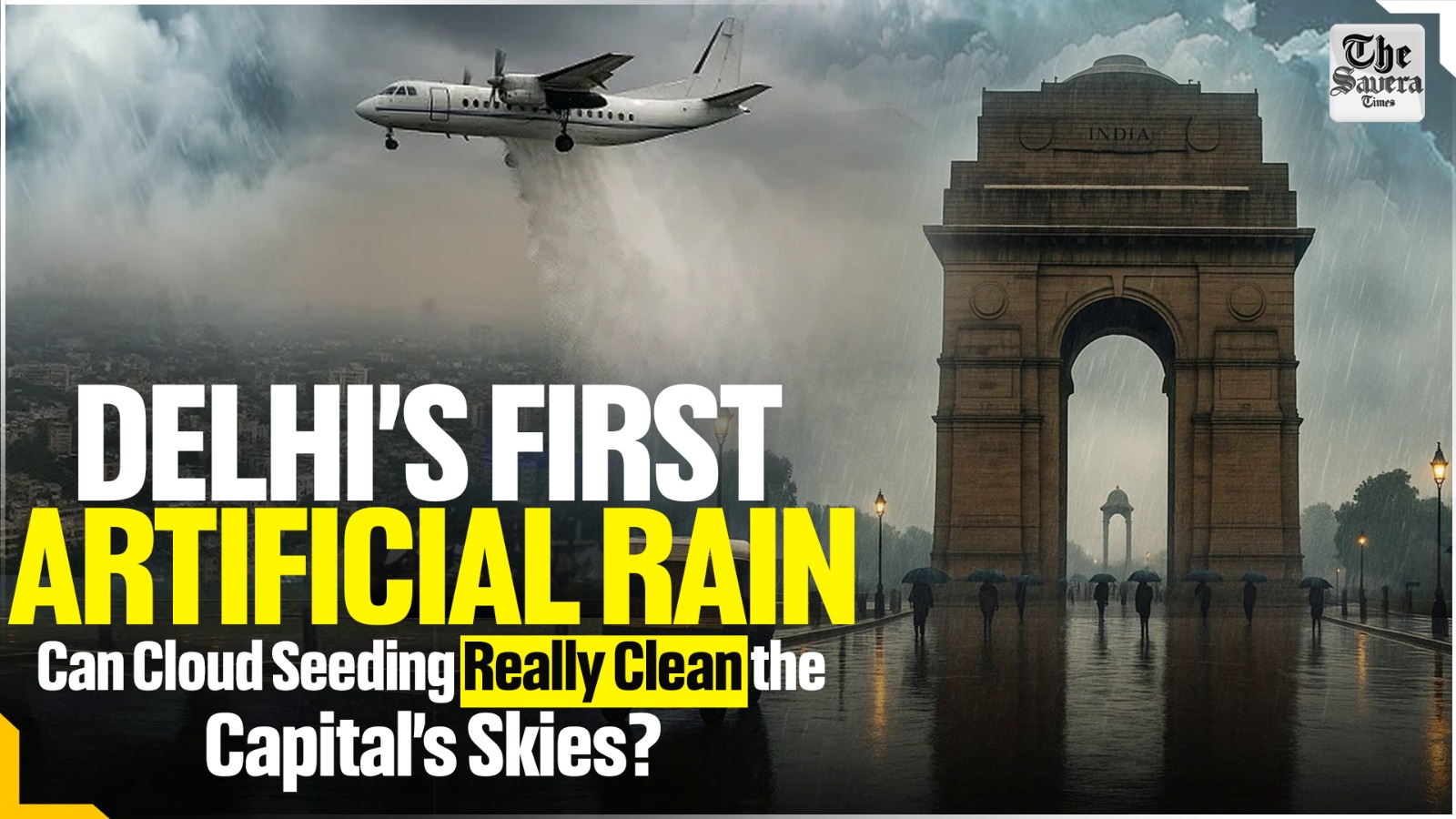
Delhi is set for its first artificial rain between October 28 and 30, as the city grapples with soaring air pollution. With PM2.5 levels hitting the highest mark since January, emergency interventions have resurfaced, including the Delhi government’s ambitious cloud seeding program aimed at washing particulate matter from the atmosphere.
Chief Minister Rekha Gupta confirmed that if weather conditions remain favourable, Delhi could witness artificial rain on October 29, marking a major technological milestone in the capital’s fight against air pollution. The program, developed in partnership with IIT Kanpur, has completed all preparatory trials, including aircraft readiness, flare tests, and coordination protocols.
A Cessna-206H aircraft, stationed in Meerut, will disperse seeding material such as silver iodide into clouds, stimulating rainfall when moisture-laden clouds are present. However, the success of the program depends entirely on the presence of sufficient clouds — clear skies cannot be seeded.
How Cloud Seeding Works
Cloud seeding is a weather modification technique designed to enhance precipitation. It involves dispersing substances like silver iodide or salt particles into clouds, which act as nuclei for water condensation. Two primary methods exist:
Delhi’s seeding operation will target Nimbostratus clouds containing at least 50% moisture and located between 500 and 6,000 meters above ground, the ideal conditions for rain generation.
Potential Impact on Air Quality
Artificial rain could temporarily reduce Delhi’s Air Quality Index (AQI) by 50 to 80 points. For example, if the AQI is in the “very poor” category (300–400), rainfall might bring it down to the “poor” or “moderate” range. Rain achieves this by washing out PM2.5 and PM10 particles, which dominate Delhi’s winter pollution.
Despite these potential gains, experts stress that the relief is short-lived. Pollutants from vehicles, construction dust, industrial emissions, and crop stubble burning can quickly rebound, returning AQI levels to dangerous ranges. Cloud seeding is therefore considered a temporary intervention, not a long-term solution to systemic pollution problems.
Limitations and Criticisms
While promising, cloud seeding faces several challenges:
Authorities such as the Central Pollution Control Board (CPCB) and the Commission for Air Quality Management (CAQM) have cautioned that cloud seeding should remain experimental and not replace structural reforms in energy, transportation, and waste management — the key drivers of Delhi’s chronic pollution.
Delhi’s Cloud Seeding in Context
Cloud seeding is not new to India. States like Maharashtra, Karnataka, Andhra Pradesh, Gujarat, and Tamil Nadu have deployed similar techniques, mainly to boost rainfall in drought-prone agricultural regions. Historical programs like CAIPEEX (Cloud Aerosol Interaction and Precipitation Enhancement Experiment) suggest a 15–20% increase in rainfall under optimal conditions. However, replicating these outcomes in a dense urban environment remains largely untested.
As Delhi awaits its first artificial rain, city officials, scientists, and residents are watching closely. While cloud seeding offers a glimmer of hope, experts agree that only sustained structural changes — including pollution control, industrial regulation, and emission reduction — will provide lasting clean air for the capital.
Imagine the world’s biggest diesel exporter turning off its export taps. That is the concern after US President...

One handshake, two superpowers and a long list of disagreements. US President Donald Trump and Chinese President Xi...

A river does not understand borders. But when two countries sharing that river are locked in a long-running...

A voter list revision — and now a software controversy A voter may have the right to vote,...

A conflict already threatening the Strait of Hormuz is now putting another crucial waterway in the spotlight —...

Petrol pump dealers across India are threatening a sweeping “cash-only” strike for high-value fuel purchases, alongside multi-party-political protests,...

Aries: The day will be auspicious...