Last Updated: October 16, 2026
Last Updated: October 16, 2026





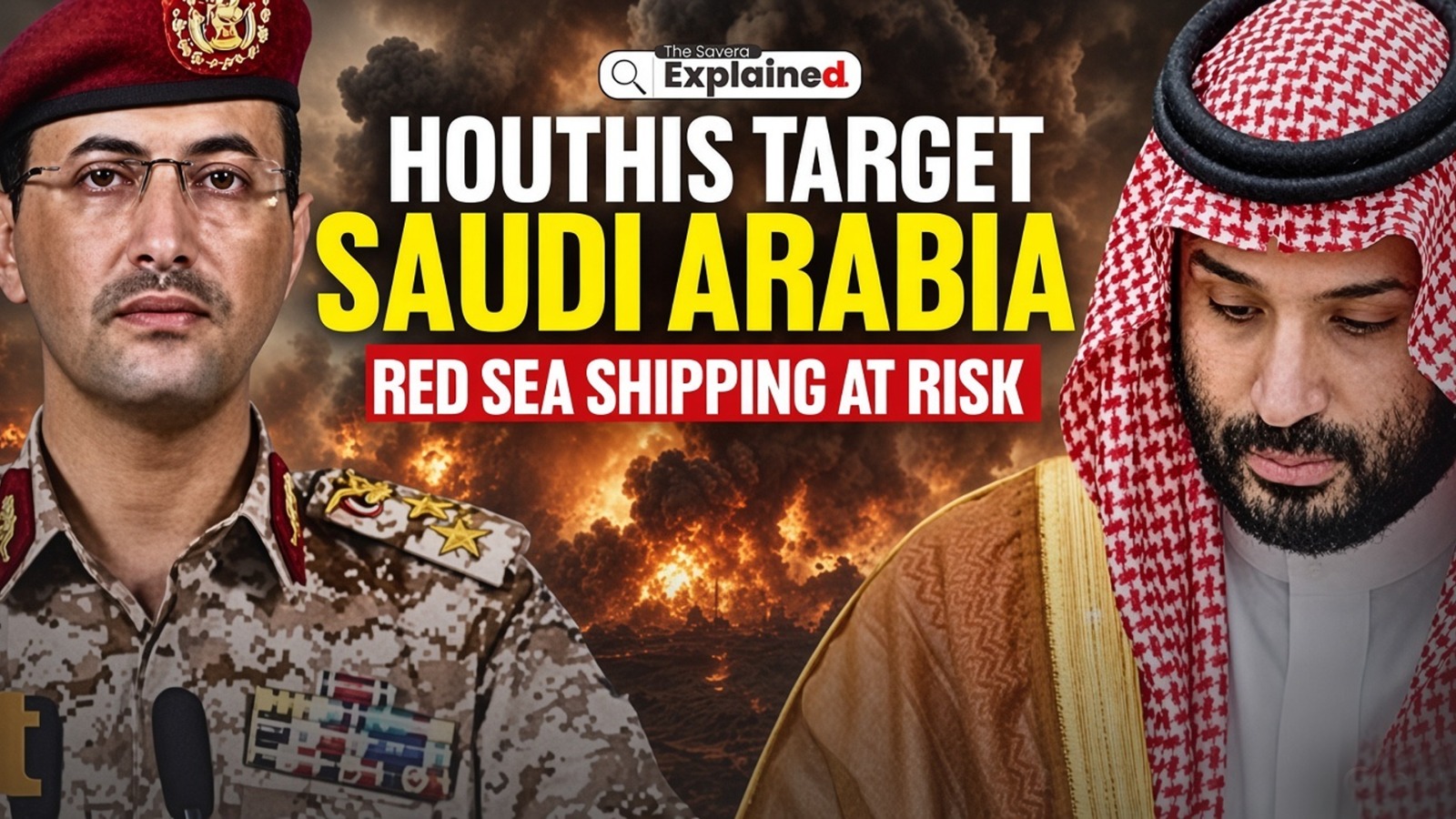
A conflict already threatening the Strait of Hormuz is now putting another crucial waterway in the spotlight — the Bab el-Mandeb. Yemen’s Houthis are escalating attacks on Saudi Arabia, raising fresh concerns over oil and global shipping. With the Strait of Hormuz already severely disrupted, any further pressure on the Red Sea could create another major challenge for the movement of energy and goods.
But why are the Houthis targeting Saudi Arabia now, and how is this connected to the wider crisis around the Strait of Hormuz?
Who Are The Houthis?
The Houthis are an Iran-aligned movement that controls large parts of Yemen, including areas along its Red Sea coast. The group has fought Saudi Arabia and its allies for years. A truce largely reduced the fighting after 2022, but hostilities have intensified again in recent months as the wider Middle East conflict has expanded.
What Has Changed Now?
The latest escalation is much wider than earlier attacks. Houthi forces have advanced along Yemen’s Red Sea coast and seized strategic positions and islands near the Bab el-Mandeb. They have also launched drones and missiles towards Saudi territory.
On September 19, Saudi Arabia said it intercepted a ballistic missile aimed at Riyadh. The Houthis also claimed attacks on several Saudi locations, including the oil hub of Yanbu, although some of those claims could not be independently verified.
Saudi Arabia has responded with airstrikes against Houthi-held areas in Yemen. The escalation has also put pressure on Saudi air-defence resources, with reports that Riyadh has sought assistance from several countries.
Why Is The Red Sea So Important?
The Red Sea connects to the Gulf of Aden through the Bab el-Mandeb Strait. It is one of the world’s important maritime chokepoints.
The recent Houthi advances have increased their ability to threaten shipping in this area. That matters because disruption to the Red Sea can affect the movement of oil and other goods between the Middle East, Europe and Asia.
The situation becomes even more significant because the Strait of Hormuz is already severely disrupted amid the wider Iran conflict. That has made alternative routes for Gulf energy exports more important.
Why Does Saudi Oil Matter?
Saudi Arabia is one of the world’s major oil producers. Its exports normally depend heavily on maritime routes, but Riyadh also has alternative infrastructure, including the East-West pipeline that can move oil towards the Red Sea.
That alternative route has itself come under attack. The disruption means the world is watching not just the Strait of Hormuz, but also Saudi pipelines, Red Sea ports and the Bab el-Mandeb.
The concern is simple: if multiple routes are disrupted at the same time, moving oil to international markets becomes more difficult and expensive. Reuters reported that oil prices and tanker costs have already risen amid the uncertainty.
What Happened Near Mecca?
One of the most sensitive incidents came on September 15. Saudi authorities said their air defences intercepted and destroyed a Houthi drone south of Mecca before it entered the city’s restricted airspace.
Saudi Arabia called the incident a serious security threat. But the Houthis denied targeting Mecca or other religious sites.
That distinction is important: the interception is reported by Saudi authorities, while the alleged intended target has been disputed by the Houthis.
Why Does This Matter To The World?
The conflict is no longer only about Yemen and Saudi Arabia. It now involves three connected pressure points: the Strait of Hormuz, Saudi energy infrastructure and the Bab el-Mandeb-Red Sea shipping route.
If fighting continues around all three, the consequences could extend beyond West Asia — affecting oil prices, shipping costs and global supply chains. The latest Saudi-Houthi escalation therefore adds another layer to an already widening regional conflict.
Pakistan is heading into its wheat-growing season with a serious water problem. The country is facing a projected...
Imagine a foreign national standing among Indian citizens at a political protest, raising questions about the government or...

For thousands of Indian tech workers in the United States, a job offer is only the beginning of...

Three years ago, on October 7, 2023, Israel woke up to one of the deadliest attacks in its...

Imagine being seriously injured inside a flying aircraft, with blood on your clothes, passengers in panic and the...

Imagine the world’s biggest diesel exporter turning off its export taps. That is the concern after US President...
Aries: The day will be auspicious...