Last Updated: October 15, 2026
Last Updated: October 15, 2026





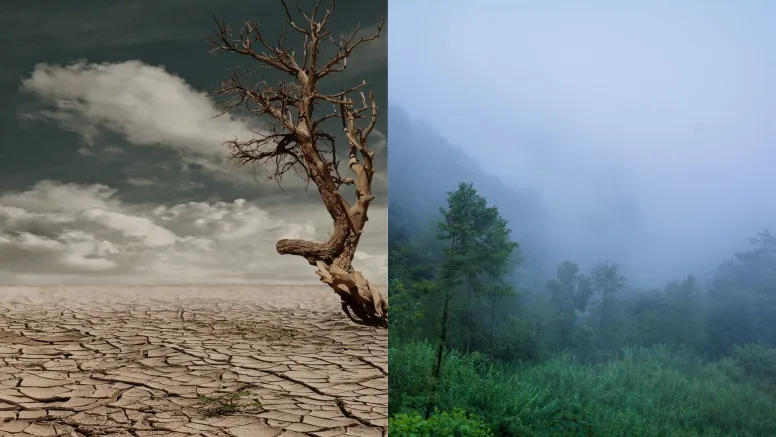
This year also, it was extremely hot. People were in a state of panic. The monsoon was eagerly awaited. The monsoon arrived only with the prediction of a weak El Niño. But whenever El Niño showed its power, the torrential downpours began to wreak havoc. It had only been a few days since the rains began, but the first and second downpours wreaked havoc. Rains began late in Himachal Pradesh but have been pouring continuously for two or three days. 400 roads are blocked, and the rest of the region is experiencing a situation even worse than last year. In Ambala, Haryana, the first rainwater entered homes. Punjab, according to data, is still 28 percent rain deficient, but where it is raining, the roads appear to be drains. The rainfall pattern is similar to last year: half of India is receiving very little rain, while the rest is receiving torrential rain. Rain has become a cloudburst instead of a drizzle. Meanwhile, global warming is showing its effects. The ice lingam disappeared from the Amarnath Yatra on the fifth day of its commencement. In metropolitan cities, when it rains, even streets and neighborhoods are flooded. The same situation is in Punjab, Himachal Pradesh, Haryana, and Uttarakhand. Punjab and Haryana have received 70.4 mm of rain so far this season, but they should have received 97.2 mm. Despite this, Punjab and Haryana are on a four-day heavy rain alert. This means that if it doesn’t rain, it won’t, but where it does, it will wreak havoc. This uncertainty is disrupting normal business, while farmers see a bleak future for their farming. It’s the time for sowing the Kharif crop. Due to uncertain and Assamese rains, Kharif sowing has been delayed by 21 percent. Delayed sowing will result in lower grain yields. It’s well known that India is distributing record-breaking amounts of cheap grain to over 800 million people. This requires government agencies to make large-scale purchases from regular markets. If production is low, where will the grain for distribution come from? Doesn’t this warning alert society and administrative regulators to strive to regulate the seasons by controlling environmental pollution, rather than simply mourning the loss of changing seasons?
The weather took a turn in Punjab on Wednesday morning. Pathankot experienced heavy rain in the morning. A
A fresh spell of snowfall has transformed the higher reaches of Manali into a picturesque winter landscape, with...
Continuous heavy rains in many parts of the country have triggered floods and landslides.
A depression over the Bay of Bengal is expected to intensify into a deep depression and cross the...
More than half of September has passed, and the monsoon is about to depart. This year, the threat...
There is a crucial link between environment and health and the current status of Delhi stands as a...
Aries: The day will be auspicious...