Last Updated: October 16, 2026
Last Updated: October 16, 2026





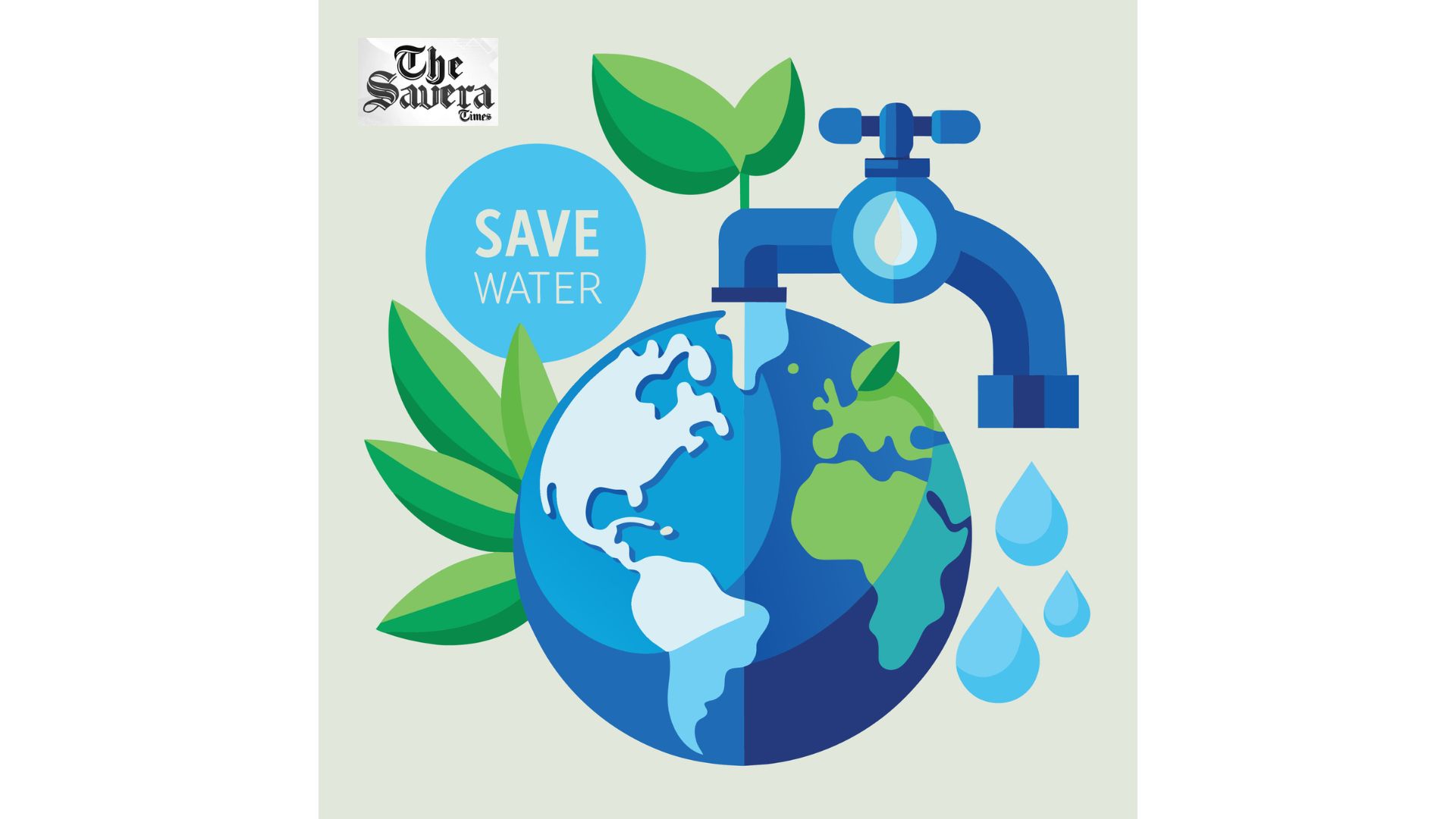
~Dr. Rajbhushan Chaudhary: Union Minister of State, Ministry of Jal Shakti, Government of India
Today, Earth’s environment stands at a crossroads where the signs of nature are becoming increasingly pronounced and the traditional cycle of seasons appears to be profoundly affected. Prime Minister Narendra Modi, with his foresight, had clearly indicated as early as the end of May that the heat would be intense this time.
He had made an impassioned appeal to all the countrymen to drink sufficient water and remain vigilant about the conservation of water sources. This call by the Prime Minister is proving to be a guiding light, showing the country a safe path amidst today’s unprecedented environmental crisis. The Earth’s steadily rising temperatures and the drastic fluctuations in seasonal cycles are clear evidence that climate change is no longer merely a distant future prospect. Instead, it has become the greatest administrative and social challenge of our time. Untimely heavy rainfall, prolonged droughts and the fierce nature of the summer season are matters of deep concern for the entire global community today.
At the very heart of this global atmospheric upheaval lies an extremely complex hydro-meteorological phenomenon originating in the Pacific Ocean, known in the language of modern science as ‘El Nino’. For a country like India – vast, densely populated and fundamentally dependent on agriculture -this El Nino cycle cannot simply be a subject of laboratory research. This is an extremely serious and practical issue directly linked to the lives and livelihoods of millions of farming families across the country, the rural economy, and our national food security. According to established principles of oceanography, under normal conditions, strong trade winds blowing from east to west across the equatorial region of the Pacific Ocean push warm surface water towards Asia and Australia.
Its influence causes cold, nutrient-rich water to rise from the ocean depths off the coast of Peru in South America. This process helps maintain the balance of global atmospheric circulation and provides a positive boost to the Indian monsoon. However, during the El Nino effect, these trade winds suddenly weaken and at times, their direction even reverses completely. As a result, the warm surface water of the ocean begins to flow back towards the coastal regions of South America instead of moving westward. This unusual warming of the ocean surface disrupts entire atmospheric pressure zones, thereby altering the global geography of cloud formation and precipitation. While this phenomenon causes excessive rainfall and flooding in parts of Peru, it leads to increased air pressure over India and Southeast Asia, thereby weakening the speed of the monsoon winds. Its direct impact on India’s landmass is reflected in the severe rainfall deficit, fragmented monsoons and record-breaking heat in summers.
This is a scientific catastrophe that has the full potential to destabilize the country’s entire hydrological cycle and water circulation. Coupled with this, the changing patterns of Western Disturbances and the impact of El Nino have combined to create a situation of imminent water crisis and weather instability for the country. The Prime Minister has always accorded the highest priority to water security, placing it on par with national sovereignty and defense security. He has a clear view that water conservation must become an innate part of every citizen’s daily life and a massive mass movement. Based on this very idea, he launched the Catch the Rain; campaigns, the basic mantra of which is that using modern techniques, we must conserve every drop of rainwater right where it falls on the earth. For the first time in the nation’s history, the present government created an integrated and powerful administrative structure in the form of the ‘Ministry of Jal Shakti’, which has proven to be a truly transformative initiative in giving a new, scientific, and coherent direction to the nation’s water planning.
To curb the continuous decline in the Earth’s water tables, caused by increasing concretization and unplanned exploitation, and ensure the longterm protection of water sources, the government has formulated a highly comprehensive and interconnected framework of policies and programs. The Jal Jeevan Hariyali Mission’s in the country has given a new impetus to environmental balance and water conservation. Through the Jal Jeevan Mission, today pure, tested and continuous drinking water supply is being ensured to every rural and remote area of the country with the resolve of Har Ghar Jal.
Besides, under ‘Atal Bhujal Yojana’, scientific management and recharge of ground water level is being done by promoting community participation in over-exploited areas. For the sustainability of the agriculture sector, under the Pradhan Mantri Krishi Sinchai Yojana, modern microirrigation techniques like drip and sprinkler are being expanded nationwide on the principle of Per Drop More Crop; so that every fraction of water is used optimally.
Moreover, the ‘Amrit Sarovar Mission’ was launched for the effective conservation of water bodies, under which a new life is being given to the local water sources by constructing and renovating at least 75 historical and new ponds in every district of the country. Along with all these national initiatives, the government is also working at full speed on the bold projects of River Interlinking; and modern Desalination; techniques to purify the saline water of the sea so that no part of the country remains affected by the water crisis. Extremely high temperatures and intense heat waves also severely affect the internal biological balance of the human body.
Our body basically operates on a fixed and mandatory proportion of water. When the external temperature starts to exceed the body’s internal normal temperature, the body tries to keep itself cool through sweating. This continuous sweating process leads to a severe depletion of water and essential electrolytes in the body, a condition medically known as dehydration. When this condition becomes severe, the body’s central nervous system begins to be affected, eventually leading to heat stroke.
The most vulnerable sections of our society such as the elderly, young children, pregnant women, and especially the hardworking farmer-labourer brethren, who toil under the scorching sun to rebuild the country, bear the brunt of this seasonal calamity. In this case, special caution is required. Regular intake of adequate amounts of clean water, ORS, lemon water and fresh buttermilk is essential for everyone to maintain the abundance of fluids in the body. In the afternoon when the rays of the sun are extremely sharp, one should completely avoid going out unnecessarily. There should be proper arrangement of cooling and ventilation in the rooms of the elderly and children. The farmers and workers working in the fields and construction sites should keep their heads covered with cotton cloth and maintain adequate water intake while taking intermittent rest in shady places. Any physical discomfort such as dizziness or severe headache requires immediate medical attention.
As we ponder over these profound principles of modern science, we must also recall the rich cultural heritage and oriental water conservation methods of our ancient Indian civilization which fully recognised this eternal and life-giving significance of water centuries ago. In our ancient scriptures and Vedas, water was never regarded as a consumable resource. Rather, it was considered a veritable medicine. A visit to Rajasthan offers a unique insight into its water culture, revealing how the local society has developed an extraordinary system to conserve every single drop of water using traditional methods even amidst harsh desert conditions. The artistic and huge stepwells, ponds and wells of Rajasthan are a living example of the fact that even in adverse weathers, the society can remain water rich with its cultural consciousness and wisdom.
Similarly, the Chandela period ponds of Bundelkhand, the Eri systems of South India and the irrigation systems like AaharPine, which have been working for centuries in the plains of North India and Bihar, were in fact vibrant centers of our social and collective consciousness, rather than just being excellent examples of engineering. Respecting water, keeping water bodies absolutely sacred and maintaining them collectively was a natural and instinctive trait of our society. In this modern and concrete era of today, the biggest need is to fully integrate this traditional device with the advanced tools of modern science.
Varanasi: A massive explosion triggered the collapse of a two-storey building in Uttar Pradesh’s Varanasi on Thursday, leaving...

Sofia: A vessel sailing under the flag of San Marino caught fire in the Black Sea near Romania...

New Delhi: Accusing the Congress of double-speak on women dignity, the Bharatiya Janata Party (BJP) Mahila Morcha on...

New Delhi: NITI Aayog’s Frontier Tech Hub released a Data Centre Evaluation Framework to help states plan for...
New Delhi: The Supreme Court on Thursday referred the cheque dishonour cases against actor and comedian Rajpal Yadav...

Mirzapur: Uttar Pradesh Chief Minister Yogi Adityanath on Thursday accused the Samajwadi Party (SP) and the Congress of...
Aries: The day will be auspicious...