Last Updated: November 12, 2026
Last Updated: November 12, 2026





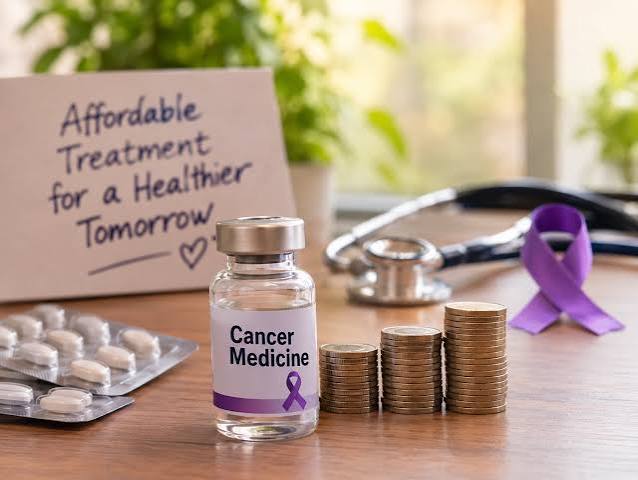
It is good news that the Indian government, heeding the Supreme Court’s advice, has initiated an effort to usher in an era of affordable medicines for cancer patients. Forty-eight days ago, the Supreme Court noted that private medical care in our country has become prohibitively expensive. The biggest discrepancy lies in the prices of essential medicines, which are actually priced differently but are often offered to patients at a high price. The Supreme Court then stated that providing a ₹2,700 medicine for ₹27,000 is tantamount to genocide. However, the government has promised to usher in an era of affordable anti-cancer medicines. The following changes have been announced: 137 medicines for cancer, the most expensive disease, have been made cheaper. Revised maximum retail prices have been implemented on them. It has been claimed that the prices of many medicines have come down by up to 80 percent. The government has implemented the revised maximum retail price of the drug formulation for 1364 medicines. It has been announced that this has reduced the prices of medicines by 80 to 90 percent and it is expected that consumers will save an estimated Rs 3540.38 crore annually. On October 17 this year, the Directorate General of Health Services had fixed the profit margins and maximum retail prices of 137 anti-cancer medicines based on the recommendations received from experts. The ministry says that as of November 8th, 85 pharmaceutical companies have submitted the maximum retail prices (MRPs) for 1,364 formulations of 121 drugs. The Department of Pharmaceuticals has stated that 679 types of medicines have been reduced by more than 50 percent, with some even seeing a 96.45 percent reduction. Now, a new app, Pharma Sahi Daam, has been developed. It will instantly tell you the price of medicines. A helpline has also been announced, allowing complaints to be made if orders are not followed. This is undoubtedly a well-intentioned effort by the government to reduce drug prices. Whether it succeeds will depend on the good intentions of both pharmaceutical companies and retailers. If, after the price reduction, an attempt is made to create a sense of scarcity and then sell the drugs at higher prices, this sincere step could backfire.
With growing interest in healthier diets, mushroom cultivation is gaining importance in India’s horticulture sector and offers scope...

As part of the strengthening bilateral energy ties, India’s imports from the UAE have risen sharply over the...

India is seen as a credible country that can help in the peace talks between Russia and Ukraine...
The Earth’s energy imbalance and the loss of India’s distinct seasons are becoming the same thing. 2024 was...

Ujjain (Madhya Pradesh): A fire broke out in a five-storey building at Bagadiya Tower near the old Central...

New Delhi [India]: Former Vice-President Jagdeep Dhankhar was admitted to the All India Institute of Medical Sciences (AIIMS)...
Aries: The day will be auspicious...