Last Updated: October 12, 2026
Last Updated: October 12, 2026





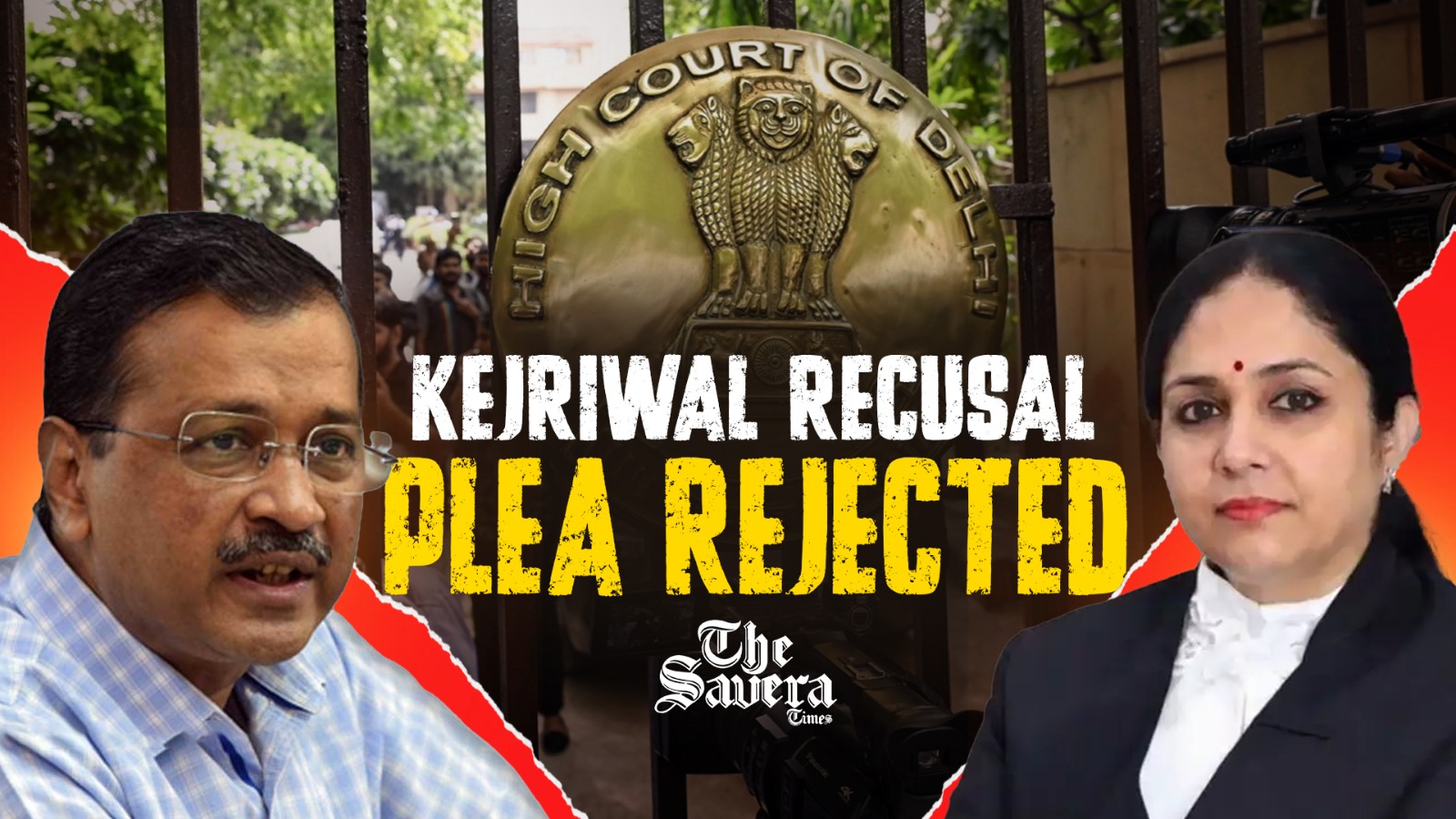
A judge says “no recusal,” a politician says “bias,” and the courtroom becomes a stage for a bigger question: who defines judicial fairness in politically sensitive cases?
On April 20, 2026, the Delhi High Court, in a significant ruling, saw Justice Swarana Kanta Sharma refuse to recuse herself from hearing a petition in the Delhi Excise Policy case involving Arvind Kejriwal and others, including Manish Sisodia. The plea came after Kejriwal, appearing in person, sought her withdrawal citing a “reasonable apprehension of bias.”
The case originates from the controversial Delhi Excise Policy (2021–22), under probe by the CBI and Enforcement Directorate over alleged irregularities like policy manipulation, cartelisation, and kickbacks. Although a trial court discharged Kejriwal and others in February 2026, strongly criticising the agencies, the CBI challenged that order before the High Court.
Recusal plea: perception over proof
Kejriwal’s argument focused not on actual bias, but the appearance of it:
He maintained that justice must not only be fair but also appear fair.
Court’s response: perception cannot override duty
Justice Sharma rejected the plea, holding that:
She emphasised that recusal cannot become a tool to avoid difficult or high-stakes cases, reinforcing judicial duty and independence.
Broader context of the case
Why this ruling matters
This decision goes beyond one plea. It reinforces a core principle:
At the same time, it highlights a continuing tension in high-profile cases—balancing public confidence in impartiality with protection against politically driven recusal attempts.
With the recusal plea dismissed, the case now returns to its main question: whether the trial court’s discharge order can stand legal scrutiny on merits.
Amidst heavy security and barricades by the Delhi Police, INDIA Bloc leaders began a protest march towards the...
The Reserve Bank of India (RBI)'s new measures to curb speculation in the rupee and maintain stability in...

Gold exchange-traded funds (ETFs) witnessed a sharp rise in investor interest in September, with net inflows surging 71.4...

Rahul Gandhi accused the Modi government of protecting Chief Election Commissioner Gyanesh Kumar, criticised security restrictions in Delhi...
Chief Justice Surya Kant said every citizen can approach the Supreme Court through a petition after declining a...

A major fire broke out at a scrap warehouse opposite the Maruti Temple in Sangameshwar, Maharashtra, around midnight....

Aries: The day will be auspicious...