Last Updated: October 15, 2026
Last Updated: October 15, 2026





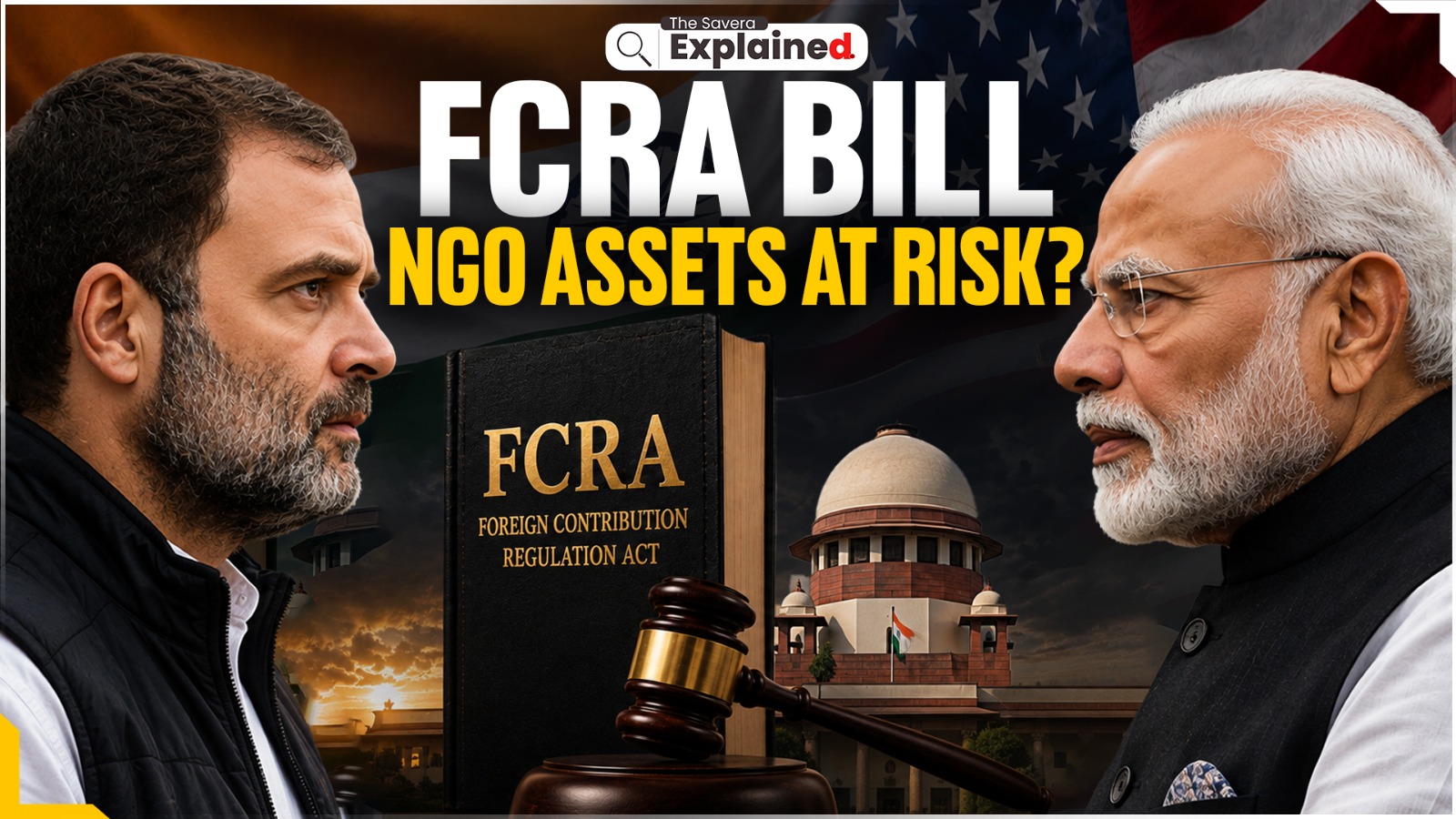
Foreign funding has once again become a major political flashpoint in Parliament. The Centre’s proposed Foreign Contribution (Regulation) Amendment Bill, 2026 seeks to change what happens to foreign funds and assets of organisations when their FCRA registration ends.
The government says the changes will improve transparency and accountability, while critics fear they could give the government greater control over NGOs and their assets.
What is FCRA?
The Foreign Contribution (Regulation) Act, or FCRA, regulates foreign donations received and used by NGOs, associations and certain other organisations in India. Organisations generally need FCRA registration or prior permission to receive foreign contributions.
The law is meant to ensure that foreign money is used only for permitted purposes and does not harm India’s national interest. According to PRS, 13,520 organisations received around Rs 55,741 crore in foreign contributions between 2019 and 2022. As of July 15, 2026, there were 14,449 active FCRA certificates.
Why has the Centre brought this Bill?
The Bill was introduced in the Lok Sabha on March 25, 2026. Its main focus is what happens to foreign contributions and assets created from such contributions when an organisation’s FCRA certificate is cancelled, surrendered, expires or otherwise ceases to exist.
The government says clearer rules are needed to prevent misuse of foreign funds and ensure that assets created from such funds do not become unregulated after an organisation leaves the FCRA system.
5 Key Changes Proposed
What happens to NGO assets?
This is at the centre of the controversy. Under the proposed framework, assets created from foreign contributions could come under the control of the Designated Authority after an organisation’s FCRA registration ends.
Critics argue that this could mean an NGO losing control over property created using foreign donations, particularly if its registration is not renewed or restored. PRS has also flagged concerns about the absence of an appeal mechanism against a government decision denying renewal of an FCRA certificate.
Why are NGOs and Opposition opposing it?
Opposition parties and critics argue that the Bill gives the government extensive powers over NGOs, their foreign funding and assets. They want greater parliamentary scrutiny and, in some cases, have demanded that the Bill be withdrawn.
Their main concern is that cancellation or non-renewal of registration could eventually affect an organisation’s assets and functioning.
What does the government say?
The government maintains that the Bill does not ban foreign funding. Its argument is that legitimate foreign contributions can continue, but stronger safeguards are needed to prevent misuse, improve transparency and protect assets created from foreign funds.
India’s Ambassador to the US, Vinay Mohan Kwatra, has also said the changes are aimed at transparency, accountability and national-security concerns rather than targeting any particular religion or community. Further, the concerns were also raised by US lawmakers, including Congressman Riley Moore, who claimed the bill could target Christian charities and allow government takeovers of churches.
Why are Christian groups and minority institutions concerned?
Christian organisations have raised concerns that the proposed asset provisions could affect churches, charitable institutions and other organisations that depend partly on foreign contributions.
The issue has become particularly important in the Northeast. Nagaland Chief Minister Neiphiu Rio has urged Union Home Minister Amit Shah to reconsider the amendments and has sought wider parliamentary scrutiny, citing concerns raised by Christian organisations in the state.
Why are Nagaland and Tamil Nadu objecting?
Nagaland has sought a deeper examination of the Bill, including consideration by a Joint Parliamentary Committee.
In Tamil Nadu, the state Assembly is also moving to oppose the proposed FCRA amendments, adding another state-level challenge to the Centre’s position.
Government vs Opposition: Key Arguments
Government: Stronger regulation, transparency, accountability, prevention of misuse and protection of foreign-funded assets.
Opposition and critics: Excessive government control, concerns over NGO autonomy, possible impact on religious and charitable organisations, and the need for wider parliamentary scrutiny.
What happens next?
The Bill is still pending in the Lok Sabha. Amid the growing opposition, the government has indicated that it is willing to consider sending the Bill to a Joint Parliamentary Committee (JPC) for detailed examination. The final shape of the legislation will depend on Parliament’s consideration and any changes made during the process.
Farmers and supporters protested at Amritsar’s Golden Gate during the Punjab bandh over Parvinder Singh Jhota’s murder and...

The India-BrazilSouth Africa Maritime Exercise (IBSAMAR) remains an important platform for strengthening naval interoperability, maritime security cooperation and...

Pakistan is heading into its wheat-growing season with a serious water problem. The country is facing a projected...

Police have arrested chemist Ashwini Kumar in connection with the shooting death of anti-drug activist Parvinder Jhota (45)...

Reacting to the arrest of Cockroach Janata Party (CJP) leaders on Wednesday, Leader of the Opposition in the...

Thirteen children aged 15 years or below died after a boat carrying them capsized in Bihar's Vaishali district...
Aries: The day will be auspicious...