Last Updated: October 13, 2026
Last Updated: October 13, 2026





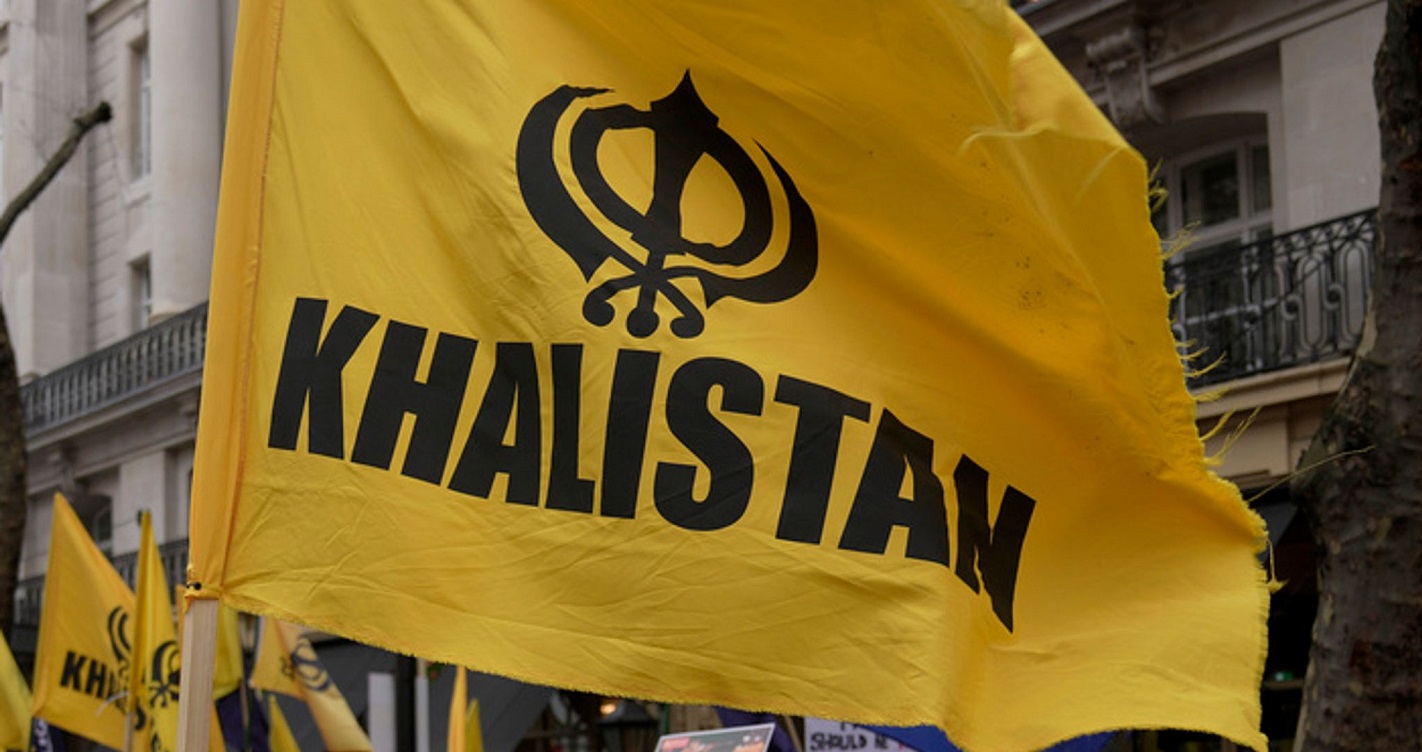
On June 23, 1985, Air India Flight 182 exploded over the Atlantic off the coast of Ireland. All 329 people on board perished. Most of them were Canadians. It was, and remains, the deadliest act of terrorism in Canadian history and, until September 11, 2001, the largest mass murder involving an aircraft anywhere in the world. Four decades later, Canada’s intelligence agency, the Canadian Security Intelligence Service (CSIS), has finally stated with unusual clarity what India has maintained since the day of the attack: a bomb planted by Canada-based Khalistani extremists destroyed the aircraft. The statement is remarkable not because it reveals something new.
The facts have been known for years. It is remarkable because the Canadian state has finally chosen to say them plainly. The timing raises an uncomfortable question: why did it take forty-one years? The answer lies in a mixture of institutional failure, political timidity and an enduring reluctance within sections of the Canadian establishment to confront violent extremism when it emerged from within its own multicultural landscape. The Kanishka bombing was not merely an act of terrorism against India. It was, in the words of Canada’s own public inquiry, “a conspiracy conceived, planned and executed in Canada.” Canadian authorities had been warned repeatedly about the threat posed by Sikh extremists operating from British Columbia. Intelligence agencies possessed informants. Surveillance existed. Specific warnings about threats to Air India had been received. Yet the attack happened anyway. Worse, crucial wiretap evidence was destroyed, investigations faltered, and prosecutions collapsed. Only one individual, bomb-maker Inderjit Singh Reyat, was ultimately convicted. The principal architects escaped justice. Some died before facing trial. For decades, the Canadian state appeared unwilling to fully internalise the implications of the tragedy.
The victims’ families repeatedly complained that the bombing was not treated as a “Canadian” disaster because the dead had Indian names and brown faces. It took years before Ottawa commemorated the tragedy with the solemnity accorded to other national traumas. The latest CSIS statement therefore carries a deeper significance. It is less an intelligence assessment than an overdue act of national honesty. But honesty delayed has its costs. The first cost has been strategic credibility. For decades, India warned successive Canadian governments that extremist networks advocating Khalistan had not disappeared but merely changed form. Canadian leaders often regarded these concerns through the prism of domestic electoral politics and freedom of expression. Indian concerns were frequently dismissed as exaggerations or as attempts to suppress dissent abroad.
That approach became increasingly untenable. When New Delhi argued that extremist groups in Canada were not simply exercising free speech but were glorifying violence and celebrating convicted terrorists, Ottawa’s response was often cautious and equivocal. The result was a widening trust deficit between two democracies that should have been natural strategic partners. Today’s explicit acknowledgment by CSIS is, in effect, a vindication of India’s long-held position. Yet vindication after four decades is cold comfort. The diplomatic damage has already been done. The second cost has been institutional. Counter-terrorism depends fundamentally upon trust between intelligence agencies. Intelligence sharing becomes difficult when one partner believes that the other lacks either the capacity or the political will to act upon information. The Kanishka case remains a cautionary tale in intelligence circles precisely because repeated warnings failed to translate into preventive action. The affair also damaged Canada’s international reputation as a serious counter-terrorism actor. A country that rightly condemns extremism elsewhere appeared unable—or unwilling—to confront it when it flourished within its own borders. The third and perhaps most profound cost has been moral. Terrorism does not become less reprehensible because its victims are foreigners or because the perpetrators belong to a politically influential constituency. Democracies derive their legitimacy from the equal application of principles. If violent extremism is condemned in one context but rationalised in another, public confidence in the rule of law erodes. The Kanishka bombing exposed precisely this contradiction. For years, Canada hesitated to identify the ideological ecosystem that enabled the attack. That hesitation unintentionally allowed fringe extremists to portray themselves as victims rather than perpetrators. It created space for revisionism and conspiracy theories.
Worse, it denied closure to hundreds of families who had waited decades for unequivocal acknowledgment. The fourth cost is geopolitical and contemporary. The world today is entering an era of transnational extremism, digital radicalisation and diaspora politics. Democracies are increasingly vulnerable to small but highly motivated groups operating across borders and exploiting the freedoms of liberal societies. Canada’s experience with the Kanishka bombing should have made it a leading voice against all forms of diaspora extremism. Instead, the issue became entangled in domestic politics and identity debates. The consequences have been visible in the severe deterioration of IndiaCanada relations over the past several years. CSIS’s latest statement may represent the beginning of a corrective. By explicitly naming Canada-based Khalistani extremists as the perpetrators of the bombing, the agency has reaffirmed an essential principle: acknowledging facts is not an attack on a community. It is a defence of democratic truth. Indeed, the overwhelming majority of Canadian Sikhs have no connection whatsoever with violent extremism and have contributed enormously to Canada’s prosperity and public life. The distinction between a peaceful community and a violent fringe is precisely what responsible states must insist upon. The challenge now is whether Canada’s political class can match the candour shown by its intelligence agency. Recognition alone is insufficient. It must be accompanied by a more consistent approach towards extremist networks, irrespective of their ideological origin or political utility. Democracies cannot afford selective counter-terrorism. Forty-one years after Flight 182 fell from the skies, Canada has finally uttered a truth that should have been self-evident from the beginning: the deadliest terrorist attack in its history was conceived by extremists operating on Canadian soil. It is an admission that honours the victims. But it is also an indictment of four decades of hesitation. The tragedy of Kanishka was not only that 329 innocent people died. It was that an entire country took forty-one years to fully accept who killed them
The storm that the Jantar-G-G stirred with young people at Jantar Mantar, the designated protest site in India's...

As the United States and China intensify their competition for leadership in artificial intelligence (AI), a new study...

Nepal's iconic Annapurna Circuit is showing signs of recovery after weeks of disruption caused by floods, landslides, and...

While China may not be the largest provider of development finance to the Pacific island nations, it has...
A shooting occurred at a school in the French city of Aubagne on Monday.
A Pakistani Army training aircraft crashed near Quetta, the capital of Pakistan's Balochistan province, on Monday.
Aries: The day will be auspicious...