Last Updated: October 11, 2026
Last Updated: October 11, 2026





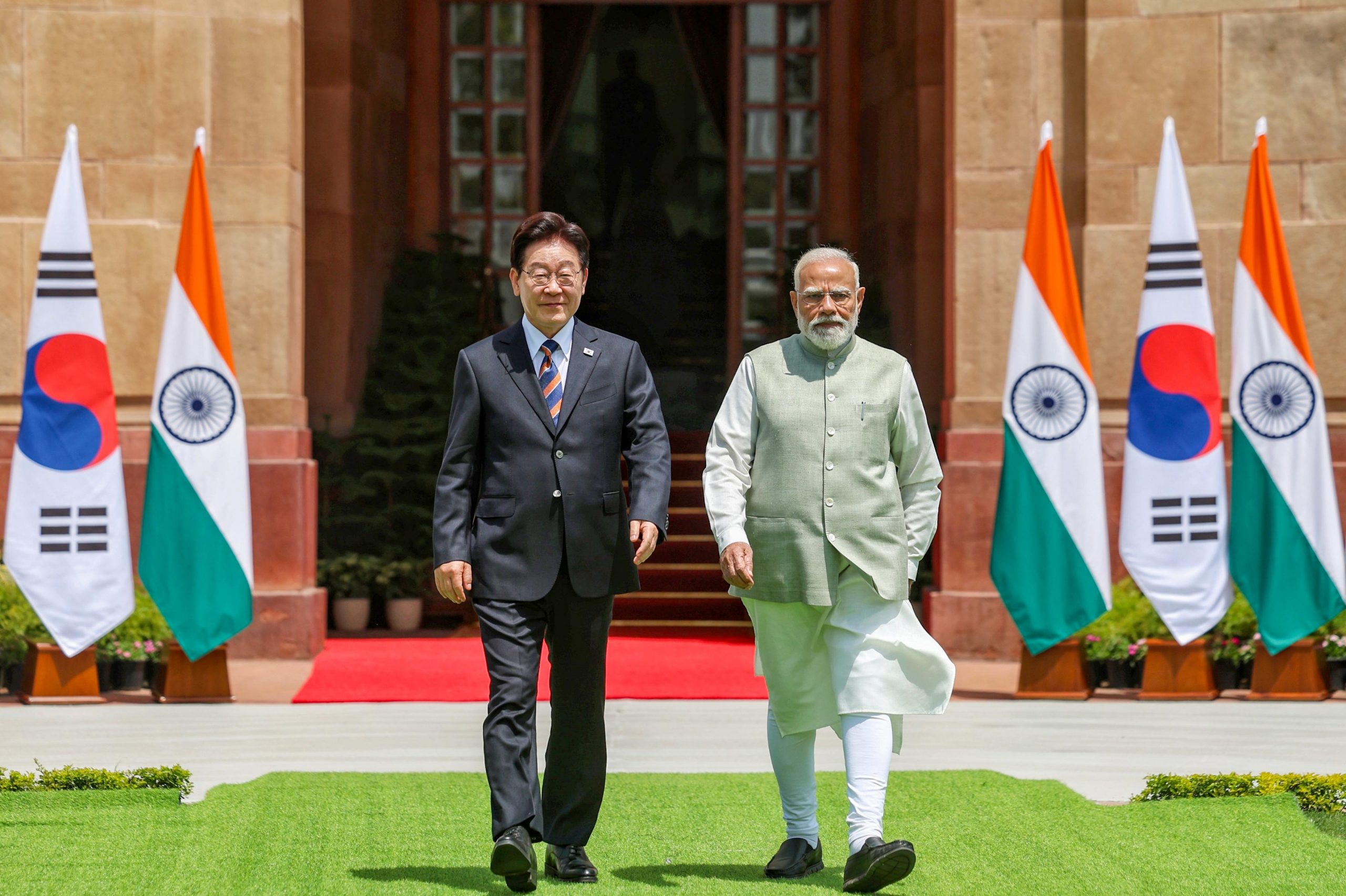
The future for ties between India and South Korea is expected to be broad and strategic as both nations have been looking at ways to enhance people-to-people ties through education, language learning, scholarships and academic exchanges, and cultural cooperation is expected to be an important sector in the endeavour.
The establishment of diplomatic ties between India and South Korea in 1973 ushered in a new era for bilateral ties, where cooperation is not restricted to historical and cultural links. Cooperation between India and South Korea have expanded over time in various sectors, including technology, economics and politics.
Trade and economic ties between India and South Korea accelerated after the implementation of the Comprehensive Economic Partnership Agreement (CEPA) in 2010. Bilateral trade between the two nations reached $25.6 billion in 2025. The two nations held the 12th Round of India-Korea CEPA Upgrade Negotiations (IK CEPA) in New Delhi in May and reviewed the progress achieved so far in the IK CEPA upgrade negotiations.
Apart from economic cooperation, the two nations have strengthened cultural cooperation. The Korean Wave, comprising K-pop, K-dramas, K-beauty and K-food, have gained popularity among Indians while South Koreans have also started showing interest in classical arts, Indian cinema, yoga and cuisine.
Cultural initiatives like artist exchanges and film festivals have offered opportunities for people of both nations to experience each other’s traditions. This growing cultural exchange demonstrates that ties between India and South Korea are not restricted to governments and institutions but are increasingly shaped by young people, students, artists and cultural communities.
Building on these developments, the future for Indian-South Korean relations appears increasingly broad and strategic. The Joint Strategic Vision for 2026-2030 highlights areas including cooperation in emerging technologies such as artificial intelligence and semiconductors, supply chain resilience, defence, maritime cooperation and Indo-Pacific.
At the same time, both nations have been looking at ways of expanding people-to-people links through education, scholarships, language learning and academic exchanges. Cultural cooperation is also expected to be an important area, with the Cultural Exchange Program extending through 2030 and 2028-29 becoming the year of India-ROK friendship. Embassy of India, Seoul, 2026.
In June, External Affairs Minister S. Jaishankar was on a two-day visit to South Korea. During his visit, he met his South Korean counterpart Cho Hyun and reviewed cooperation across various sectors.
EAM Jaishankar also held a meeting with South Korea’s National Security Director Wi Sung-lac, where they both shared their strategic assessments on global developments and the Indo-Pacific.
He also addressed the Jeju Forum for Peace and Prosperity 2026 in South Korea and underscored the need for greater international cooperation in tackling global challenges.
Earlier in April, the South Korean President paid a three-day State Visit to India. He was accompanied by a high-level delegation including ministers, senior officials and leading CEOs of Korean companies. During his visit, President Lee held talks with Prime Minister Narendra Modi and President Droupadi Murmu.
Ukrainian President Volodymyr Zelensky has criticised Donald Trump’s reported agreement to allow Russian diesel supplies to global markets,...
A 7.2-magnitude earthquake struck Panama on Friday, shaking buildings in Panama City and prompting tsunami alerts. Panama Canal...

Russian President Vladimir Putin says proposed Russian oil supplies to the US could benefit the global economy following...
Sharjah, UAE: All 22 Indian seafarers aboard the Panama-flagged crude oil tanker MT GEM NO. 2 are safe...
China is facing a human resources problem as the country’s younger generation sees technical education as lower in...
~Abhishek Vij Crude oil and natural gas exported from Gulf nations to half the world form the energy...