Last Updated: October 21, 2026
Last Updated: October 21, 2026





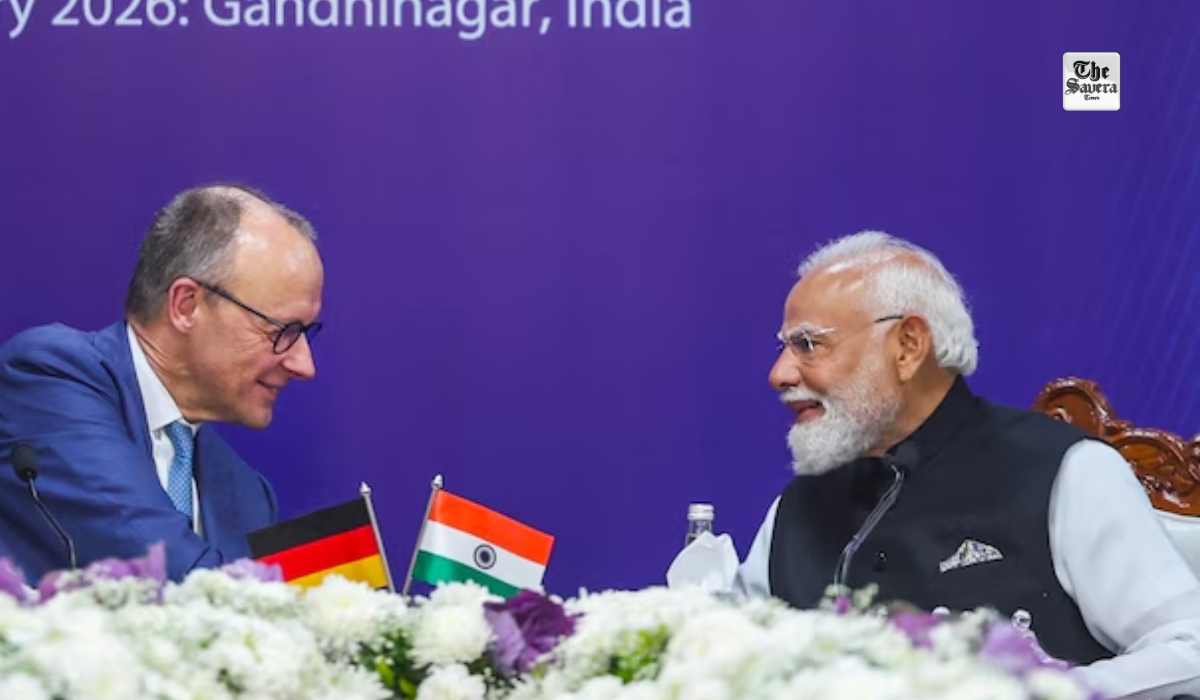
New Delhi: Germany has taken a significant step towards facilitating international travel and further strengthening India-Germany bilateral relations. Germany has announced visa-free transit for Indian passport holders through its airports. Under this, Indian travelers will no longer need to obtain a transit visa to travel to a third country via German airports.
This decision will provide significant relief to Indian travelers traveling through major German airports like Frankfurt and Munich. It will simplify the travel process, save time, and eliminate unnecessary paperwork.
Result of high-level diplomatic discussions
This decision was taken following German Chancellor Friedrich Merz’s visit to India in January 2024. During this visit, the top leadership of the two countries discussed deepening economic, educational, technical, and cultural cooperation. During the visit, special emphasis was placed on enhancing mutual contacts, trade, research, and people-to-people contacts.
According to officials, this visa-free transit policy reflects the growing trust and partnership between the two countries. This step will prove extremely beneficial not only for ordinary travelers but also for students, professionals, businesspeople, and tourists.
Special Emphasis on Education and Research Cooperation
In addition to travel facilitation, the two countries also agreed to enhance cooperation in the fields of education, research, and innovation. The leaders noted the increasing number of Indian students studying in Germany, calling it a sign of the strength of bilateral relations. The presence of Indian students, particularly in the fields of engineering, technology, natural sciences, and research, is steadily increasing.
Germany is known for its high-quality education, industry-linked courses, and research-based programs, making it a major destination for Indian students. Institutional collaboration between universities and research institutes in both countries is also steadily strengthening.
India-Germany Roadmap for Higher Education
India and Germany have agreed on an “Indo-German Roadmap for Higher Education” to give new direction to cooperation in higher education. This roadmap aims to promote student and faculty exchanges, joint degree programs, shared research projects, and academic collaboration.
Joint research and innovation will be encouraged in emerging areas such as artificial intelligence, renewable energy, climate studies, advanced manufacturing, and digital technologies. Officials say this roadmap will create a solid framework for a long-term academic partnership.
Invitation to German universities to open campuses in India
In another significant initiative, Germany has urged its universities to explore the possibility of establishing campuses in India. This move is in line with India’s new higher education policies, which allow prestigious foreign universities to operate in the country.
The opening of German university campuses in India will provide Indian students with access to international-level education within the country. This will reduce the cost of studying abroad and provide more students with access to quality education. It will also create new opportunities for joint research centers, innovation hubs, and industry-academic partnerships.
Promoting Cultural and Institutional Cooperation
The leaders of both countries also emphasized strengthening cultural exchanges, student exchange programs, and institutional cooperation. Language education, cultural programs, and educational partnerships were also discussed to enhance mutual understanding and trust between the two societies.
German officials described India as a natural partner given India’s young population and growing focus on innovation. The Indian side welcomed Germany’s commitment to strengthening the educational and research infrastructure in India.
Wide Impact on Travel, Education, and Bilateral Relations
The visa-free transit facility will immediately benefit Indian travelers who use German airports to travel to Europe or other countries. Travel industry experts believe that this decision will increase the number of Indian travelers at major German airports and strengthen India’s participation in the European air connectivity system.
From a diplomatic perspective, this decision is seen as the beginning of a new chapter in India-Germany relations. With initiatives promoting education, research, and people-to-people contacts, this policy will further strengthen long-standing cooperation, institutional partnerships, and global engagement between the two countries.
Protests in Jakarta, Yogyakarta and Bandung brought students onto the streets over rising costs, forest fires and civil...

Organisations linked to Neville Roy Singham are under US congressional scrutiny over funding. Their coverage of protests in...

US President Donald Trump says Washington and New Delhi are close to a trade agreement that will differ...

Iran has ruled out transferring its enriched uranium stockpile outside the country, with security official Mohsen Rezaei reiterating...

Donald Trump has urged Volodymyr Zelensky to pursue a peace deal with Russia, warning that Ukraine could face...

Pakistan, battling insurgencies at home and tensions along multiple borders, is too overstretched to offer meaningful military support...
Aries: The day will be auspicious...