Last Updated: November 24, 2026
Last Updated: November 24, 2026




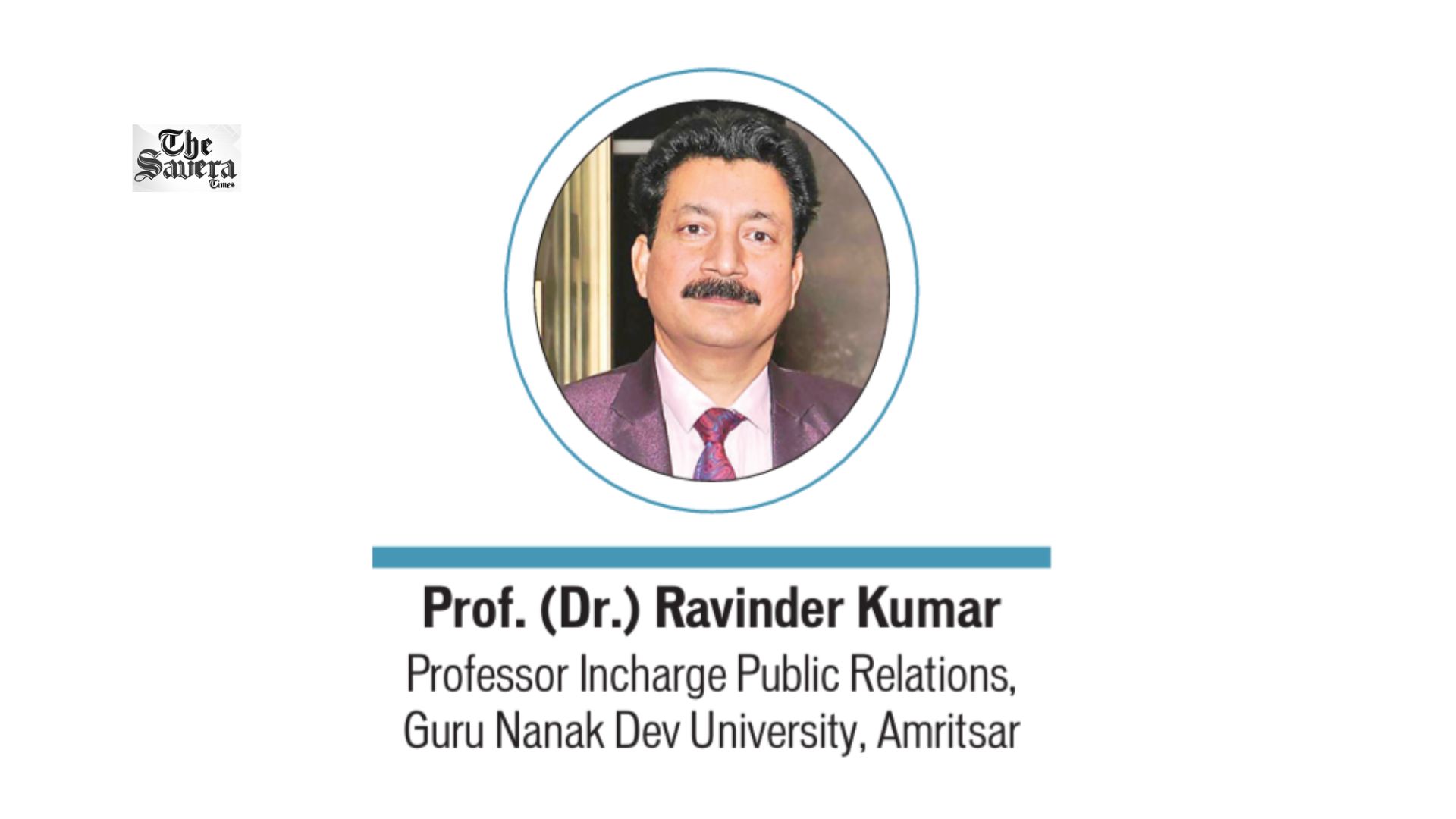
What should a historic city aspire to become after completing 450 years of its existence? How can its glorious heritage become the foundation for sustainable development, intellectual growth and global recognition? These are the larger questions that give special significance to the 57th Foundation Day of Guru Nanak Dev University, being dedicated to the 450th anniversary of Sri Amritsar Sahib. The convergence of these two important milestones represents more than a commemorative occasion. It reflects an opportunity to connect the historical identity of Amritsar with the aspirations of future generations. Through this initiative, Guru Nanak Dev University is seeking to position academic knowledge, research, cultural understanding and collective participation at the centre of the city’s long-term development. Established on November 24, 1969, to commemorate the 500th birth anniversary of Sri Guru Nanak Dev Ji, the University has, over the past 57 years, evolved into an important centre of higher education, research, sports and cultural activities. Its foundational philosophy draws inspiration from the teachings of Sri Guru Nanak Dev Ji — Kirat Karo, Naam Japo, Vand Chhako and Sarbat Da Bhala. The decision to dedicate the University’s 57th Foundation Day to the 450th anniversary of Sri Amritsar Sahib is, therefore, a meaningful expression of its connection with the city whose historical, spiritual and cultural identity is deeply intertwined with the institution. Founded by Sri Guru Ram Das Ji, Sri Amritsar Sahib has, over the centuries, developed into a centre of spiritual enlightenment, social interaction, commerce and cultural exchange. Originally known as Ramdaspur, the city was envisioned as a shared social space where people from different regions, occupations and backgrounds could settle and prosper. Historical accounts associate its early settlement with 52 different categories of traders and occupational communities. The teachings of Sri Guru Nanak Dev Ji established the values of equality, service, truth and universal welfare, while the construction of Sri Harmandar Sahib and the compilation of Sri Guru Granth Sahib by Sri Guru Arjan Dev Ji gave the city an unparalleled spiritual and cultural significance. The message of universal friendship, reflected in the Gurbani, continues to define the social ethos of Amritsar. Today, as the city completes 450 years, the challenge is to preserve this exceptional legacy while responding to the demands of contemporary urban life. Heritage conservation, environmental sustainability, economic opportunities, improved infrastructure and international connectivity must become integral elements of its future growth. This is where Guru Nanak Dev University can play a larger role beyond its traditional academic responsibilities. As per the Vice-Chancellor, Prof. (Dr.) Karamjeet Singh, the development of a city cannot be measured merely through roads, buildings, commercial establishments and physical infrastructure. Its progress completes with the quality of civilization, education, intellectual resources, research capabilities, cultural awareness and the participation of its citizens. Over the last 57 years, Guru Nanak Dev University has contributed significantly to the educational and intellectual development of Amritsar. Thousands of students educated at the University have established themselves in diverse fields, including science, technology, literature, languages, management, sports and research, bringing recognition to Punjab, the country and the international academic community.The University’s achievement of winning the Maulana Abul Kalam Azad Trophy 25 times is another significant contribution to the city’s identity. A distinctive feature of this year’s Foundation Day celebrations is the effort to transform the 450th anniversary of Sri Amritsar Sahib into a meaningful and sustained programme of intellectual and developmental engagement. Under the visionary leadership of Vice-Chancellor Prof. (Dr.) Karamjeet Singh, the University has onceptualized a year-long framework of activities that seeks to bring together the city’s historical legacy, contemporary challenges and future aspirations. Under the Vice-Chancellor’s leadership, a 13-point action plan has been envisaged, incorporating several significant initiatives, including the Amritsar 2052 Vision Document, a Global Conclave, a documentary, the 450 Voices Oral History Project and the Amritsar Declaration. The proposed Amritsar 2052 Vision Document is among the most significant components of this initiative. It seeks to encourage a comprehensive understanding of the city’s development requirements and identify areas where academic expertise, public participation and institutional collaboration can contribute to long-term progress. One of the foremost priorities is the preservation of Amritsar’s historical and religious heritage. Sachkhand Sri Harmandar Sahib, Sri Akal Takht Sahib, historic gurdwaras, temples, mosques, churches and religious places, Jallianwala Bagh, traditional markets, heritage streets and historic buildings constitute an invaluable cultural legacy. The city’s international identity provides another important opportunity. The Punjabi and Sikh diaspora across the world shares a deep emotional, cultural and historical connection with Amritsar. This relationship can be strengthened through academic partnerships, research collaborations, cultural exchanges and investment opportunities. Guru Nanak Dev University can provide an effective platform for bringing these different stakeholders together and facilitating meaningful engagement between the city and its global community. The University holds Category-I status from the University Grants Commission and an A++ grade from the National Assessment and Accreditation Council, reflecting its established academic standards. In the 2026 The Week-Hansa Research rankings, the University secured the 14th position among multidisciplinary universities in India. Its recognition in the World University Rankings for Innovation (WURI) 2026 further reflects its growing international academic profile. The history of a city is not confined to official documents, monuments and historical buildings. It also lives in the experiences, struggles, achievements and memories of its residents. Recording these individual narratives can create a valuable historical resource for future generations and preserve the living cultural heritage of the city. The 450-year journey of Sri Amritsar Sahib and the 57-year academic journey of Guru Nanak Dev University offer an opportunity to establish a stronger and more structured relationship between the two. The 57th Foundation Day of Guru Nanak Dev University carries a significance that extends beyond celebrating the institution’s achievements. It provides an opportunity to reflect on the legacy of Sri Guru Ram Das Ji, who founded the city with an inclusive and forwardlooking vision, and the universal teachings of Sri Guru Nanak Dev Ji, which continue to inspire humanity through the principles of equality, service and collective welfare. The coming together of 450 years of the Guru’s city and 57 years of the University’s academic journey should, therefore, be viewed as the beginning of a new chapter — one in which the preservation of heritage goes hand in hand with innovation, sustainable development and global engagement.
Punjab’s challenge is to build a future worthy of its glorious heritage by translating its enduring values of...
On November 22, even as the diplomatic chill between New Delhi and Islamabad remained at its deepest following...
The Counter Intelligence Wing of the Punjab Police has busted a cross-border drug smuggling network in Amritsar.

The Enforcement Directorate has summoned AAP MLA Ladi Dhons, Moga MLA Amandeep Kaur Arora, her husband and several...

Former Ghanaur MLA Madanlal Jalalpur has been reinstated in the Congress after Pargat Singh revoked his suspension. The...

Political discussions are underway over a possible alliance between Waris Punjab De, Akali Dal (Punar Surjit) and the...

Aries: The day will be auspicious...