Last Updated: October 15, 2026
Last Updated: October 15, 2026





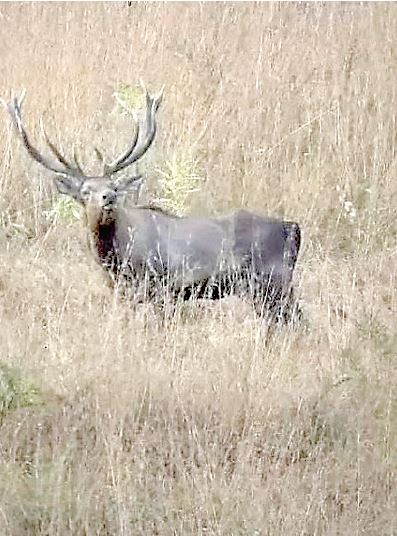
Kashif Farooq Bhat, a 24-year-old from Srinagar, is continuing his family’s legacy of protecting the hangul, Kashmir’s endemic and critically endangered stag species. The Dachigam National Park, once the hunting grounds of the Maharaja of Jammu and Kashmir, became a wildlife sanctuary before being declared a national park in 1981, spanning 141 square kilometres. Kashif lives just a kilometre from the park and works as a project leader for a non-profit dedicated to wildlife conservation.
His commitment is rooted in generations of family involvement. Both his paternal and maternal grandfathers were engaged in wildlife protection, and his father, Farooq Ahmad Bhat, continues to serve after more than 30 years. Kashif’s maternal grandfather, Abdul Rahman Mir, had been a wildlife guard and received the Wildlife Service Award in 2003. Inspired by this legacy, Kashif pursued a master’s in wildlife sciences from Aligarh Muslim University before returning to work on hangul conservation.
Historically, the hangul was also found in Himachal Pradesh, but today its population is limited to Kashmir. The 2023 census recorded 289 individuals in Dachigam, and the 2025 census, conducted in March, may have seen numbers rise above 300. Despite this, the species faces multiple threats. Political instability in the region has disrupted habitats, and occasional encounters disturb the animals. While poaching has declined, encroachment by the nomadic Bakkarwal community during summer and autumn affects the hangul’s migratory patterns, as the stags move to Upper Dachigam while herders graze livestock. Climate change has also altered snowfall patterns, delaying winter migration.
Water availability is critical, with the alpine Marsar and Tarsar lakes feeding Dachigam. Reduced flow in the Dagwan River has impacted both the hangul and other wildlife, including the Asiatic black bear, leading to increased human-wildlife conflict.
Conservation efforts have intensified. The park has planted grass species preferred by hangul, maintained water holes and salt licks, and provided alternative feed during winter. According to Parvaiz Wani, Dachigam’s central division wildlife warden, the park topped a 2022 Wildlife Institute of India evaluation among 438 protected areas, scoring 92.97 percent. Strict patrolling and habitat management have prevented poaching for over a decade. Corridors connecting Dachigam to Thajwas, Overa-Aru, and Tral sanctuaries also support the hangul, although populations in Tral are fragmented.
Farooq Ahmad Bhat has spent more than three decades in Dachigam, following the footsteps of his father and grandfather. Both have passed away while in service. Community outreach and ensuring livestock vaccination are key priorities to prevent disease transmission and strengthen conservation. Kashif also stresses protecting corridors like the Dara conservation reserve, where poaching remains a concern. Through three generations, this Kashmiri family has played a crucial role in sustaining the hangul’s fragile population in Dachigam, balancing heritage, ecology, and modern conservation challenges.
Higher reaches of Jammu and Kashmir received the season’s first snowfall, covering Doda, Gurez Valley and Pir Ki...

Mumbai Police has issued a 'Leave India' notice to Bollywood superstar Aamir Khan's nephew and actor Imran Khan....

Ram Kumar Singh, a 71-year-old retired Customs officer, was shot dead outside his home in Ara’s Kanakpuri locality....

Punjab AGTF and Haryana STF arrested Gurlal Singh in connection with Ajmeet Singh’s September 11 murder in Naushera...

Uttar Pradesh Police arrested a 28-year-old alleged criminal after an encounter in Noida’s Sector 63. Police said around...

Indian equity benchmarks opened higher on Thursday, with the Sensex rising 183.91 points and the Nifty gaining 48.60...

Aries: The day will be auspicious...