Last Updated: November 5, 2026
Last Updated: November 5, 2026





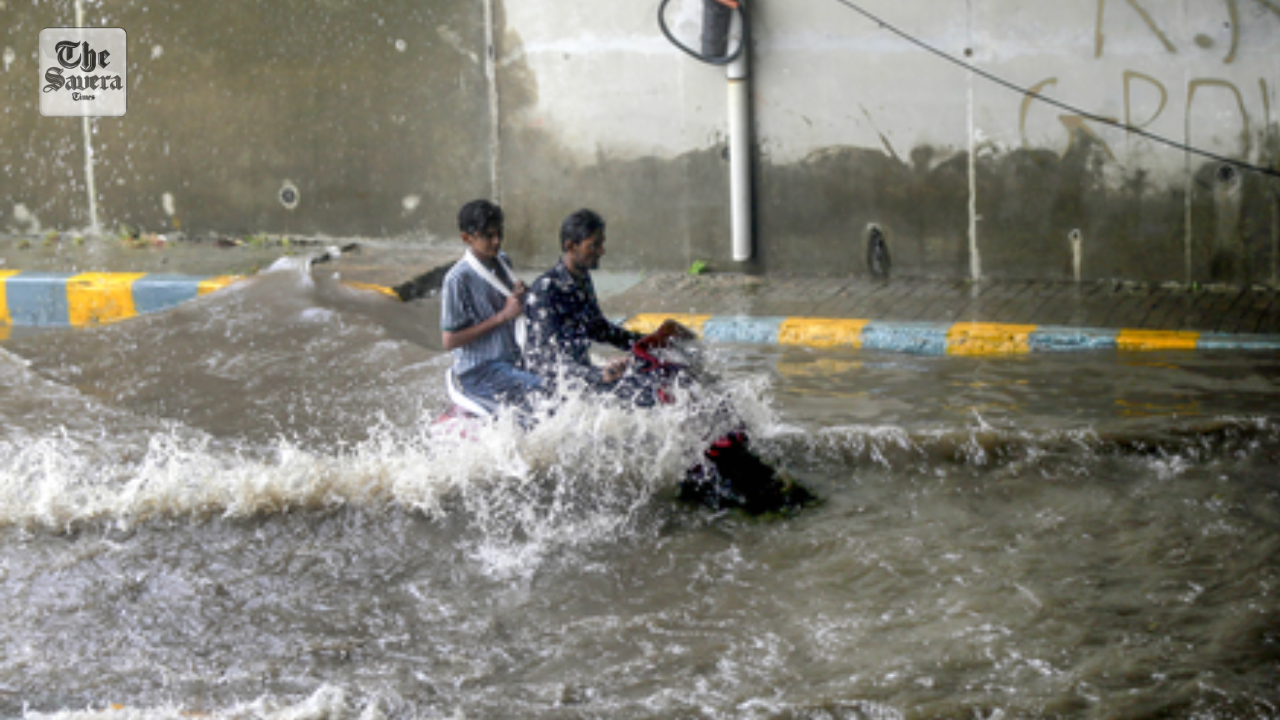
Gujarat has received widespread and consistent rainfall this monsoon, with an average of 92.64 per cent of the seasonal quota recorded across the state till Thursday, according to the State Emergency Operation Centre (SEOC).
North Gujarat leads with 96.94 per cent rainfall, closely followed by South Gujarat (96.91 per cent), East-Central Gujarat (93.79 per cent), Kutch (85.14 per cent), and Saurashtra (84.74 per cent). This uniform rainfall pattern has significantly replenished the state’s reservoirs.
Dams at High Alert as Water Levels Rise
Out of the 206 dams in Gujarat, 113 are on high alert due to rising water levels. Of these, 82 are at full capacity, while 68 are between 70-100 per cent filled.
The Sardar Sarovar Dam, regarded as Gujarat’s lifeline, currently holds over 89 per cent of its total storage capacity.
Boost to Agriculture and Kharif Crops
The abundant rainfall has been a major boost for agriculture. By September 1, 96.29 per cent of the cultivable area had been sown under kharif crops. Groundnut leads with 22 lakh hectares under cultivation, followed by cotton (20 lakh hectares) and paddy (over 8 lakh hectares), according to the state agriculture department.
In the past 24 hours alone, 24 districts and 158 talukas received more than 12 mm of rainfall.
IMD Weather Advisory
The India Meteorological Department (IMD) has issued a warning to fishermen, advising them not to venture into the sea from September 4 to 7 due to rough weather conditions.
Dual Impact on Farming
This year’s monsoon has had a twofold impact on farming — mostly beneficial for crop prospects but posing challenges in certain pockets. The more than 92 per cent seasonal rainfall ensures ample irrigation water for kharif crops like cotton, groundnut, paddy, pulses, and bajra.
Farmers in Saurashtra and North Gujarat, where groundnut and cotton are dominant, have especially benefited from timely and sufficient rains, which boosted sowing and crop growth. The assured water supply is also expected to support a strong rabi season, particularly for wheat, cumin, and mustard.
Water Management and Infrastructure Support
Gujarat’s extensive dam network — comprising over 200 major and medium reservoirs — plays a critical role in flood control, irrigation, and year-round water supply for both agriculture and drinking needs.
Urban centres such as Ahmedabad, Surat, and Vadodara have invested in stormwater drainage projects, riverfront development, and flood-control systems to mitigate heavy rainfall impacts. In rural areas, thousands of check dams, farm ponds, and watershed structures help recharge groundwater and prevent drought conditions later in the year.
A major road accident occurred in Uttarkashi, Uttarakhand, on Thursday morning. An MUV car lost control and plunged...
Good Morning Viewers! Stay updated with The Savera Times Morning Bulletin, bringing you the latest news and top...

Air pollution in the capital Delhi is becoming increasingly severe. As air quality deteriorates, the Air Quality Index...
All 11 people trapped in a tank in Telangana have been rescued safely. This includes 10 personnel from...

Chandigarh: Union Home Minister Amit Shah will participate in the ‘Save Democracy, Remove Anarchy’ march in Karnal, Haryana...

Prime Minister Narendra Modi will meet the Indian contingent of athletes participating in the Asian Para Games 2026...

Aries: The day will be auspicious...