Last Updated: November 8, 2026
Last Updated: November 8, 2026





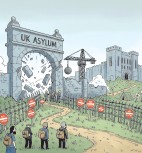
Britain is set to introduce some of its toughest immigration restrictions in decades, with the Labour government announcing sweeping changes that will sharply reduce protections for refugees and end automatic support for asylum seekers. The measures, unveiled late Saturday, mark a significant shift in the country’s asylum framework and mirror strict policies long enforced in Denmark. The new approach comes as Prime Minister Keir Starmer faces mounting pressure from the growing influence of the anti-immigration Reform UK party.
Interior Minister Shabana Mahmood outlined the changes, stating that the government would end what she called the country’s “golden ticket for asylum seekers”. Under the existing system, refugees granted protection receive a five-year residency period before they can apply for indefinite leave to remain and, eventually, citizenship. The Home Office now plans to reduce that initial protection period to 30 months. The status would be subject to regular review, and refugees would be required to return to their home countries once authorities deem conditions safe.
In a further tightening of long-standing rules, the government plans to extend the waiting time to apply for long-term residence from five years to 20 years. Officials argue that this will deter irregular migration and align the UK’s system with European countries that have adopted more restrictive asylum standards. The changes have been announced at a time when asylum claims in Britain have climbed to record levels. Official figures show that 111000 applications were filed in the year ending June 2025.
The Labour government’s programme, which will be presented in Parliament on Monday, has been described by the Home Office as the most significant overhaul of asylum policy in modern times. A key change is the removal of a statutory requirement introduced in 2005 that obliges the government to provide housing and weekly allowances to asylum seekers. Instead, support will become discretionary. Officials say this will allow the government to deny assistance to applicants who could work or support themselves but choose not to, as well as to those who commit criminal offences.
The shift comes as Starmer faces continued criticism for failing to halt small-boat crossings of the English Channel, an issue that has challenged successive Conservative governments. More than 39000 people have made the journey so far this year, surpassing last year’s total though still below the peak recorded in 2022. Labour has turned to Denmark as a model, praising the country’s strict approach to asylum management. Senior British officials have visited Danish authorities, who have overseen a dramatic reduction in asylum approvals to their lowest level in four decades. Denmark grants refugees an initial one-year residence permit, renewable only after reassessment, and encourages returns once conditions improve. Family reunification rules are also strict, requiring applicants to meet language, income, and age criteria.
Mahmood is expected to introduce similar restrictions on family reunions in the UK. The government argues that these steps are necessary to restore credibility to the asylum system and make the country a less attractive destination for irregular migration.
Refugee advocates, however, warn that the measures will not deter desperate people from attempting dangerous journeys. Enver Solomon, chief executive of the Refugee Council, urged the government to reconsider its plans, arguing that reducing protections will push vulnerable people into deeper insecurity. He added that refugees who work, pay taxes, and contribute to society should have the opportunity to build stable lives.
The Labour leadership is also likely to face dissent from within its own ranks. Several MPs on the party’s left have expressed concern that the government’s hardening stance risks alienating progressive voters, who may shift their support to the Greens or other liberal parties.
At least 11 people were killed after airstrikes hit Ash Sharyah village near Yemen's capital, Sanaa, according to...

A mural of Rabindranath Tagore at Bangladesh's Khulna Railway Station was defaced with black ink. Police have launched...

US President Donald Trump has described the confrontation with Iran as “not a war”, claiming Washington has made...

American governors and federal leaders celebrated Diwali while recognising the contributions of Indian Americans. President Donald Trump received...

Washington: A 30-year-old Venezuelan national was arrested near the White House after US Secret Service agents discovered three...

Washington: US President Donald Trump outlined plans for a sprawling aerospace exhibition venue at Florida’s former space shuttle...

Aries: The day will be auspicious...