Last Updated: October 16, 2026
Last Updated: October 16, 2026





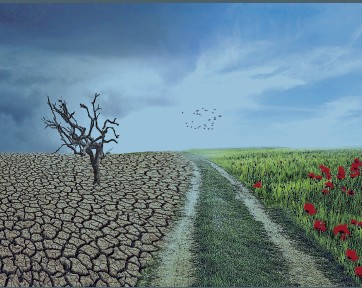
Across India, water is becoming unpredictable, scarce, and contested. From drying hand pumps in Bundelkhand to sinking water tables in Punjab and flash floods in Himalayan towns, the country’s water crisis is no longer seasonal — it is structural.
Climate change has accelerated this transformation. Rainfall patterns are becoming erratic, with intense downpours replacing steady monsoons. Rivers flood suddenly and then shrink to trickles. Glaciers that feed major river systems are retreating faster than scientists predicted. The consequences are already visible in everyday life.India’s cities are among the most vulnerable. Rapid urbanisation has outpaced infrastructure, while groundwater extraction continues unchecked. In cities like Bengaluru, Chennai, and Delhi, residents rely heavily on tanker water, often at exorbitant prices.
As aquifers drop deeper each year, poorer neighbourhoods are hit first. Women and children spend hours collecting water, while conflicts over access increase. Urban planning has failed to protect lakes, wetlands, and floodplains that naturally recharge groundwater. Experts warn that without intervention, several Indian cities could face “day zero” situations — where taps run dry — within a decade.
In rural India, farmers are facing a different reality. Unpredictable rains are disrupting crop cycles, forcing farmers to gamble on sowing times. A delayed monsoon can destroy an entire season’s income, pushing families deeper into debt.
Groundwater-dependent states like Punjab, Haryana, and Rajasthan are extracting water faster than it can be replenished. Tube wells now reach hundreds of feet deep, increasing costs and energy consumption.Small farmers, unable to afford deeper borewells, are being pushed out of agriculture altogether.The Himalayas, often called India’s water towers, are warming faster than the global average. Glacial melt initially increases river flow, creating floods and landslides.
But as glaciers shrink, long-term water availability declines.Communities in Uttarakhand, Himachal Pradesh, and Jammu and Kashmir report springs drying up — a critical source of drinking water in mountain regions. Scientists warn that millions downstream will feel the impact in the coming decades. India has no comprehensive national water management strategy aligned with climate realities. River interlinking projects, large dams, and groundwater extraction policies often ignore ecological limits.Water conservation efforts remain fragmented, and traditional systems like rainwater harvesting and community-managed tanks have been neglected or abandoned.
Environmentalists argue that water must be treated as a shared resource, not a commodity. Pricing mechanisms, crop diversification, and strict regulation of groundwater use are essential.The water crisis is not just an environmental issue; it is a social and political one. Water scarcity fuels migration, health problems, and conflict. Without urgent action, it will deepen inequalities between regions and communities.India still has time to change course — by restoring ecosystems, investing in sustainable agriculture, and rethinking urban growth. But the window is closing.The question is no longer whether India will face a water crisis. It is whether the country will act before the taps and the rivers run dry.
Varanasi: A massive explosion triggered the collapse of a two-storey building in Uttar Pradesh’s Varanasi on Thursday, leaving...
Sofia: A vessel sailing under the flag of San Marino caught fire in the Black Sea near Romania...

New Delhi: Accusing the Congress of double-speak on women dignity, the Bharatiya Janata Party (BJP) Mahila Morcha on...

New Delhi: NITI Aayog’s Frontier Tech Hub released a Data Centre Evaluation Framework to help states plan for...
New Delhi: The Supreme Court on Thursday referred the cheque dishonour cases against actor and comedian Rajpal Yadav...

Mirzapur: Uttar Pradesh Chief Minister Yogi Adityanath on Thursday accused the Samajwadi Party (SP) and the Congress of...
Aries: The day will be auspicious...