Last Updated: October 15, 2026
Last Updated: October 15, 2026





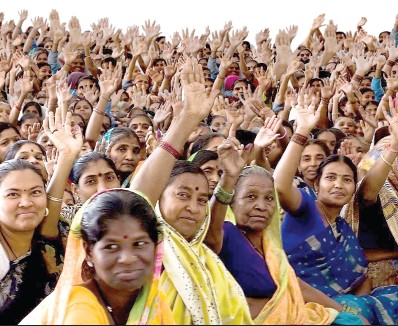
Every morning in India begins long before offices open or screens light up. It begins with hands sweeping streets, kettles boiling on roadside carts, buses being cleaned, vegetables unloaded, and construction sites coming alive. These early movements belong to India’s informal workers—millions of people whose labour sustains daily life, even though their work often remains unseen, uncounted, and undervalued.
India’s informal economy employs nearly 90% of the country’s workforce. From street vendors and sanitation workers to delivery riders, domestic helpers, agricultural labourers and small repair workers, informal labour forms the backbone of how Indian cities and villages function. Without them, everyday life would slow, falter, and eventually stop.
Unlike formal employment, informal work rarely comes with contracts, fixed wages, paid leave, or social security. Yet it is this flexibility—often born out of necessity—that allows India’s economy to adapt quickly to changing conditions. When markets shift, construction pauses, or migration patterns change, informal workers adjust faster than any policy can. They move where work exists, learn new skills on the job, and fill gaps that formal systems fail to anticipate.
During the COVID-19 lockdowns, this reality became impossible to ignore. When informal workers disappeared from cities overnight, urban life collapsed. Construction halted, food supply chains broke down, waste piled up, and services stopped functioning smoothly. Their absence revealed a truth long taken for granted: informal workers are not peripheral to India’s economy, they are central to it.
Yet even after the crisis, recognition has remained limited. Informal workers are often discussed only in moments of disruption—during strikes, migrations, or disasters—rather than as a permanent foundation of economic life. Their contributions are rarely reflected in wages, working conditions, or long-term security.
Take street vendors, for example. They provide affordable food, convenience, and livelihoods to millions, yet face frequent eviction and harassment. Domestic workers enable middle-class households to function by managing childcare, cooking, and cleaning, but remain excluded from many labour protections. Construction workers build India’s skylines, roads, and infrastructure, yet often live in temporary settlements without basic services.
What sustains informal workers is not institutional support but resilience. Skills are passed down through families and communities. Informal networks provide job leads, emergency loans, and shared resources. Trust replaces paperwork; reputation substitutes for certification. These systems are fragile, but they endure because formal alternatives are often inaccessible.
India’s economic growth story is frequently told through statistics, start-ups, and infrastructure projects. But beneath these narratives lies a quieter reality: growth is made possible by people who wake up early, work long hours, and return home without certainty about tomorrow’s income. Their labour creates stability for others while their own lives remain precarious.
Improving the conditions of informal work does not require dismantling the informal economy. It requires acknowledging it. Simple measures—access to healthcare, accident insurance, affordable housing, predictable workspaces, and fair regulation—can significantly improve lives without disrupting livelihoods. Policies must be designed with workers, not just for them.
Formalisation, when discussed, is often framed as bringing informal workers into rigid systems that do not reflect their realities. Instead, the goal should be protection without exclusion: recognising informal work as legitimate work, worthy of dignity and security.
India’s strength has always rested in its ability to function despite imperfections. Informal workers embody this adaptability. They keep cities clean, food affordable, services accessible, and economies moving. They are present in every neighbourhood, market, station, and street corner.
To truly understand how India runs each day, one must look beyond offices and institutions to the people whose labour rarely pauses and rarely receives applause. Informal workers do not just support the economy—they are the economy. Recognising this is not charity or sentiment. It is realism.Until India learns to value the hands that keep it moving, its progress will remain incomplete—built on effort that is essential, yet still waiting to be fully seen.
New Delhi: The Delhi High Court on Thursday recorded the assuarance by Delhi Polices promise that all legal...
New Delhi: The Ministry of Defence on Thursday said it has signed contracts worth Rs 4,106 crore for...

Patna: An Excise Department constable was killed after suspected liquor smugglers and an alleged accomplice opened fire on...

New Delhi: Amid the ongoing protests, investigators have found that certain elements backed by Pakistan launched a multi-layered...
Good Afternoon Viewers! Stay updated with The Savera Times Afternoon Bulletin, bringing you the latest news from Punjab,...

New Delhi: Heavy rain and thunderstorms swept parts of Delhi-NCR on Thursday as dark clouds covered the national...
Aries: The day will be auspicious...