Last Updated: October 18, 2026
Last Updated: October 18, 2026





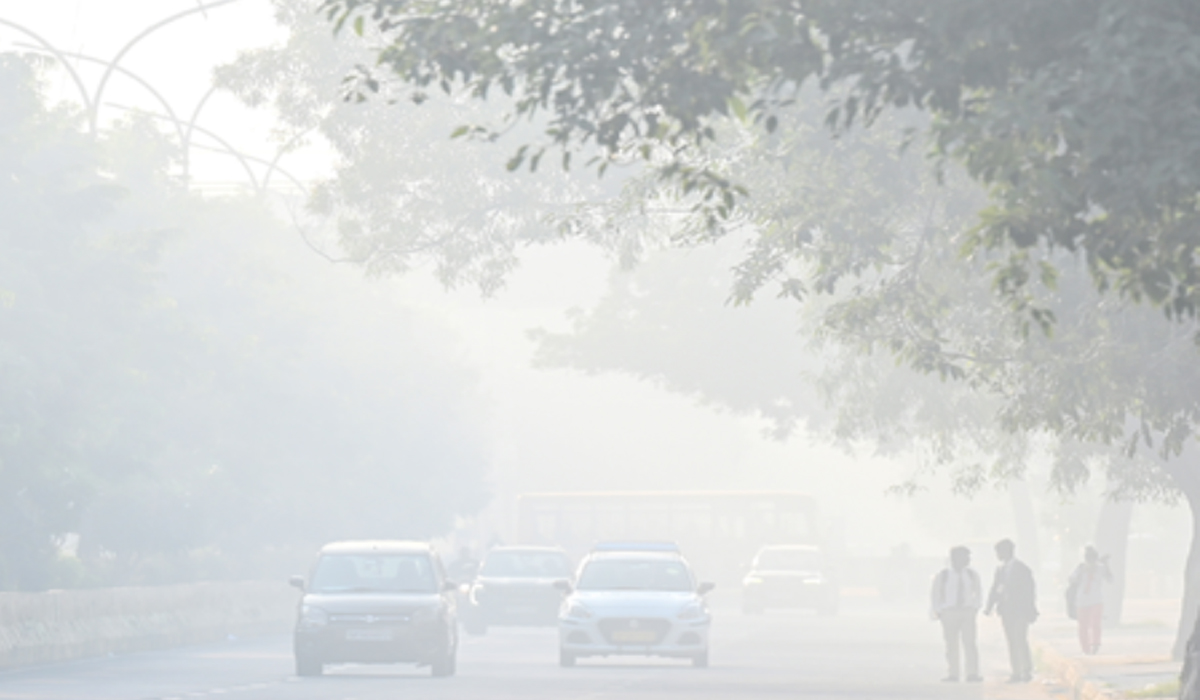
South Asia bears the highest current economic burden from air pollution among world regions, equivalent to 10 per cent of regional gross domestic product (GDP), while implementing 25 integrated climate and clean air solutions could generate $21 in economic benefits for every $1 invested. This was simply what a new UN assessment revealed. The assessment Hidden Assets: The Economic and Health Case for Climate and Clean Air Action by the United Nations Environment Programme (UNEP) and the Climate and Clean Air Coalition found that the 25 solutions could avoid damages equivalent to around 4 per cent of South Asia’s GDP in 2035, rising to 14.5 per cent by 2100, the highest of the 15 regions assessed. The 21 clean air and near-term climate solutions alone would deliver benefits exceeding 3 per cent of regional GDP in 2035. In South Asia, clean cooking and heating is the leading solution in 2035, followed by energy transformation for power generation and industrial process emissions standards. The assessment cites India’s Pradhan Mantri Ujjwala Yojana (PMUY) as an example of a clean cooking programme addressing distributional impacts and equity. Citing research by Mani et al (2020), it said PMUY expanded liquefied petroleum gas (LPG) access to approximately 80 million low income households. The report’s India case study further showed that much of the recent progress in reducing emissions from the residential sector is attributable to PMUY, which expanded LPG connections and facilitated the spread of cleaner cooking fuels. The report’s findings placed this progress in the context of a continuing global clean cooking challenge. In 2025, 24 per cent of the world’s population relied on solid fuels for cooking, while the assessment’s integrated action scenario assumes that efficient access to clean cooking can eliminate traditional solid fuel cooking by 2035. By 2050, clean cooking and heating falls to fourth, overtaken by industrial process emissions standards, vehicle emission standards and energy transformation for power generation. The assessment showed that the relative importance of individual measures changes according to a region’s energy system, pollution profile and stage of development. The authors of the report also said clean cooking and heating remains highly significant in developing regions even as energy transformation becomes more prominent with rising energy demand. In South Asia, its importance reflects the region’s starting point, energy system and pollution profile rather than a different policy framework. The assessment projected that fine particulate matter or PM2.5, concentrations will rise in South Asia and Southeast Asia without further action, contrasting with Centrally Planned Asia, where concentrations are projected to decline under existing legislation. By 2050, avoided heat related labour productivity losses alone are estimated to be worth approximately 2 per cent of South Asia’s GDP. The 25 solutions are intended to operate as a package. The report says their full benefits materialise only when they are implemented together, although their economic returns and priority differ across regions and over time. The assessment cautioned that no single measure can fully address the PM2.5 burden in any region. Any one measure delivers at most 50 per cent of the total reduction potential in a region or year, reinforcing the need to combine clean cooking with measures across energy, transport, industry, agriculture and waste. Globally, implementing the 25 solutions could generate around $15 in economic benefits for every $1 invested. The benefits will be equivalent to 2.8 per cent of global GDP in 2035, 4.5 per cent in 2050 and 11.4 per cent in 2100. The economic returns include market benefits such as lower healthcare expenditure, higher labour productivity and avoided physical damage, as well as the monetary value of fewer premature deaths and healthier lives. Even excluding non market welfare benefits, the measures return around $4 for every $1 invested. Market returns exceed implementation costs within 10 years. “For too long, we have treated climate action as a cost to be managed and air pollution as the unfortunate outcome of development. This report shows the opposite: clean air is a key driver of development, health, food and energy security, and climate stability,” said Inger Andersen, executive director of UNEP. “Proven solutions already exist. What we lack is the decisive leadership from governments, financial institutions, and businesses to deliver them with the speed and coordination this crisis demands,” she said. The annual economic benefits of implementing the 25 measures are estimated at 2.8 per cent of global GDP in 2035, 4.5 per cent in 2050 and 11.4 per cent in 2100. This compares with government spending equivalent to 2.18 per cent of global GDP on explicit fossil fuel subsidies in 2022 and healthcare spending equivalent to 9.3 per cent of GDP in 2023. Every year of delayed action would forgo more than $1.5 trillion in annual combined market and non market benefits, equivalent to 0.5 per cent of global GDP. The authors of the report estimated that implementation delays could average 7.5 to eight years globally. Institutional barriers are the single largest contributor, accounting for approximately 2.4 years over a notional 15 year implementation window. A delay of this scale roughly halves the emissions reductions achievable by 2035. In Delhi, achieving current national air quality standards on schedule from 2026 would reduce the cumulative PM2.5 exposure burden by 20 per cent by 2040. With an eight year delay, the reduction would be only 10 per cent, meaning half the benefit would be lost. “A benefit cost ratio of 15 to 1 would attract capital instantly in almost any other sector. The only reason it hasn’t integrated climate and clean air action yet is that the returns are split across health systems, productivity and avoided climate damage rather than landing on a single balance sheet,” said Elliott Harris, independent co-chair of the assessment.
Azad M. Madni, an Indian-American engineer and USC professor who grew up in Mumbai, has won the 2026...

Nairobi: Kenya’s Ministry of Health on Saturday confirmed four new cases of Ebola Bundibugyo virus disease, bringing the...

Increasing Houthi attacks on Saudi Arabia are testing Pakistan’s ability to defend Riyadh without affecting its ties with...

Nepal is seeking substantial financial assistance from India ahead of Prime Minister Balendra Shah’s proposed visit to New...

The race to succeed Antonio Guterres remains uncertain after three leading candidates faced opposition from two permanent members...

Democratic lawmakers have criticised Donald Trump for waiving key sanctions and tariff provisions under the Graham Act, citing...

Aries: The day will be auspicious...