Last Updated: October 16, 2026
Last Updated: October 16, 2026





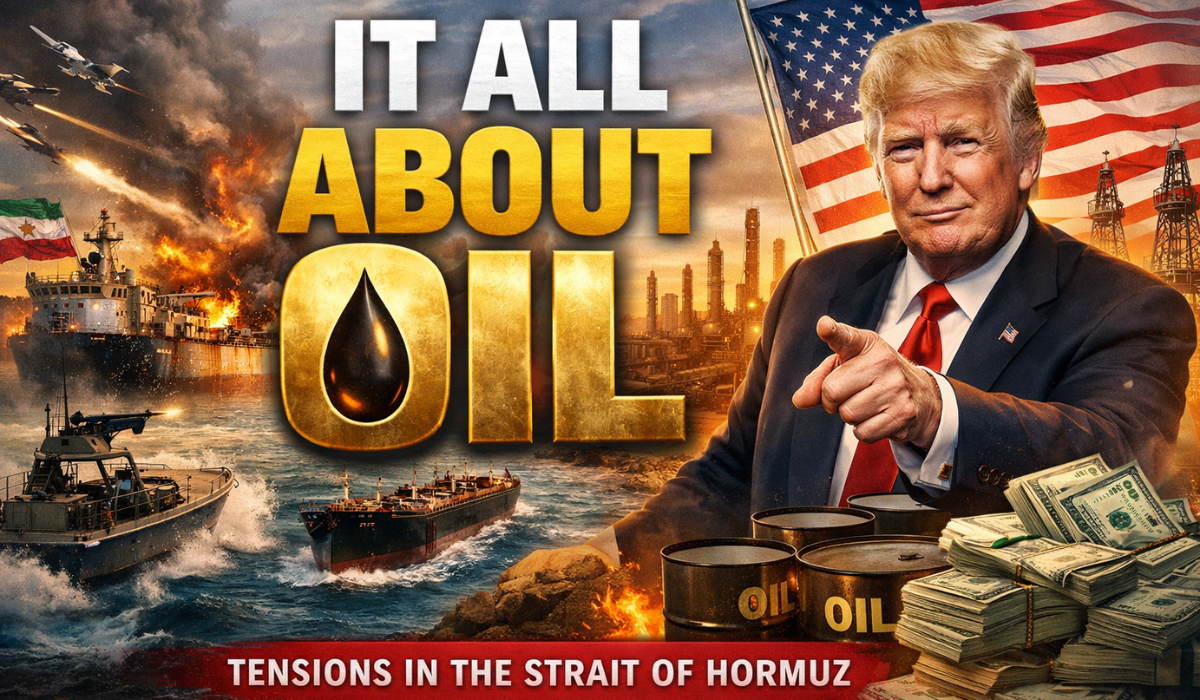
The world’s most critical oil artery is under strain — and while global markets tremble, the United States is quietly gaining ground. What appears to be a crisis for many nations is turning into leverage for Washington. At the heart of this shift lies a simple reality: oil flows shape power.
The Strait of Hormuz, a narrow passage between Iran and Oman, carries nearly 20% of the world’s oil supply in normal times. When tensions escalated and tanker movement slowed to a trickle, the global system felt the shock instantly. This wasn’t just another geopolitical flashpoint — it was a direct hit to the world’s energy lifeline.
The world’s most critical oil artery is under strain — and while global markets tremble, the United States is quietly gaining ground. What appears to be a crisis for many nations is turning into leverage for Washington. At the heart of this shift lies a simple reality: oil flows shape power.
The Strait of Hormuz, a narrow passage between Iran and Oman, carries nearly 20% of the world’s oil supply in normal times. When tensions escalated and tanker movement slowed to a trickle, the global system felt the shock instantly. This wasn’t just another geopolitical flashpoint — it was a direct hit to the world’s energy lifeline.
America’s energy pivot changes the story
But this time, the United States is not reacting like it used to.
Over the past decade, it has transformed into the world’s largest oil producer. Domestic output now exceeds 13.6 million barrels per day, with total energy production surpassing 24 million barrels daily. Crucially, the U.S. no longer depends on the Strait of Hormuz for its energy needs.
Most imports come from stable neighbors, while domestic supply dominates consumption. That shift has rewritten the rules of crisis economics for America.
From vulnerability to opportunity
Here’s where the story flips.
As Middle Eastern supply tightens, global buyers are forced to look elsewhere. The United States becomes the obvious alternative. American oil, once competing in a crowded market, is now in high demand.
Exports are surging. Europe is increasing purchases rapidly. Asian markets are doubling shipments. American refineries are pushing out record volumes of gasoline, diesel, and jet fuel.
Higher prices, bigger profits
Rising global prices are not just a burden — they are also a revenue engine.
For American oil producers, this is a high-margin environment. Shale companies earn more per barrel. Refineries benefit from stronger spreads. Energy jobs and investments gain momentum.
The same price spike hurting import-dependent economies is boosting U.S. energy revenues.
The political narrative takes shape
This economic reality feeds directly into the administration’s messaging.
The argument is clear: energy independence equals national strength. By expanding domestic production and reducing reliance on foreign oil, the U.S. has insulated itself from global shocks. Now, instead of absorbing the crisis, it is capitalizing on it.
There’s also a strategic shift in tone. Allies reliant on Hormuz are being urged to take greater responsibility for securing their own supply lines. The U.S., meanwhile, continues to benefit economically without fully carrying the burden of protection.
The hidden cost at home
Of course, the story isn’t entirely positive.
Higher oil prices still hit American consumers. Gasoline becomes more expensive. Transportation costs rise. Inflation pressures creep back into the economy.
Reportedly, U.S. gas prices have surged, with national averages rising rapidly past $3.90–$4.00 per gallon by late March 2026, as pre-war inventories diminish. Diesel prices, crucial for shipping and agriculture, are rising even faster.
But the impact is uneven. While households feel the pinch, the broader economy gains from export growth and energy sector expansion. Compared to Europe or Asia, the U.S. remains in a stronger position.
A long-term shift in global energy power
If the disruption continues, its effects may outlast the crisis itself.
Countries that once depended heavily on the Middle East may permanently diversify their suppliers. That creates lasting opportunities for American oil. Market share gained during a crisis often doesn’t fully reverse afterward.
Even when the Strait of Hormuz re opens — as economic necessity will likely force it to — the global energy map may look different. The U.S. could emerge with stronger trade relationships and deeper influence.
The bigger picture
The tensions in the Strait of Hormuz are painful for much of the world. They expose vulnerabilities, disrupt economies, and raise costs across industries.
But for the United States, the same crisis is proving something else entirely: energy strength translates into geopolitical and economic leverage.
What was once America’s biggest weakness — dependence on foreign oil — has turned into one of its greatest advantages.
And in this moment, that advantage is paying off.
Pakistan is heading into its wheat-growing season with a serious water problem. The country is facing a projected...
Imagine a foreign national standing among Indian citizens at a political protest, raising questions about the government or...

For thousands of Indian tech workers in the United States, a job offer is only the beginning of...

Three years ago, on October 7, 2023, Israel woke up to one of the deadliest attacks in its...

Imagine being seriously injured inside a flying aircraft, with blood on your clothes, passengers in panic and the...

Imagine the world’s biggest diesel exporter turning off its export taps. That is the concern after US President...
Aries: The day will be auspicious...