Last Updated: November 8, 2026
Last Updated: November 8, 2026





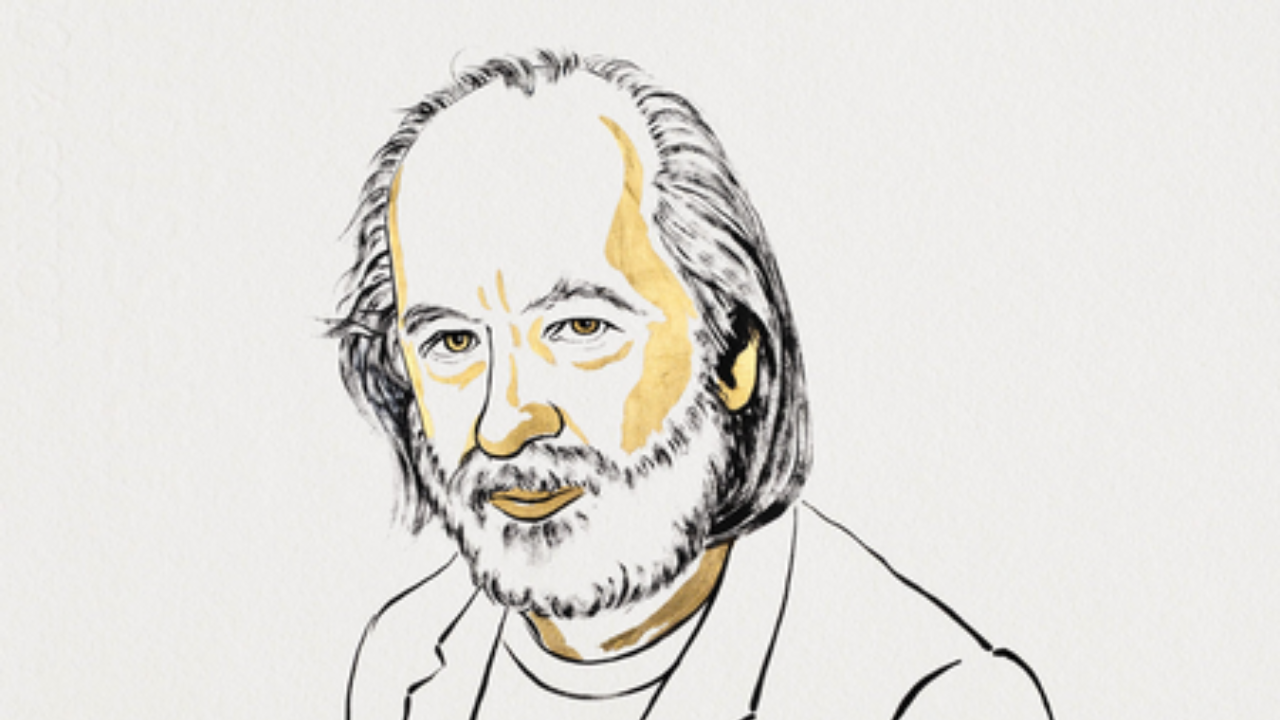
New Delhi: Hungarian writer László Krasznahorkai has been awarded the 2025 Nobel Prize for Literature, recognised for his dense, visionary, and apocalyptic prose that draws from Gogol, Kafka, and Beckett, yet extends into both Central European and Eastern mysticism.
The Swedish Academy hailed his work “for his compelling and visionary oeuvre that, in the midst of apocalyptic terror, reaffirms the power of art.”
Second Hungarian Nobel Laureate
Krasznahorkai, 71, is the second Hungarian to win the Nobel Prize in Literature after Imre Kertész in 2002. He had earlier won the Man Booker International Prize in 2015, making him a globally recognised literary figure.
The author has described his writing as “reality examined to the point of madness.” His works are marked by long, unbroken sentences, sudden shifts in narrative voice, and fluid treatment of time. Critics note that his pacing often mirrors the slow churn of social change.
Major Works and Themes
Satantango (1985; English, 2012): A postmodern novel structured like a tango, depicting a decrepit Hungarian village deceived by a conman. Adapted into a seven-hour film by Béla Tarr.
The Melancholy of Resistance (1989; English, 2000): A political allegory about unrest in a town, featuring a dead whale, a circus, and rabble-rousers—reflecting Eastern Europe’s upheaval.
War and War (1999; English, 2006): A Hungarian man becomes obsessed with a manuscript and journeys to New York to preserve it online.
Destruction and Sorrow Beneath the Heavens (2004; English, 2016): Explores modern China’s relationship with its traditional culture.
Seiobo There Below (2008; English, 2013): Spanning time and geography from Japan to Renaissance Italy, it examines art and beauty, with 17 chapters structured by the Fibonacci sequence.
Baron Wenckheim’s Homecoming (2016; English, 2019): A complex tale of an eccentric aristocrat’s return to Hungary, blending politics, murder, and social decay. Krasznahorkai called this his most complete novel.
“One Book” Philosophy
In an interview, Krasznahorkai said:
“I wasn’t satisfied with the first, and that’s why I wrote the second… With Baron, I can close this story. With this novel, I can prove that I really wrote just one book in my life.”
Despite this, he has continued to publish novels, novellas, and essays, further enriching his haunting and challenging literary landscape.
At least 11 people were killed after airstrikes hit Ash Sharyah village near Yemen's capital, Sanaa, according to...
A mural of Rabindranath Tagore at Bangladesh's Khulna Railway Station was defaced with black ink. Police have launched...

US President Donald Trump has described the confrontation with Iran as “not a war”, claiming Washington has made...

American governors and federal leaders celebrated Diwali while recognising the contributions of Indian Americans. President Donald Trump received...
Washington: A 30-year-old Venezuelan national was arrested near the White House after US Secret Service agents discovered three...

Washington: US President Donald Trump outlined plans for a sprawling aerospace exhibition venue at Florida’s former space shuttle...
Aries: The day will be auspicious...