Last Updated: October 12, 2026
Last Updated: October 12, 2026





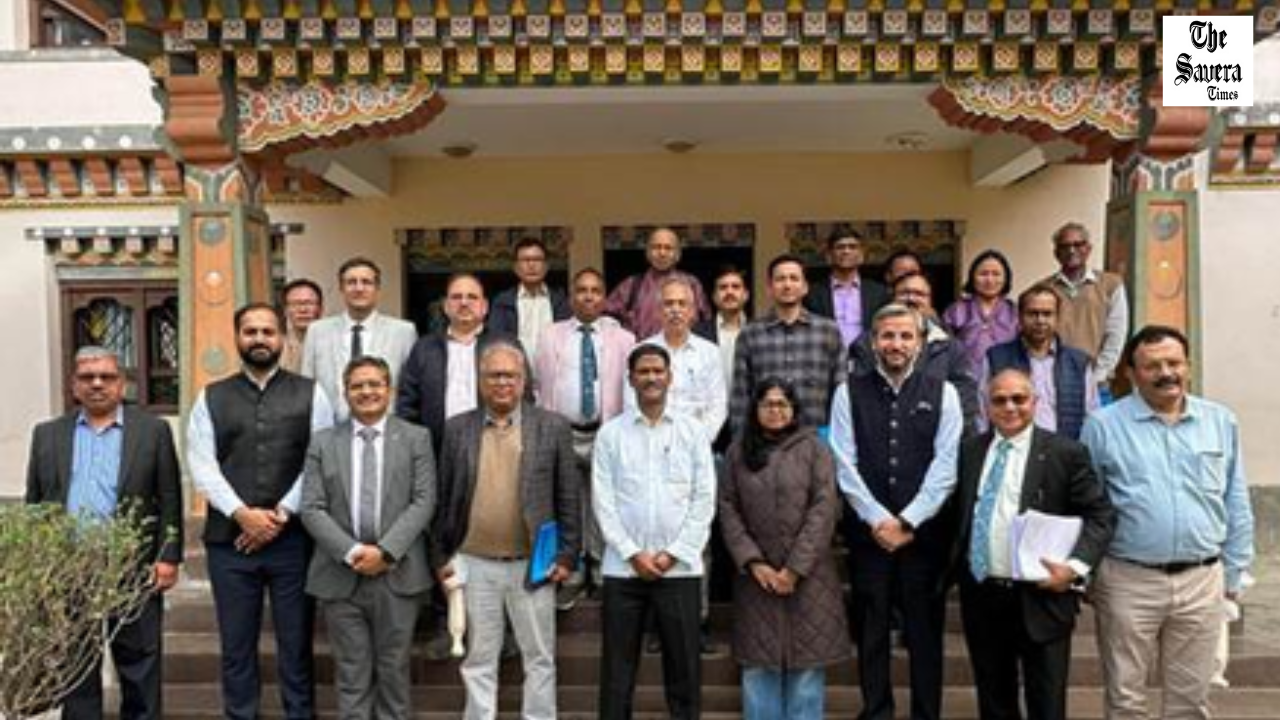
India and Bhutan have agreed to further strengthen bilateral cooperation on trans-boundary rivers and hydropower projects, affirming their longstanding partnership in water resource management and clean energy development. This decision was reached at a high-level official meeting in Thimphu, the capital of Bhutan, where senior officials from both nations discussed key areas of joint action.
The discussions, held from February 24 to 27, 2026, were led on the Indian side by V. L. Kantha Rao, Secretary of the Department of Water Resources, River Development & Ganga Rejuvenation (DoWR, RD & GR) in the Ministry of Jal Shakti. The Indian delegation included officers from the Jal Shakti Ministry, representatives from the state governments of Assam and West Bengal, and officials from WAPCOS Ltd.
A central theme of the talks was cooperation on trans-boundary rivers waterways that flow across the borders of both countries and serve as vital sources of water, irrigation and flood control. Officials reviewed mechanisms for joint flood management and flood forecasting, aiming to enhance preparedness and reduce disaster risks in vulnerable regions.
Strengthening already established river-monitoring networks and hydro-meteorological observation systems was another key focus, particularly on Bhutan’s trans-border rivers that eventually flow into India’s Assam and West Bengal. Improved data-sharing arrangements are expected to boost both countries’ ability to issue timely warnings during floods and extreme weather events triggered by climate change.
These steps are significant not only for improving disaster response but also for managing shared water resources sustainably. Experts say that effective data exchange on river flows and meteorological patterns is critical for both nations to cope with the increasing frequency of extreme weather events in the region.
Hydropower has long been a cornerstone of India-Bhutan relations, with several major projects already generating clean energy and contributing to Bhutan’s exportable power capacity. One of the key projects discussed was the Punatsangchhu-I Hydroelectric Project, which is being implemented in Bhutan in partnership with India.
The two sides reviewed progress on this project and explored ways to enhance technical cooperation, potentially speeding up construction and ensuring the integration of modern technologies. Future collaboration is likely to revolve around expanding hydropower capacity and exploring further opportunities for bilateral clean energy investment.
Bhutan’s hydropower potential is immense and has been a major export product to India, generating revenue for Bhutan and providing affordable, clean electricity to Indian states. Several other initiatives including privately financed projects like the Dorjilung Hydropower Project, developed in partnership with Indian entities and international funding highlight the growing depth of energy cooperation.
With climate change influencing water availability, glacial patterns and flood risks in the Himalayan region, both countries acknowledged the need for joint action on emerging challenges. Bhutan’s mountainous terrain makes it particularly vulnerable to glacial lake outburst floods (GLOFs), while downstream Indian states also bear the brunt of seasonal flooding.
Experts have emphasized that collaborative river management including enhanced forecasting, early warning systems, and joint emergency response protocols can help mitigate the adverse impacts of extreme events. Strengthening institutional frameworks for cooperation was therefore a key takeaway from the meeting.
The talks in Thimphu reflect the robust and evolving partnership between India and Bhutan, particularly in areas of natural resource management and energy cooperation. Both nations have long enjoyed strong political and cultural ties, and deepening cooperation on rivers and hydropower adds a strategic dimension to their relationship.
As climate risks grow and energy demands increase, this collaborative approach could serve as a model for regional cooperation on shared water resources. By aligning infrastructure development with sustainable water management, India and Bhutan are positioning themselves as key partners in addressing the intertwined challenges of energy security and environmental change.
A Sudanese rights group says at least 72 gold miners were killed in an air strike near the...

US President Donald Trump is scheduled to attend the ASEAN summit in Manila on November 16 before travelling...

An Indian national injured in the October 10 attack on Riyadh’s King Khalid International Airport has died, taking...

Ukrainian President Volodymyr Zelenskyy says he was unaware of Donald Trump’s announcement of an immediate energy ceasefire between...

Colombian businessman Alvaro Pulido Vargas has been arrested in Florida over two US federal cases involving alleged bribery...

Republican Senator Thom Tillis has questioned the legality of Trump's Russian diesel deal, while John Barrasso defended it...

Aries: The day will be auspicious...