Last Updated: October 10, 2026
Last Updated: October 10, 2026





Abhishek Vij
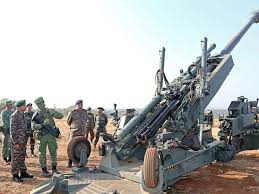
In response to the evolving global landscape, India has, over recent times, been actively engaged in efforts to augment its military capabilities. It is only natural for Pakistan to feel perturbed by this development. This unease was particularly palpable recently when India concluded military agreements worth $2.8 billion aimed at quadrupling its defensive shield.
These agreements underscore a firm resolve to further bolster the strength of both the Indian Army and the Indian Air Force. According to the latest reports, India has also taken concrete steps to enhance the power of its Navy. India is determined to ensure that its presence in the Indo-Pacific and Indian Ocean regions remains undiminished in any way.On Friday, India formally inducted the INS Aridhaman—a new, indigenously built, nuclear-powered ballistic missile submarine—into its naval fleet.
This induction has significantly reinforced the naval component of the nation’s nuclear military triad. This was a highly classified project, the details of which were disclosed only upon its successful completion. Prior to this, another submarine, the INS Arihgat, had been inducted into the Navy following months of rigorous sea trials. This impressive augmentation of naval power took place in Visakhapatnam, Andhra Pradesh, in the presence of Defense Minister Rajnath Singh.
Another significant development is that, even amidst such a challenging geopolitical climate, India continues to export state-of-the-art, domestically manufactured weaponry to Third World nations without any hindrance. These reports had an immediate ripple effect across the border in Pakistan. Panic spread among Pakistani citizens, fueled by the apprehension that India might now be preparing to launch the second phase of ‘Operation Sindoor.’It is worth recalling that Defense Minister Rajnath Singh has explicitly stated that ‘Operation Sindoor’ has not been terminated; it has merely been put on hold.
Should Pakistan fail to desist from its terrorist activities and attempt to reactivate its terror launchpads, we will once again teach it a befitting lesson. However, with the sudden surge in the Indian Army’s strength, a campaign of threatening rhetoric directed at India has abruptly begun within the Pakistani media. Media outlets there are asserting that India is bolstering its military capabilities precisely because it intends to launch an attack on Pakistan. Local leaders known for their venomous propaganda are boasting that they had “beaten” India during “Operation Sindoor” and would now “enter India to beat them again.” This sudden surge in propaganda appears to be a calculated move by Pakistani Army Chief Asim Munir and Prime Minister Shehbaz Sharif to divert the public’s attention away from the economic destitution resulting from the ongoing conflict in the Gulf region.
Furthermore, a loan owed by Pakistan to the UAE is due for repayment on April 16. The UAE has formally demanded the return of its funds. Saudi Arabia—with which Pakistan shares a military pact—also found itself without Pakistan’s support amidst the attacks being carried out by Iran in the current West Asian conflict. Meanwhile, Pakistan’s economy has spiraled into instability; petrol prices have soared to 520 rupees per liter.Under such circumstances, public outrage is entirely justified. Asim Munir’s boastful claim that he would broker a reconciliation between Iran and the United States in Islamabad has proven to be nothing more than empty rhetoric.
Consequently, the Pakistani leadership is left with only one recourse: to escalate tensions with India and stoke fears of war, thereby ensuring that the Pakistani populace forgets about the government’s incompetence and the ongoing conflict with Afghanistan. With the insurgency in Balochistan persisting, the Shehbaz government has proven to be a failure on every front. Pakistan now appears to be on a trajectory toward fragmentation into four separate entities. It is for this very reason that Pakistan’s rulers are striving to divert the public’s attention away from their own failures and refocus it squarely on a potential military confrontation with India.
Jaipur: The Anti-Narcotics Task Force (ANTF) of Rajasthan Police has arrested wanted drug smuggler Sohanlal, alias Sonu, carrying...

Imagine a foreign national standing among Indian citizens at a political protest, raising questions about the government or...

Aizawl: The Assam Rifles, in coordination with other law enforcement agencies, seized methamphetamine tablets and foreign-made cigarettes worth...
Kolkata: A Returning Officer (RO), acting on behalf of the Election Commission of India (ECI), has lodged a...

New Delhi: The Delhi BJP Mahila Morcha staged a protest on Saturday to demand the expulsion from Congress...
Sanaa: Saudi warplanes launched fresh airstrikes on Houthi-held areas in northwestern Yemen on Saturday as fighting intensified between...