Last Updated: October 8, 2026
Last Updated: October 8, 2026





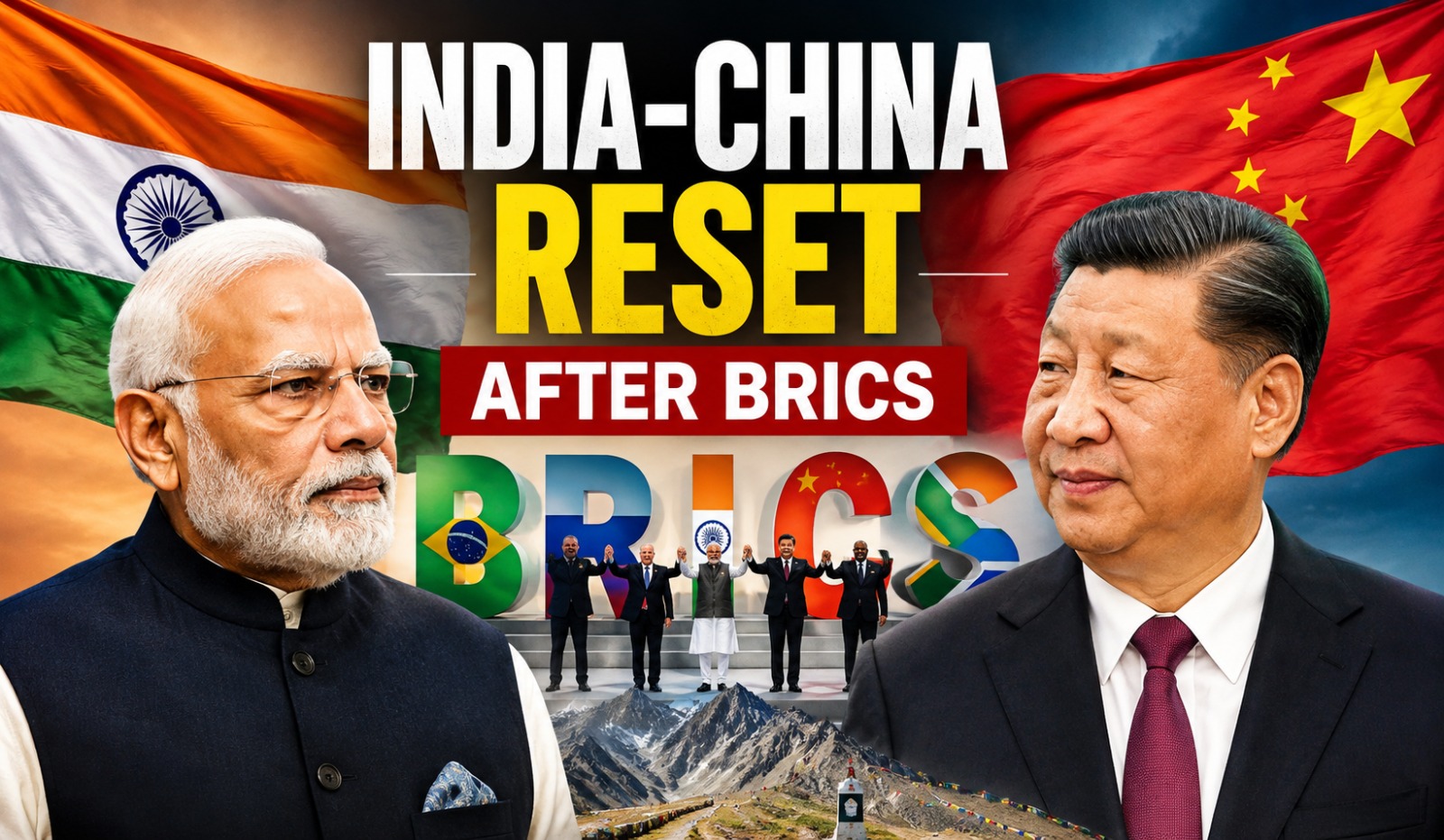
For years, the biggest test in India-China ties was the border. Now, as both countries try to bring relations back on track, another issue is moving to the centre — the Brahmaputra.
Prime Minister Narendra Modi and Chinese President Xi Jinping met during the BRICS Summit in New Delhi on September 12. Their meeting came after years of tension following the 2020 Galwan clash. Both sides have since taken steps to stabilise ties. But the Brahmaputra could test whether this thaw can move beyond diplomacy and trade and enter an area directly linked to water security and disaster management.
From Border Tension To A Cautious Thaw
India-China relations have had several ups and downs.
The two countries established diplomatic relations in 1950, but the relationship was badly damaged by the 1962 India-China war. Border tensions continued for decades, even as economic and diplomatic engagement increased.
In 1988, then Prime Minister Rajiv Gandhi’s visit to China helped restart high-level political engagement. Later, the two sides signed agreements aimed at maintaining peace and tranquillity along the border.
But serious differences remained. The 2017 Doklam standoff and, more importantly, the deadly Galwan clash of 2020 again pushed ties into a deep freeze.
After years of military and diplomatic negotiations, India and China reached an agreement in October 2024 that led to disengagement in eastern Ladakh. Since then, flights, pilgrimages, diplomatic contacts and other exchanges have gradually resumed.
The latest signal came at the 2026 BRICS Summit. Xi’s visit was his first to India in seven years. Both leaders spoke about stabilising ties. China said the two countries should view each other as partners, while India stressed border peace, mutual respect and sensitivity.
But the thaw does not mean all disputes are over.
Why The Brahmaputra Matters
The Brahmaputra begins in Tibet, where it is known as the Yarlung Tsangpo. It enters India through Arunachal Pradesh, where it is called the Siang, and then flows through Assam before entering Bangladesh.
The key issue is geography.
China controls the river’s upper reaches. India is downstream. That means developments upstream can have consequences for people and ecosystems downstream.
For India, one of the most important issues is access to hydrological information — such as river levels and other data needed for flood forecasting and emergency planning.
India and China created an Expert-Level Mechanism on Trans-border Rivers in 2006. The mechanism deals with flood-season hydrological data, emergency management and other river-related issues. Sixteen meetings have been held so far, with the latest in New Delhi in April 2025.
In August 2026, the two countries agreed to hold the next meeting of this mechanism in September and continue discussions on hydrological data sharing and the renewal of relevant agreements.
The Dam Question
The biggest new concern is China’s massive hydropower project on the lower reaches of the Yarlung Zangbo.
China formally began construction in July 2025. The project consists of five cascade hydropower stations and has an estimated investment of about 1.2 trillion yuan, or around $167.8 billion.
India has concerns about the possible ecological and downstream impact of large projects in the upper reaches of the river.
China says the project will not adversely affect downstream countries and says it will follow ecological safeguards and cooperate on hydrological information and disaster management.
It is important to note that the issue is not simply whether China can “switch off” the Brahmaputra. Much of the river’s water is added after it enters India through rainfall and tributaries. But upstream projects can still matter for flood patterns, sediment, ecosystems and the timing of water flows.
Why This Could Test The Thaw
This is where the Brahmaputra becomes important for the wider India-China relationship.
Trade between the two countries has already reached record levels. India’s official data shows bilateral goods trade at $151.1 billion in 2025-26, but India’s trade deficit with China stood at $112.16 billion.
So, even as economic ties recover, strategic mistrust remains.
The Brahmaputra will test whether the two sides can cooperate in an area where there is no easy political compromise.
For India, the key demands are likely to be predictable hydrological information, greater transparency about upstream projects and stronger arrangements for floods and emergencies.
For China, greater cooperation could help show that its position as an upstream country does not automatically translate into strategic pressure on downstream neighbours.
The border was the first major test of the India-China thaw. Trade is another. Now, the next test could be a river.
The Brahmaputra does not recognise the Line of Actual Control. Its waters cross borders — and how India and China manage that reality could show whether the latest thaw is temporary diplomacy or the beginning of a more stable relationship.
Kabul: Two civilians were injured in a blast in the northern Afghan province of Badakhshan on Wednesday, provincial...
As concerns grew around the world over a plague outbreak, the World Health Organisation (WHO) said on Tuesday...

A Ukrainian drone attack triggered a fire on a Liberian-flagged oil tanker carrying an all-Indian crew off Russia’s...

India has strongly criticised the Organisation of Islamic Cooperation (OIC), accusing it of being unable to distinguish between...

Three years ago, on October 7, 2023, Israel woke up to one of the deadliest attacks in its...

Guwahati: Ashik Ali, an accused in the death of Gauhati University student Nimisha Thakuria, was shot in the...

Aries: The day will be auspicious...