Last Updated: November 26, 2026
Last Updated: November 26, 2026




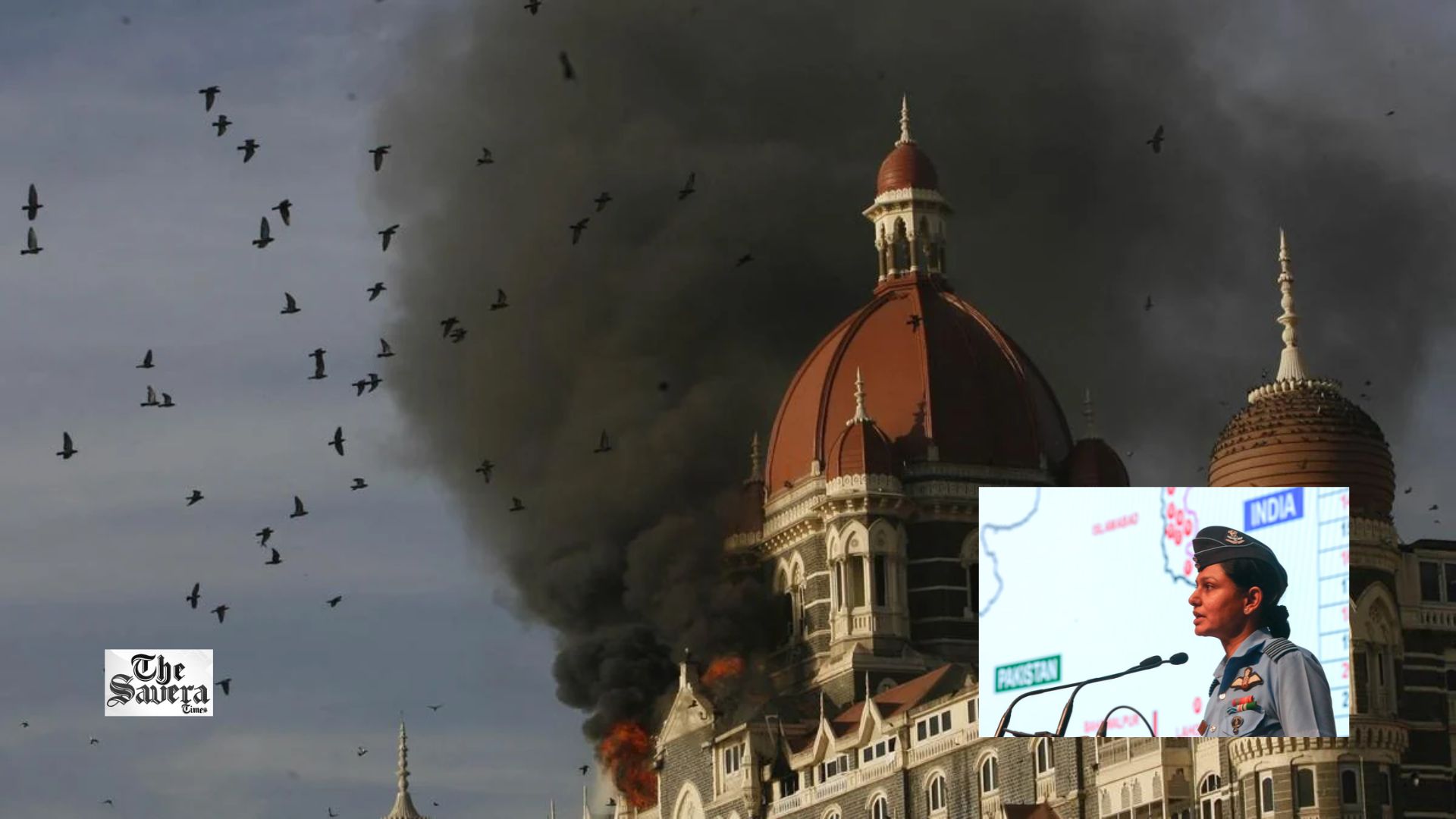
New Delhi: Eighteen years after the 26/11 Mumbai terror attacks, India has significantly changed its approach to counterterrorism, moving from a largely reactive response and diplomatic pressure to an intelligence-led strategy focused on preventing attacks and disrupting terrorist networks.
As the country observes the 18th anniversary of the attacks on November 26, tributes were paid to the 166 people who lost their lives and the security personnel who made the supreme sacrifice while fighting the terrorists.
Maharashtra Governor Jishnu Dev Varma and Chief Minister Devendra Fadnavis paid floral tributes at the Mumbai Police headquarters. Deputy Chief Minister Sunetra Pawar, senior police officials and other dignitaries were also present. The Governor and Chief Minister met the families of police personnel who were killed during the attacks.
Fadnavis remembered the brave personnel who defended Mumbai and the innocent civilians who lost their lives. Union Home Minister Amit Shah also paid tribute to the victims and security personnel, while External Affairs Minister S Jaishankar reiterated India’s commitment to combating terrorism in all its forms and bringing those responsible to justice.
26/11 Attacks Exposed Major Gaps in India’s Security System
The November 26, 2008, attacks remain among the most horrific terror strikes witnessed by India. Ten Lashkar-e-Taiba (LeT) terrorists entered Mumbai by sea and launched coordinated attacks at multiple locations, including the Taj Mahal Palace Hotel, Oberoi-Trident Hotel, Chhatrapati Shivaji Maharaj Terminus and Nariman House.
The attacks continued until November 29, leaving 166 people dead and more than 300 injured.
The response to the attacks drew criticism, with questions raised over intelligence failures, inadequate equipment available to Mumbai Police personnel, poor coordination among security agencies and delays in bringing the National Security Guard (NSG) from Delhi.
Investigators managed to capture one of the terrorists, Ajmal Kasab, alive. His interrogation and subsequent trial provided crucial evidence about the attackers and their links to Pakistan.
Pakistan initially denied any connection with the attack. Kasab’s hometown was identified as Faridkot village in Pakistan’s Punjab province, in Okara district. His family reportedly left the village after his identity became public.
Intelligence Sharing Became a Priority After Mumbai Attacks
The 26/11 attacks exposed serious gaps in intelligence gathering and coordination. The landing of the ten terrorists in Mumbai and the reconnaissance conducted by David Headley before the attacks were not adequately acted upon by Indian agencies.
Headley, who travelled to India from the United States to conduct reconnaissance of potential targets, was identified as a key conspirator in the planning of the attacks.
Following the incident, strengthening intelligence gathering and improving coordination between central agencies, state police forces and local intelligence units became major priorities.
According to security officials, agencies gradually adopted a more proactive approach, with greater emphasis on sharing intelligence and acting on potential threats before attacks could take place.
From Surgical Strikes to Balakot and Operation Sindoor
India’s counterterrorism response also underwent a change in its approach to cross-border attacks.
After the 2016 Uri terror attack, in which 19 Indian Army personnel were killed, the Indian Army conducted surgical strikes across the Line of Control in Pakistan-occupied Kashmir (PoK). India said the operation targeted terrorist launch pads.
In February 2019, following the Pulwama suicide bombing that killed 40 CRPF personnel, the Indian Air Force carried out an air strike on a Jaish-e-Mohammed facility in Balakot, Pakistan.
The April 2025 Pahalgam terror attack, in which 26 people were killed, further intensified India’s response. The attackers reportedly identified victims on the basis of their religion before shooting them.
Following the attack, India launched Operation Sindoor, during which the armed forces struck terrorist infrastructure in Pakistan and Pakistan-occupied Kashmir.
These developments marked a shift towards a strategy that placed greater emphasis on disrupting terrorist infrastructure and responding to cross-border attacks through military action.
PRAHAAR Doctrine Gives India a National Counterterrorism Framework
A major development in India’s evolving security strategy came with the unveiling of PRAHAAR, the country’s first comprehensive National Counter Terrorism Policy and Strategy, by the Ministry of Home Affairs on February 23, 2026.
The framework aims to prevent terrorist attacks and strengthen India’s response through intelligence-led operations and coordination among government agencies.
PRAHAAR is based on seven pillars:
Prevention: Preventing terror attacks to protect Indian citizens and national interests.
Response: Ensuring swift and proportionate responses to threats.
Aggregating capacities: Strengthening coordination through a whole-of-government approach.
Human rights: Following human rights and rule-of-law-based processes.
Attenuating conditions: Addressing factors that enable terrorism, including radicalisation.
Aligning international efforts: Strengthening international cooperation against terrorism.
Recovery and resilience: Building resilience through a whole-of-society approach.
The policy also emphasises real-time intelligence sharing through the Multi Agency Centre (MAC), coordination between state police forces and central agencies, protection of critical infrastructure and action against terror financing.
India Moves Beyond Dossiers to Disrupt Terror Networks
For years after the Mumbai attacks, India relied heavily on diplomatic pressure and dossiers containing evidence of Pakistan-based terror networks and their alleged involvement in attacks.
However, security experts have argued that sharing evidence and seeking action through diplomatic channels did not produce the desired results, as Pakistan continued to deny allegations and several accused remained beyond India’s reach.
Over time, India’s approach increasingly focused on disrupting terrorist networks, targeting their infrastructure and preventing attacks through intelligence-based operations.
The surgical strikes after Uri, the Balakot air strike and Operation Sindoor are among the major operations associated with this shift.
Jammu and Kashmir Remains a Key Counterterrorism Challenge
After the 26/11 attacks, India also witnessed a series of blasts attributed to the Indian Mujahideen. Following security operations against the outfit, terrorist activity increasingly remained concentrated in Jammu and Kashmir, although the threat did not disappear.
Security officials point to intelligence operations, action against terror networks and measures to disrupt radicalisation as important parts of the evolving strategy.
The abrogation of Article 370 in August 2019 also brought major administrative and political changes to Jammu and Kashmir. The government has highlighted development, employment opportunities and improved infrastructure as part of its efforts to bring stability to the region.
However, the threat of terrorism continues, with security agencies also dealing with radicalisation, online propaganda, disinformation campaigns and suspected honey-trapping networks.
India’s Counterterrorism Strategy Continues to Evolve
Security officials and counterterrorism experts maintain that the lessons of 26/11 remain relevant even after nearly two decades. While India’s intelligence and response mechanisms have undergone significant changes, the threat posed by state and non-state actors continues to evolve.
The challenge now extends beyond preventing physical attacks to identifying recruitment networks, disrupting terror financing, countering online radicalisation and responding to emerging security threats.
Eighteen years after the Mumbai attacks, the central lesson remains the importance of intelligence coordination, preparedness and a swift response. India’s counterterrorism framework continues to evolve as it addresses new challenges to national security.
Gold and silver futures gained on MCX on November 26, with gold rising ₹1,524 and silver climbing ₹4,544....

Stay updated with The Savera Morning Brief, featuring the top headlines from India and around the world across...

Prime Minister Narendra Modi questioned Congress-era constitutional amendments, the Emergency and the use of Article 356 in his...

Tamil Nadu Chief Minister C. Joseph Vijay will present scholarships and certificates to Class 10 and 12 toppers...

Chief ministers Yogi Adityanath, Devendra Fadnavis, Bhajanlal Sharma and Mohan Yadav paid tribute to the victims and security...
Chief Election Commissioner Gyanesh Kumar's photographs with Congress MLA Ajay Singh at a private wedding in Bhopal have...