Last Updated: October 22, 2026
Last Updated: October 22, 2026





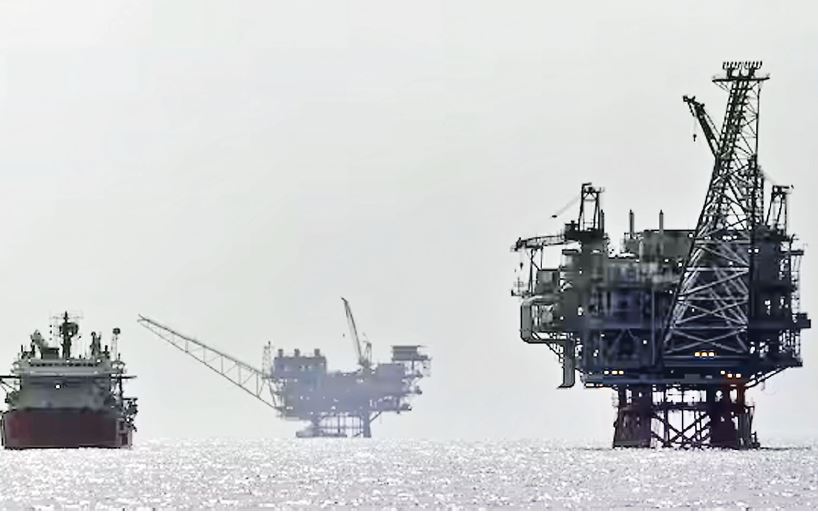
India has opened a new chapter in its energy story with the confirmation of natural gas reserves in the Andaman basin, a development that Union Petroleum Minister Hardeep Singh Puri has described as “an ocean of energy opportunities.” The discovery, announced last week, is being seen as a milestone in the country’s deepwater exploration efforts, with potential implications for energy security, economic growth, and the transition to cleaner fuels.
The Discovery
The find was made by Oil India Limited (OIL), a Maharatna company under the Ministry of Petroleum and Natural Gas. OIL reported the presence of natural gas in its second exploratory well drilled in the Andaman Shallow Offshore Block. The well, named Sri Vijayapuram-2, lies about 17 kilometres off the Andaman coastline, in waters 295 metres deep. Drilling extended to a target depth of 2,650 metres.
According to OIL, the “occurrence of natural gas” was established during testing between 2,212 and 2,250 metres. Initial production tests revealed intermittent flaring, and samples brought to Kakinada for analysis confirmed methane content of about 87 per cent. The company had secured this block, AN-OSHP-2018/1, under the Open Acreage Licensing Policy (OALP).
Why It Matters
The discovery is significant for multiple reasons. Petroleum Minister Puri has long suggested that the Andaman basin holds promise comparable to large hydrocarbon finds in Guyana, Myanmar, and Indonesia, which share similar geological belts. He noted that while the size and commercial viability of the gas pool would require further assessment, the find validates India’s long-standing belief in the basin’s potential.
The timing is also important. Just weeks earlier, Prime Minister Narendra Modi announced the launch of the National Deep Water Exploration Mission during his Independence Day address. Describing the initiative as “Samudra Manthan,” Modi had framed it as part of India’s broader push toward energy self-reliance. The Andaman discovery provides an early boost to this mission, highlighting the potential of offshore reserves in strengthening the country’s energy security.
India currently relies heavily on imported natural gas, with 44 per cent of its consumption in 2023–24 met through imports, mostly in the form of liquefied natural gas (LNG). A steady rise in demand, particularly in the power, fertilizer, and industrial sectors, has made this dependency a concern. If commercially viable, the Andaman reserves could help reduce that reliance. Analysts suggest the discovery could even double India’s domestic production if developed efficiently.
Methane and the Green Shift
The discovery also aligns with India’s environmental goals. Methane, the primary component of natural gas, is considered a cleaner fuel compared to coal and oil. It produces lower carbon dioxide emissions per unit of energy generated, contributing to reduced air pollution and greenhouse gas output. For a country attempting to balance industrial growth with commitments to reduce emissions intensity, this find could serve as a valuable bridge fuel in the energy transition.
However, methane also poses challenges. While cleaner when burned, it is itself a potent greenhouse gas if released uncombusted into the atmosphere. Effective infrastructure for extraction, transport, and distribution will be essential to ensure minimal leakage and maximum benefit.
Economic and Strategic Dimensions
The potential economic impact extends beyond energy security. Developing methane infrastructure in the Andamans could create jobs across extraction, transport, and related services. It could also attract global expertise. Puri underscored that the discovery strengthens India’s ability to collaborate with international deepwater specialists such as Petrobras, BP, Shell, and ExxonMobil.
The strategic angle is equally important. As energy becomes a cornerstone of geopolitical influence, domestic reserves give India more leverage in global negotiations. Reduced import dependency also shields the economy from volatile international LNG prices and supply disruptions.
What Comes Next
Despite the excitement, experts caution that the road from discovery to production will take time. Officials have indicated that further isotope studies, seismic surveys, and testing of nearby prospects are necessary to estimate the reserve’s size and economic viability. Commercial production could still be years away, depending on results.
In the immediate aftermath of the announcement, the markets reacted positively. Oil India’s stock price rose over 3 per cent, touching Rs 423 per share, its biggest intraday gain since late September. This reflected investor optimism about the company’s prospects, though analysts warned that long-term gains would depend on the actual scale of recoverable reserves.
A Measured Optimism
The Andaman find fits into India’s larger narrative of pursuing energy independence while transitioning towards cleaner fuels. The government has repeatedly emphasized reducing dependency on imports and increasing the share of natural gas in the energy mix from the current 6 per cent to 15 per cent by 2030. Achieving this target requires both new discoveries and substantial investment in infrastructure.
The Andaman basin, with its deepwater potential, could become central to that effort. But commercial exploitation will require large-scale investment, advanced technology, and careful environmental safeguards given the region’s ecological sensitivity.
For now, the discovery has energized India’s exploration ambitions, providing a sense of direction and possibility. It has reaffirmed the belief that the country’s seas hold untapped wealth, waiting to be unlocked. As Minister Puri put it, this occurrence marks “a significant milestone in our journey through Amrit Kaal.”
India’s future in energy production may still be uncertain, but with the Andaman gas reserves, the country has taken a step closer to rewriting its energy map—one that promises both opportunity and responsibility.
Good Evening Viewers! Get the latest updates from India and around the world with The Savera Times Evening...

Bharatiya Janata Party (BJP) National General Secretary Smriti Zubin Irani launched a scathing attack on Congress MP and...

New Delhi: Cockroach Janata Party (CJP) leaders Saurav Das and Ashutosh Ranka will be released from judicial custody...

According to police, three suspicious young men are seen in CCTV footage. Efforts are underway to identify them....
A video has surfaced of an alleged attempted assault on Jan Suraj Party's Bihar president Manoj Bharti. The...

Two accused have been convicted and sentenced to 10 years of rigorous imprisonment in a 2017 drug trafficking...

Aries: The day will be auspicious...