Last Updated: October 11, 2026
Last Updated: October 11, 2026





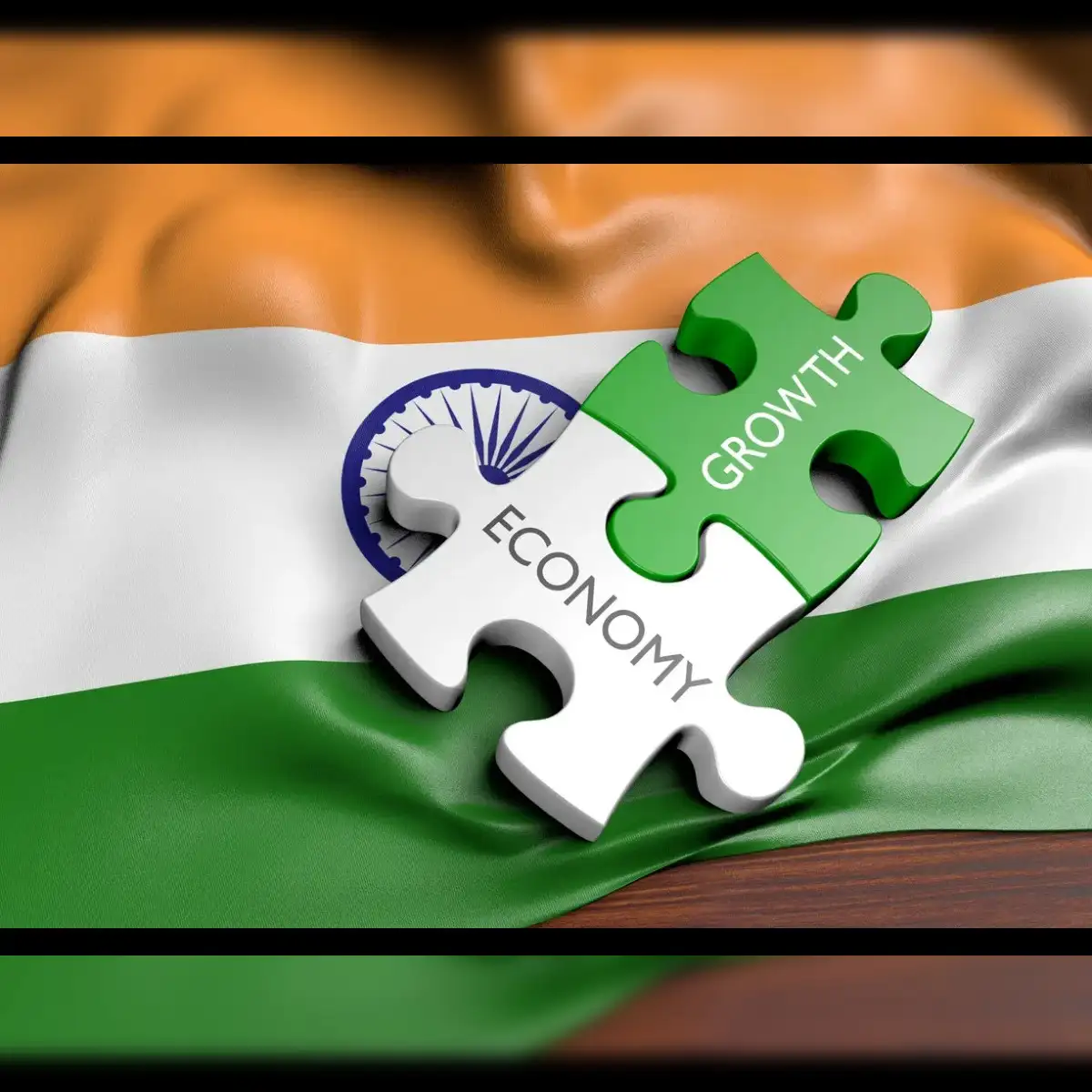
India wants to become a developed economy. It wants more factories, more investment, more jobs and the infrastructure to support them. But while we speak about building a $5 trillion economy and becoming a global manufacturing hub, another question deserves attention: Are we creating enough institutions that build, produce and create wealth? The figures in the accompanying analysis raise an uncomfortable point. For every startup recognised by the Department for Promotion of Industry and Internal Trade (DPIIT), there are approximately 2.5 NGOs registered on the government’s NGO Darpan portal. The analysis also cites estimates of nearly 37 lakh NGOs across the country-almost one-third of the estimated NGO population of the G20. The numbers alone do not tell the whole story. NGOs and startups serve different purposes, and a ratio between them cannot, by itself, establish whether one is more valuable than the other. But the figures do raise a question about the direction of institutional energy in the country. Are we creating an environment where building a business, creating jobs and producing something of value is encouraged-or one where those who want to build are increasingly required to defend themselves against those who want to stop them? India has spent years trying to improve its business environment. Yet the real difficulty of doing business is not always captured by official rankings. A project can receive an approval and still remain stuck for years because of litigation, local opposition, administrative delays or repeated procedural objections. A factory that never opens creates no jobs. A mine that never starts production creates no raw materials. A road that remains incomplete cannot connect a market. This is the less visible cost of development delays. It does not always appear as a dramatic economic loss. Sometimes it appears as a project that never takes off, an investment that moves elsewhere, or a young person who continues looking for work because the factory that was supposed to employ him never opened. The analysis presents a statewise comparison that makes the question even more interesting. Industrially stronger states such as Telangana, Karnataka, Gujarat and Maharashtra have lower NGOto-startup ratios than the national average. Telangana is listed at 1.6, Karnataka at 1.8, Gujarat at 1.9 and Maharashtra at 2.0. Several northeastern and border regions, on the other hand, show much higher ratios. Sikkim is listed at 14.1 NGOs for every startup, Manipur at 13.6, Ladakh at 11.2 and Arunachal Pradesh at 9.6. The accompanying map and tables present this contrast visually, with industrial hubs generally appearing on the lower end of the scale and several sensitive border regions on the higher end. These figures should not be read as proof that NGOs are responsible for the economic difficulties of these states. The Northeast and border regions face difficult terrain, limited connectivity, smaller markets, historical conflict and other structural challenges. These factors can also explain why startups are fewer. A high ratio may reflect a shortage of businesses as much as an abundance of NGOs. But that does not make the question irrelevant. If a region has far more organisations engaged in advocacy, mediation or development work than businesses creating jobs and wealth, it is worth asking whether the institutional balance is right. A country cannot become economically strong if its most difficult regions remain dependent on a system that produces more intermediaries than employers. The economic cost of prolonged obstruction is real. The analysis refers to an Intelligence Bureau assessment that organised protests by foreign-funded NGOs could reduce India’s annual GDP growth by 2% to 3%. It also argues that, without such disruption, India’s growth rate could potentially rise from around 7% to 10%. Those estimates require independent verification. The underlying report and its methodology are not provided in the material available here. They should therefore be treated as claims to be examined, not as established economic facts. But the broader issue does not depend on accepting those figures. When coal mines, nuclear power plants, ports, dams or industrial projects are delayed for years, the consequences are felt across the economy. Domestic production suffers, imports become more important, and the cost of infrastructure rises. India cannot afford to remain dependent on imported raw materials when it has substantial reserves of its own. Nor can it afford to spend years debating whether a project should proceed when the real question is how to make it safer, cleaner and more efficient. That is where the debate needs to move. The answer to environmental concerns should be better technology, better regulation and better implementation-not an endless process in which every project becomes a permanent target. The same issue becomes more serious when it involves strategic infrastructure. Roads, bridges and tunnels in border regions are not merely development projects. They are also vital to the movement of troops and supplies. Delays in such projects can have consequences far beyond the local economy. The analysis raises concerns about organised agitation, foreign funding and the possibility of internal friction being exploited by adversaries. These are serious claims, and they should be examined through evidence rather than assumptions. The presence of an NGO in a border region does not, by itself, establish a security threat. But where infrastructure has clear strategic importance, the government must have a system that can distinguish legitimate concerns from deliberate attempts to obstruct national interests. The scrutiny of NGOs is not a recent or partisan phenomenon. The analysis refers to former Prime Minister Manmohan Singh’s 2012 remarks on protests surrounding the Kudankulam Nuclear Power Plant, as well as Income Tax Department investigations involving the Environics Trust. These examples are cited to show that concerns about foreign funding, organised protests and development delays have existed across political administrations. That history matters because this debate should not be reduced to a political argument about one government or another. The real issue is whether India has created an institutional environment in which development can move forward while legitimate concerns are addressed. A democracy must allow criticism. It must allow citizens to question projects, challenge decisions and demand accountability. But accountability cannot mean that every project is treated as guilty until proven innocent. Nor can the right to protest become a substitute for the responsibility to find solutions. India needs NGOs that improve lives, protect the environment and strengthen communities. It also needs startups that create jobs, manufacturers that build products and infrastructure that connects markets. These are not necessarily competing goals. In a healthy economy, they should reinforce one another. The problem begins when the balance shifts too far towards institutions that exist to monitor, mediate or oppose, while the institutions that build and produce struggle to get the space they need. The country needs more builders, not more barriers to building. The figures in this analysis should therefore be treated as a starting point for a larger discussionnot as proof that every NGO is a problem. The real question is whether India is creating enough productive institutions to match its ambitions. Because in the end, economic growth is not created by registrations, reports or campaigns. It is created by people who build factories, develop products, employ workers and take the risk of creating something that did not exist before. India’s future will depend on whether those people are given the freedom to build-or whether they are forced to spend too much of their time defending the right to do so.
Jaipur: The Anti-Narcotics Task Force (ANTF) of Rajasthan Police has arrested wanted drug smuggler Sohanlal, alias Sonu, carrying...

Imagine a foreign national standing among Indian citizens at a political protest, raising questions about the government or...

Aizawl: The Assam Rifles, in coordination with other law enforcement agencies, seized methamphetamine tablets and foreign-made cigarettes worth...

Kolkata: A Returning Officer (RO), acting on behalf of the Election Commission of India (ECI), has lodged a...

New Delhi: The Delhi BJP Mahila Morcha staged a protest on Saturday to demand the expulsion from Congress...
Sanaa: Saudi warplanes launched fresh airstrikes on Houthi-held areas in northwestern Yemen on Saturday as fighting intensified between...