Last Updated: November 2, 2026
Last Updated: November 2, 2026




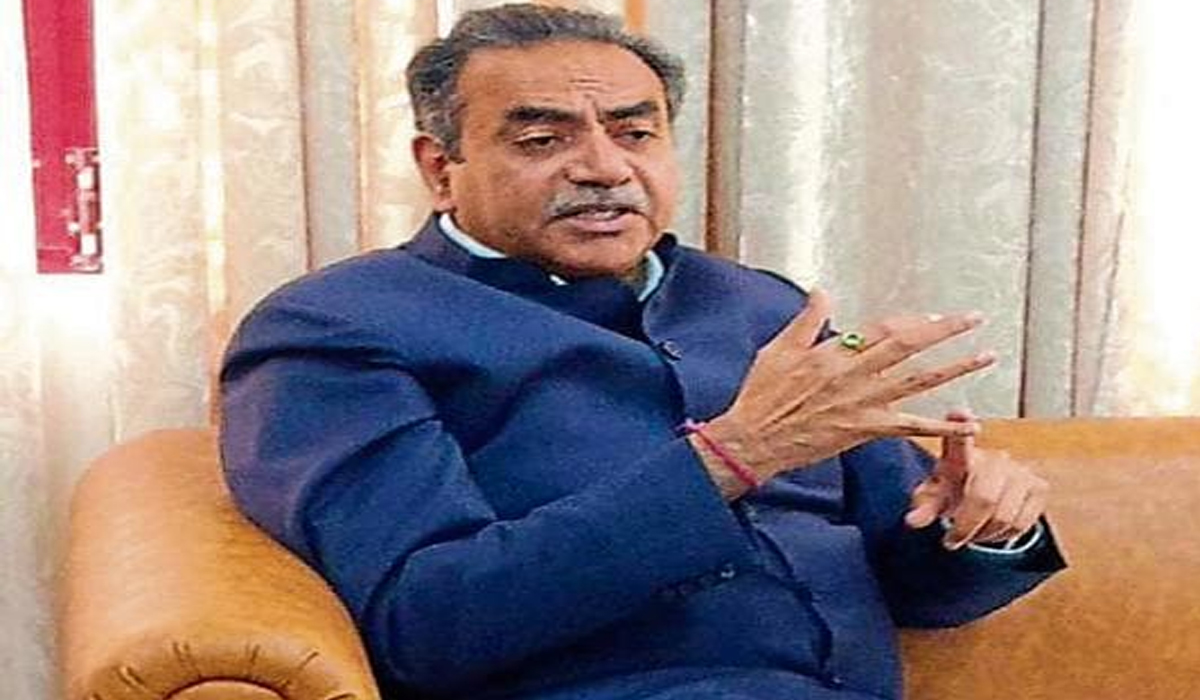
Sanjay Tondon
In international affairs, power is often measured by military strength, economic capacity, and geopolitical influence. Yet history repeatedly reminds us that one of the greatest tests of national leadership is not merely the ability to wage a conflict, but the wisdom to conclude it at the right moment. Far fewer have shown the discipline required to define limited objectives, achieve them with precision and then step back before a conflict expands into a prolonged and costly entanglement. The 20th and 21st centuries provide numerous examples of conflicts that began with clear intentions but evolved into long and exhausting engagements.
Vietnam became a defining lesson in the limits of military power. Afghanistan consumed enormous resources over two decades. The RussiaUkraine conflict continues to impose immense economic and human costs on both sides and beyond. West Asia has witnessed recurring cycles of confrontation that have repeatedly destabilised the region and complicated diplomatic efforts. The common thread in many of these situations is not the absence of military capability but the difficulty of finding a clear and sustainable exit. In an era marked by geopolitical uncertainty, India’s strategic conduct offers an important lesson in this regard. Over the past several decades, India has demonstrated a consistent ability to undertake limited, objective-driven operations and conclude them once the desired goals have been achieved.
The emphasis has remained on precision rather than escalation, deterrence rather than occupation, and strategic outcomes rather than openended conflict. The Kargil conflict of 1999 remains one of the most significant examples. Faced with a grave challenge to its territorial integrity, India responded with determination and military effectiveness. Yet the objective remained clearly defined: Restore the status quo and reclaim occupied positions. Despite considerable provocation, the conflict was not expanded into a wider regional war. Once the objective was achieved, military operations concluded. The same principle was visible years later in the surgical strikes conducted across the Line of Control following the Uri terrorist attack. India identified a specific threat, responded with calibrated force, conveyed its resolve and avoided unnecessary escalation. Similarly, the Balakot air strike after the Pulwama attack demonstrated India’s willingness to act against terrorism while maintaining control over the broader strategic environment. The operation sent a clear message without allowing the situation to spiral into a prolonged confrontation.
More recently, Operation Sindoor reflected the same underlying philosophy. The action was guided by defined objectives, executed with precision and brought to a close once those objectives had been met. What makes such actions noteworthy is that they are not purely military achievements. They represent the successful coordination of multiple institutions – armed forces, intelligence agencies, diplomatic channels, and political leadership. Modern conflicts are no longer fought exclusively on battlefields. International opinion, economic resilience, technological capabilities and diplomatic credibility play equally important roles. India’s growing influence under the dynamic leadership of our Prime Minister Narendra Modi on the global stage has strengthened its ability to operate within this broader framework.
Over the last decade, the country has expanded its diplomatic outreach, deepened strategic partnerships and enhanced its standing as a responsible global actor. Through vaccine diplomacy, India demonstrated that national capability can be leveraged not only for domestic security but also for international goodwill. This combination of strength and responsibility has enhanced India’s credibility. A nation that is trusted internationally enjoys greater diplomatic space when addressing security concerns. Military actions, when necessary, are viewed within the context of a broader record of responsible conduct.
The lesson is particularly relevant today, as we are currently witnessing in the West Asia. Prolonged conflicts drain national resources, weaken economic momentum, create social strains and divert attention from development priorities. So, a war should end once its intrinsic purpose has been met. It’s easy to start a war. However, there is always a question about who will win it. The most difficult thing to win is peace.
That is why the true measure of statecraft lies in preserving national interests while minimising unnecessary costs. India’s experience increasingly suggests the emergence of a mature strategic doctrine rooted in clarity of purpose, precision of execution and restraint in escalation. It is an approach that recognizes that military force is a means, not an end in itself. It is not a doctrine of passivity. Nor is it a doctrine of perpetual confrontation. It is a doctrine of measured action, where strength is exercised with responsibility and where the end state is considered as carefully as the initial decision to act. In a world where many conflicts seem easier to start than to finish, this ability may well become one of India’s most significant strategic advantages. The mark of a rising power is not simply its capacity to enter a conflict. It is its ability to achieve its objectives, preserve stability, protect its interests and know precisely when to bring the chapter to a close. India has increasingly demonstrated that rare combination of resolve and restraint, a quality that deserves greater recognition in contemporary strategic thinking.
(The writer is a senior BJP leader. The views expressed are strictly his personal)
The Supreme Court disposed of petitions seeking a CBI investigation into alleged donation theft at the Ram Temple...
Eight labourers died of electrocution at a road construction site in Chhapoli village, Jhunjhunu, after a gravel-mixing machine...

Amidst concerns over rising air ticket prices, the Central Government has notified new rules. Under these rules, the...

A tragic road accident occurred late last night in Kushinagar district of Uttar Pradesh. An Omni van collided...

Cyclone 'Murasu', active over the Bay of Bengal, has now intensified into a severe cyclonic storm.

The national capital Delhi and NCR experienced a chilly feeling on Monday morning. The effects of winter are...

Aries: The day will be auspicious...